
People of Habakkuk
Every person who appears in the book of Habakkuk, ordered by how often they are mentioned there.
The People of Habakkuk appear within a prophetic dialogue that addresses the rise of the Chaldean empire and the subsequent divine judgment on Judah. The book is framed as a series of complaints and responses between the prophet and the deity, rather than a historical narrative with a large cast of characters. Habakkuk is identified as a prophet who receives a burden or oracle concerning the violence and injustice he observes in his society (Habakkuk 1:1). He questions why the law is paralyzed and why the wicked surround the righteous, prompting a divine response regarding the coming invasion (Habakkuk 1:4).
The text organizes its figures primarily through the descriptions of two conflicting groups: the transgressors within Judah and the invading foreign power. Habakkuk is the central figure who stands at his watchpost to keep guard and see what will be answered to his complaint (Habakkuk 2:1). The Chaldeans are described as a bitter and hasty nation that marches through the breadth of the earth to seize dwellings not their own (Habakkuk 1:6). The text notes that their own might is their god, and they are dreaded for their fierce horses and keen soldiers (Habakkuk 1:7–11). Within the prophecy, the proud man is identified as one whose soul is not upright, contrasting with the just who shall live by his faith (Habakkuk 2:4). The text also mentions the specific woes against those who build towns with blood and those who make their neighbors drink to look at their nakedness (Habakkuk 2:12–15).
The book concludes with a prayer or shiggaion attributed to Habakkuk, which recounts a divine appearance from Teman and Mount Paran (Habakkuk 3:1–3). In this final section, the prophet describes the physical reaction of his own body to the vision, noting that his lips quivered and rottenness entered his bones as he waited for the day of trouble (Habakkuk 3:16). The text does not name specific kings, priests, or other historical contemporaries of the prophet. Instead, it focuses on the internal transformation of Habakkuk from a state of questioning to a state of quiet confidence. He ends the record by declaring that even if the fig tree does not blossom and the fields yield no food, he will exult in the God of his salvation (Habakkuk 3:17–18). The final note indicates the work was intended for the choirmaster to be played on stringed instruments (Habakkuk 3:19).
Everyone in this list
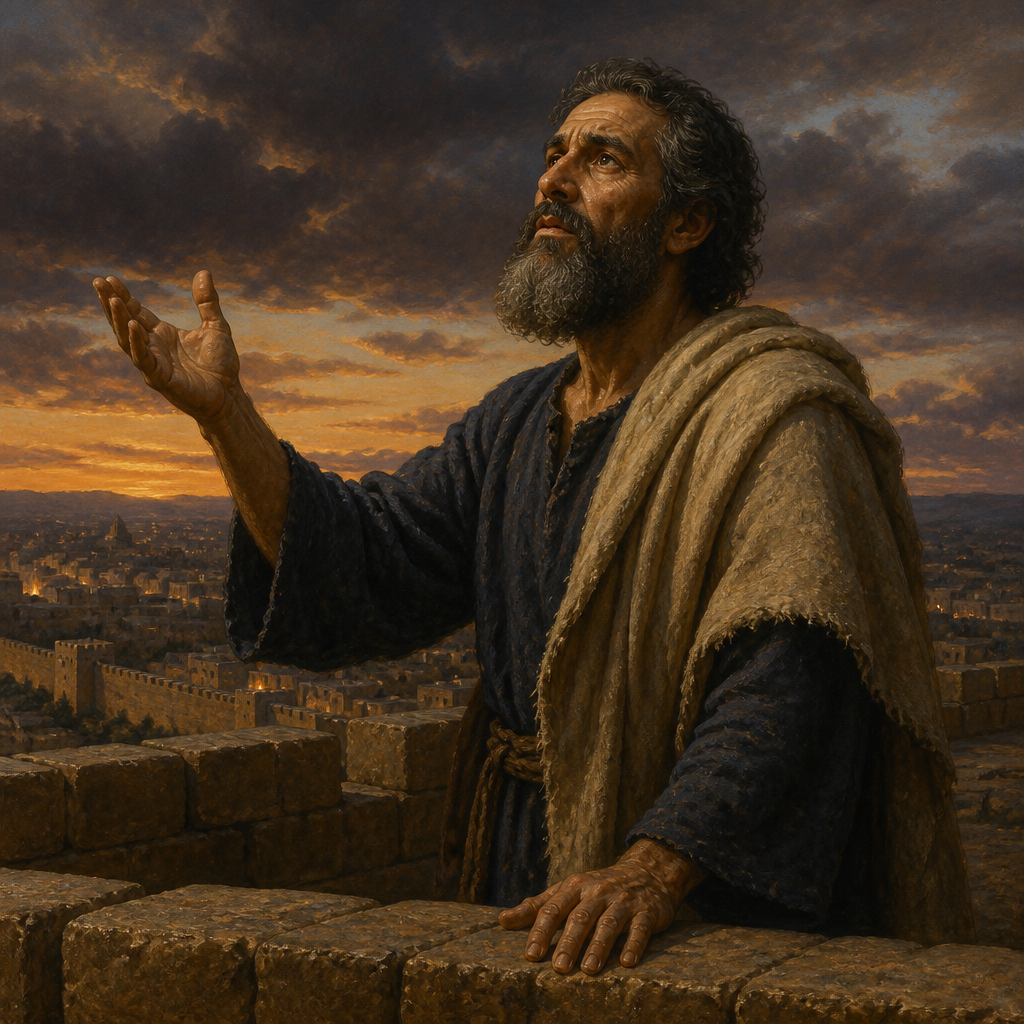
Habakkuk
Prophet who questioned divine justice before the Babylonian exile