Zaccur, Levite Musician of the United Monarchy
Who was Zaccur, Levite Musician of the United Monarchy, in the Bible?
A prominent Levite musician and son of Asaph who served in the third musical division under King David during the United Monarchy period.
This is one of 8 people named Zaccur in the Bible. See all 8 →
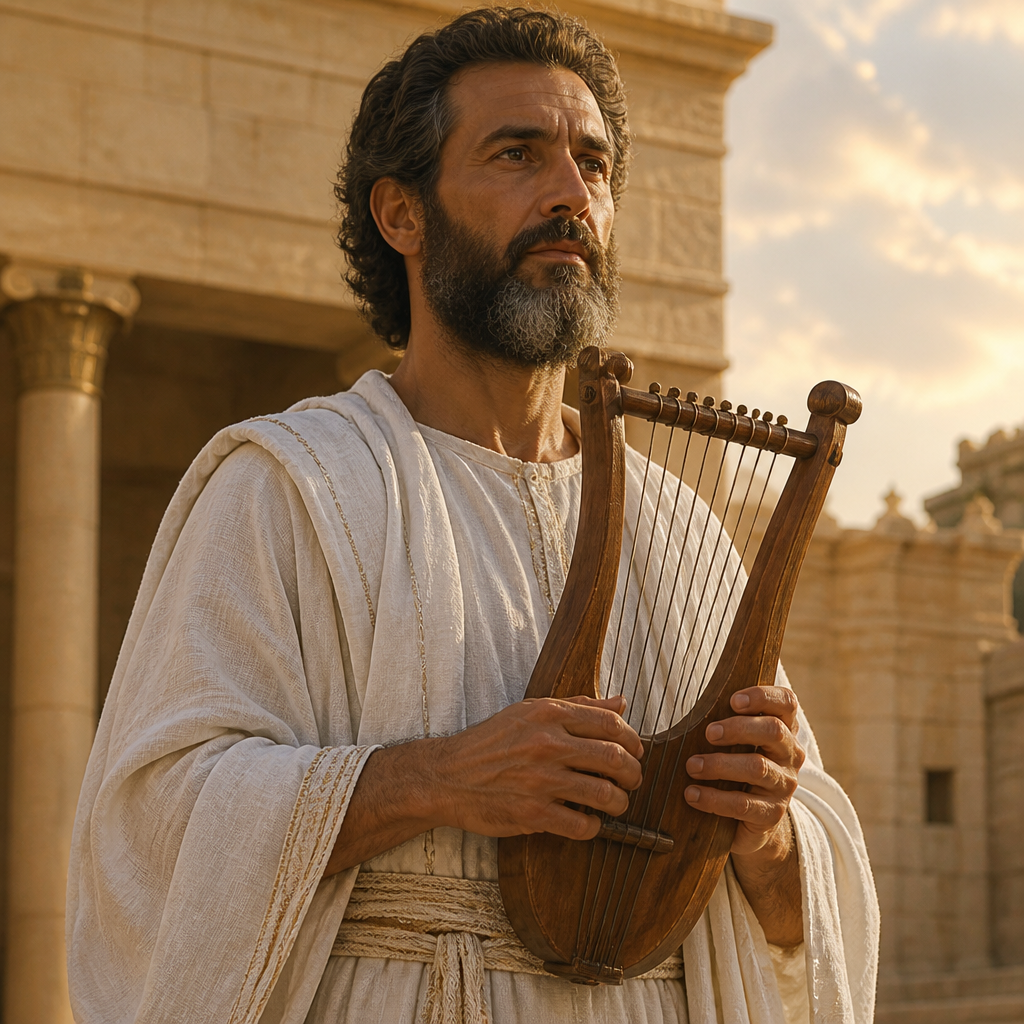
Zaccur was a Levite of the family of Asaph, serving during the transition from the United Monarchy into the early United Monarchy period. He is primarily identified through his role in the formalization of the temple music system established by King David. As a member of the elite musical guilds, Zaccur was not merely a performer but a leader among the Levites, tasked with the spiritual and artistic duty of leading the congregation in worship through song and instrumentation.
His lineage is of particular importance in the biblical narrative, as he represents the direct continuation of the 'sons of Asaph,' a group synonymous with prophetic musical ministry. Zaccur’s name appears in the genealogical records of 1 Chronicles and is later referenced in the Nehemiah genealogies to establish the legitimate priestly and Levite lineages following the return from exile, underscoring his lasting impact on the liturgical history of Israel.
Background and Family
Zaccur was the son of Asaph, one of the three primary musicians appointed by King David to oversee the service of song in the house of the LORD. As a member of the Tribe of Levi, Zaccur was born into a life of consecrated service. He grew up in a household where music was inextricably linked to prophecy and royal service.
Zaccur was one of four brothers: Joseph, Nethaniah, and Asharelah (also referred to as Asarelah). Together, these four brothers served under the direct supervision of their father, Asaph. The biblical record in 1 Chronicles 25:2 notes that Asaph himself "prophesied under the direction of the king," suggesting that the musical training Zaccur received was viewed as a form of prophetic utterance, blending artistic skill with spiritual revelation.
Major Life Events
The most significant recorded event in Zaccur’s life was his appointment to the third division of the temple musicians. As King David organized the Levites into twenty-four shifts or lots to ensure continuous worship in the sanctuary, Zaccur was chosen by lot for the third position.
According to 1 Chronicles 25:10, Zaccur did not serve alone; he led a contingent consisting of his sons and brothers, totaling twelve men. This structure emphasizes the communal and hereditary nature of the Levitical ministry. During his era, the "United Monarchy" (specifically the transition into it as David’s institutions were solidified), Zaccur would have been responsible for maintaining the musical standards and liturgical traditions that defined the Solomonic Temple's worship.
Relationship to Other Biblical Figures
Zaccur’s primary relationship was to his father, Asaph. In the biblical tradition, the "sons of Asaph" became a distinct guild of musicians who survived for centuries, even appearing in the post-exilic records. Zaccur’s role as a direct son of the patriarch of this guild gave him a status of foundational authority within the Levite ranks.
Furthermore, Zaccur is linked to later generations. In Nehemiah 12:35, a descendant named Zechariah (son of Jonathan) is traced back through a lineage that specifically names Zaccur as the son of Asaph. This genealogy serves to validate the credentials of the priests and musicians who participated in the dedication of the wall of Jerusalem centuries later, showing that Zaccur’s faithfulness in the 10th century BC provided the legal and spiritual basis for his descendants' service in the 5th century BC.
Spiritual Significance
The spiritual significance of Zaccur lies in the biblical concept of "musical prophecy." The text of 1 Chronicles 25:1-2 explicitly links the playing of lyres, harps, and cymbals with the act of prophesying. As the leader of the third lot, Zaccur was a guardian of this tradition. His life illustrates the biblical value of order and structure in worship; he was not a freelance musician but a servant who operated under the authority of his father and the king.
His inclusion in the genealogies of Nehemiah also highlights the theme of continuity. In the Hebrew mindset, Zaccur’s service was not a solitary act but a link in a chain that ensured the praises of God would continue through times of national division and exile. He represents the ideal of the Levite who fulfills his specific calling within the larger tapestry of Israel’s religious life.
Zaccur’s significance is rooted in the institutionalization of worship during the era of the United Monarchy. By leading the third division of temple musicians, Zaccur helped establish the liturgical framework that would sustain the spiritual life of Judah for generations. His role confirms that music in the Tabernacle and Temple was not merely aesthetic but was considered a prophetic and divinely ordained ministry.
Moreover, Zaccur serves as a genealogical bridge. His mention in both the records of David’s reign and the post-exilic records of Nehemiah demonstrates the importance of ancestral fidelity. He is a testament to the preservation of the Levitical office, ensuring that the 'songs of Asaph'—many of which are recorded in the Book of Psalms—were passed down through a legitimate and recognized line of descendants.
Frequently Asked Questions
What tribe did Zaccur belong to?
Zaccur was a member of the Tribe of Levi, specifically from the family of Asaph, who were designated as temple musicians.
Who was Zaccur's father?
Zaccur was the son of Asaph, the famous musician and seer who served King David.
What was Zaccur's specific role in the temple?
He was the leader of the third division of musicians. He, along with his twelve sons and brothers, was responsible for the musical service in the house of the LORD.
In which books of the Bible is this Zaccur mentioned?
This specific Zaccur is mentioned in 1 Chronicles (chapters 25) and Nehemiah (chapter 12).
Did Zaccur have any brothers?
Yes, he had three recorded brothers: Joseph, Nethaniah, and Asharelah (Asarelah).
Family & Relationships
Parents
 Asaph, Levite Musician and SeerFather1 Chronicles 25:2Stated
 Zaccur, Levite Musician of the United MonarchyThis page
 AsarelahBrother1 Chronicles 25:2Stated
 Joseph, Son of AsaphBrother1 Chronicles 25:2Stated
 Nethaniah, Son of AsaphBrother1 Chronicles 25:2Stated
Connected Figures
Family
Father · 1 Chronicles 25:2
A prominent Levite musician and seer appointed by King David to lead worship and prophesy through music in the Tabernacle and later the Temple.
United MonarchyFirst: 1 Chronicles 6:3932 versesMusician, Seer, and Levite LeaderLevi
Brother · 1 Chronicles 25:2
A Levite musician and son of Asaph who served in the sanctuary during the reign of King David during the United Monarchy era.
United MonarchyFirst: 1 Chronicles 25:22 versesLevite MusicianLevi
Brother · 1 Chronicles 25:2
A Levite musician and son of Asaph who served as a leader of the temple worship singers during the reign of King David and the United Monarchy.
United MonarchyFirst: 1 Chronicles 25:22 versesLevite Musician and Choir LeaderLevi
Brother · 1 Chronicles 25:2
A Levite musician and son of Asaph who served as the leader of the fifth division of temple singers during the reign of King David.
United MonarchyFirst: 1 Chronicles 25:22 versesLevite MusicianLevi
Mentions by Book
- 1 Chronicles2
- Nehemiah1
Scripture References
All 3 indexed verses, in canonical order, from the Berean Standard Bible.
1 Chronicles · 2
- 1 Chronicles 25:2
From the sons of Asaph: Zaccur, Joseph, Nethaniah, and Asarelah. These sons of Asaph were under the direction of Asaph, who prophesied under the direction of the king.
- 1 Chronicles 25:10
the third to Zaccur, his sons, and his brothers—12 in all;
Nehemiah · 1
- Nehemiah 12:35
and some of the priests with trumpets, and also Zechariah son of Jonathan, the son of Shemaiah, the son of Mattaniah, the son of Micaiah, the son of Zaccur, the son of Asaph,
Others Named Zaccur
Compare all 8 bearers →Zaccur, descendant of BigvaiEzra 8:14
A member of the clan of Bigvai who returned to Jerusalem with Ezra during the second wave of the Jewish restoration.
Zaccur, Father of ShammuaNumbers 13:4
A man of the tribe of Reuben whose son, Shammua, was selected as one of the twelve spies sent by Moses to scout the land of Canaan.
Zaccur, Father of HananNehemiah 13:13
The son of Mattaniah and father of Hanan, Zaccur was a man whose lineage provided assistants for the administration of the temple storerooms.
Zaccur, son of ImriNehemiah 3:2
A Jewish returnee from the Babylonian exile who participated in the reconstruction of the walls of Jerusalem under the leadership of Nehemiah.
Zaccur, Signatory of the CovenantNehemiah 10:12
A Jewish leader during the time of Nehemiah who signed the solemn covenant to observe God's law after the return from Babylonian exile.
Zaccur, son of Jaaziah1 Chronicles 24:27
A Levite of the clan of Merari who served during the United Monarchy as a listed descendant of Jaaziah.
Zaccur, son of Hammuel1 Chronicles 4:26
A descendant of the tribe of Simeon whose lineage is preserved in the genealogical records of the era of the conquest and the judges.