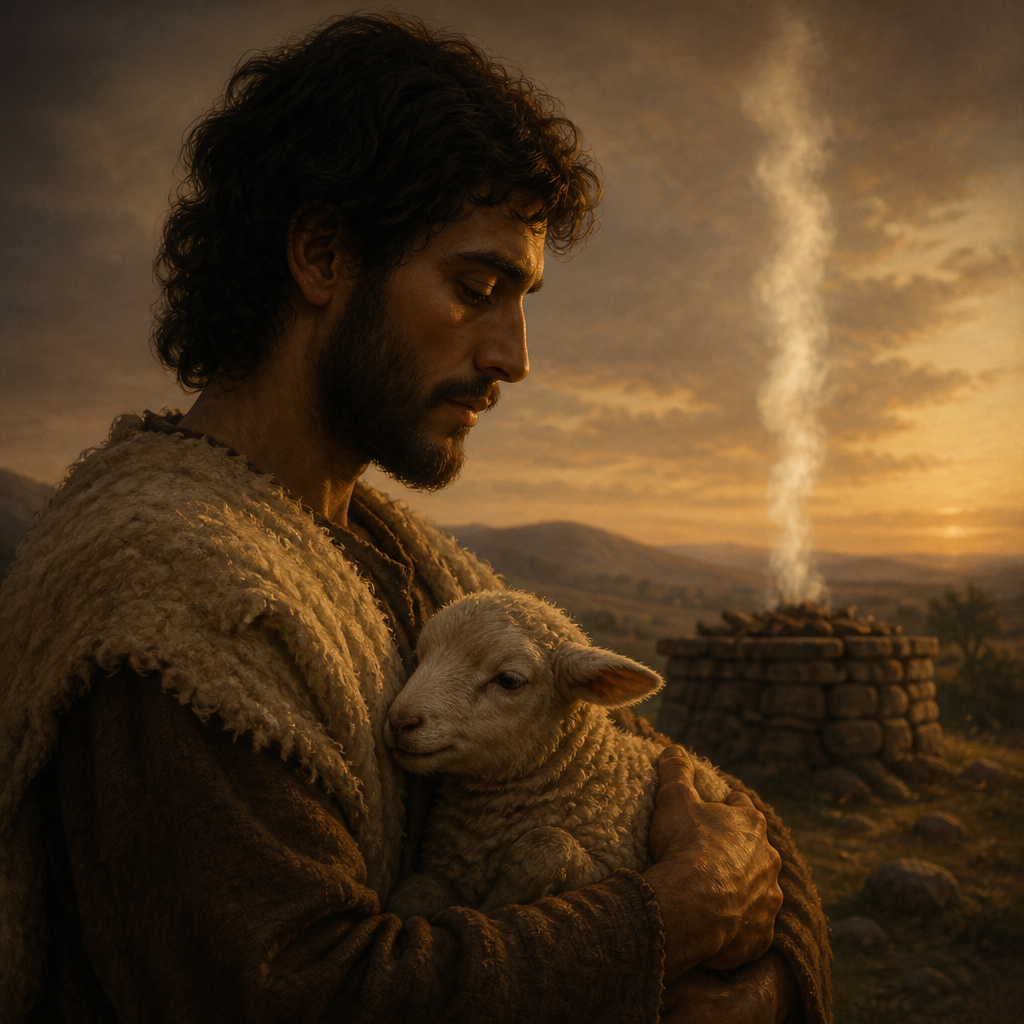
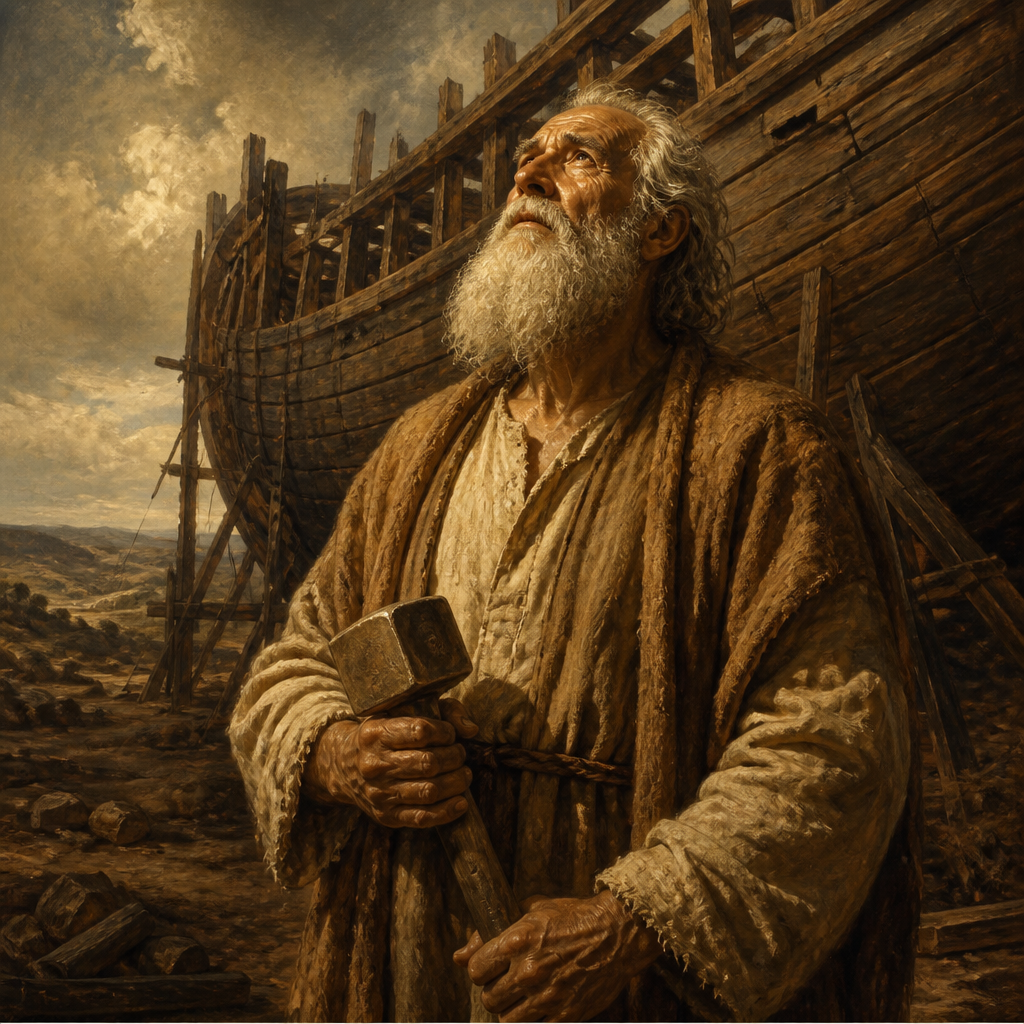
Seth
The third son of Adam and Eve, Seth was born after the death of Abel and became the ancestor of the line of the faithful leading to Noah.
Seth is a fundamental figure in the primordial history of humankind, appearing in the Book of Genesis as the third named son of Adam and Eve. Born in the aftermath of the tragic fratricide of Abel by Cain, Seth is presented as a replacement provided by God to continue the righteous lineage of humanity. His name is traditionally derived from the Hebrew root meaning 'to appoint' or 'to place,' reflecting his mother Eve’s belief that God had appointed him as a substitute for her lost son.
While the biblical narrative provides fewer biographical details for Seth than for his brothers, his role in the genealogical structure of the Old Testament is indispensable. He serves as the bridge between the First Family and the post-diluvian world, as he is the direct ancestor of Noah. Through Seth, the image of God—first bestowed upon Adam—is passed down to subsequent generations, establishing a distinct contrast to the lineage of Cain.
Background and Family
Seth enters the biblical record in Genesis 4 and 5, following the expulsion of Adam and Eve from the Garden of Eden and the subsequent murder of Abel. According to the Masoretic text, Seth was born when Adam was 130 years old. His arrival marks a turning point in the psychological and spiritual state of the first family. Upon his birth, Eve declares, "God has appointed for me another offspring instead of Abel, for Cain killed him" (Genesis 4:25). This statement is significant as it acknowledges both the grief of the past and the providential hope for the future.
Seth was not the only child of Adam and Eve born after the fall, as the text notes they had "other sons and daughters," but Seth is the only one named and tracked through a detailed lineage. He grew up in the shadow of the world's first family tragedy, yet his life is characterized by stability and the restoration of spiritual order. He eventually became a father himself at the age of 105, naming his firstborn Enosh.
Major Life Events
The biblical account of Seth is primarily genealogical, yet it contains one of the most significant environmental shifts in early human history. During the days of Seth and his son Enosh, Genesis 4:26 records that "at that time people began to call upon the name of the Lord." This suggests that Seth’s household was central to the formalization of worship or a renewed communal seeking of God, distinguishing his people from the increasingly secular or violent civilization attributed to the descendants of Cain.
Seth lived a remarkably long life, even by the standards of the antediluvian patriarchs. The Bible records that he lived for a total of 912 years. During these nine centuries, Seth would have witnessed the rapid expansion of the human race and the increasing complexity of human society. Because he lived so long, according to the biblical chronology, he would have been a contemporary of every patriarch in his line down to Lamech (the father of Noah), serving as a living link to the first man, Adam.
Relationship to Other Biblical Figures
Seth’s primary relationship in the narrative is to his father, Adam. Genesis 5:3 makes a specific point of stating that Adam "fathered a son in his own likeness, after his image, and named him Seth." This language mirrors the description of God creating Adam in His own image (Genesis 1:27). By applying this language to Seth, the text affirms that despite the Fall and the introduction of sin, the 'imago Dei' (Image of God) remained intact and was transmitted through Seth's line.
In the broader biblical context, Seth is the foundational ancestor for the people of Israel and, eventually, Jesus Christ. The genealogy in Luke 3 traces the ancestry of Jesus back through David, Abraham, and Noah, ultimately reaching "Seth, the son of Adam, the son of God" (Luke 3:38). This positions Seth as a vital link in the Messianic chain, ensuring that the promise given in the Garden of Eden—that the seed of the woman would crush the serpent—would be fulfilled through a specific, preserved lineage.
Spiritual Significance
Theologically, Seth represents the concept of the "remnant" or the chosen line. While Cain’s descendants are credited with the invention of metallurgy, music, and urbanization (Genesis 4:17-22), they are also associated with the escalation of violence and pride (exemplified by Lamech’s boast). In contrast, Seth’s line is defined by their relationship with God and their longevity. Seth represents the perseverance of faith in a fallen world.
In later Jewish and Christian tradition, Seth was often viewed as a prototype of the sage or the righteous man. His birth represents the idea that God provides a way forward even when human sin seems to have destroyed all hope. For the author of Genesis, Seth is the answer to the chaos of Cain; where Cain brought death and wandering, Seth brought life, continuity, and the invocation of the Divine Name. To be a 'Sethite' in biblical symbolism is to belong to the community that remembers and worships the Creator.
Spiritual Significance
Seth is theologically significant as the carrier of the divine image and the progenitor of the 'godly line.' His birth restored the lineage of faith that was interrupted by Abel's death, ensuring that the covenantal hope of humanity remained alive. By being the direct ancestor of Noah, Seth is the biological link through which all of modern humanity (according to the biblical narrative) is descended, as the line of Cain perished in the Flood.
Furthermore, Seth's inclusion in the genealogy of Jesus in the Gospel of Luke underscores his role in salvation history. He serves as a testimony to God's providence—that for every loss (Abel), God is capable of 'appointing' a new foundation (Seth) to fulfill His ultimate purposes for redemption.
Frequently Asked Questions
What does the name Seth mean?
The name Seth (Sheth) means 'appointed' or 'placed.' It was given to him by Eve because she believed God had appointed him as a replacement for Abel.
How long did Seth live?
According to Genesis 5:8, Seth lived for a total of 912 years, making him one of the longest-lived individuals mentioned in the Bible.
Who were Seth's brothers?
Seth's most famous brothers were Cain and Abel. Genesis also mentions that Adam and Eve had other 'sons and daughters' who are not named in the text.
Is Seth in the genealogy of Jesus?
Yes, Seth is explicitly mentioned in the genealogy of Jesus found in Luke 3:38, which traces Jesus' ancestry all the way back to Adam.
Why is Seth called the 'godly lime'?
He is often associated with the 'godly line' because his descendants, such as Enoch and Noah, maintained a relationship with God, whereas Cain's descendants are often depicted as turning away from Him.