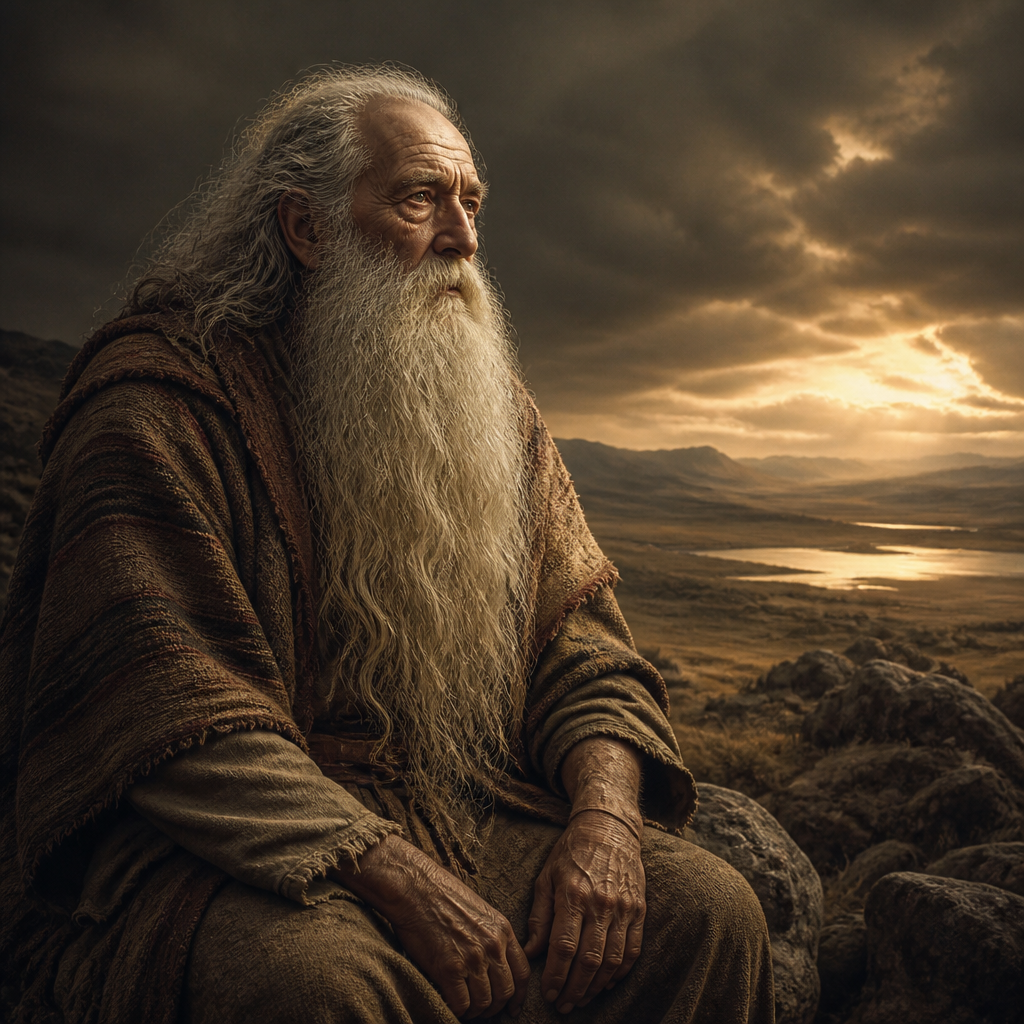
Noah
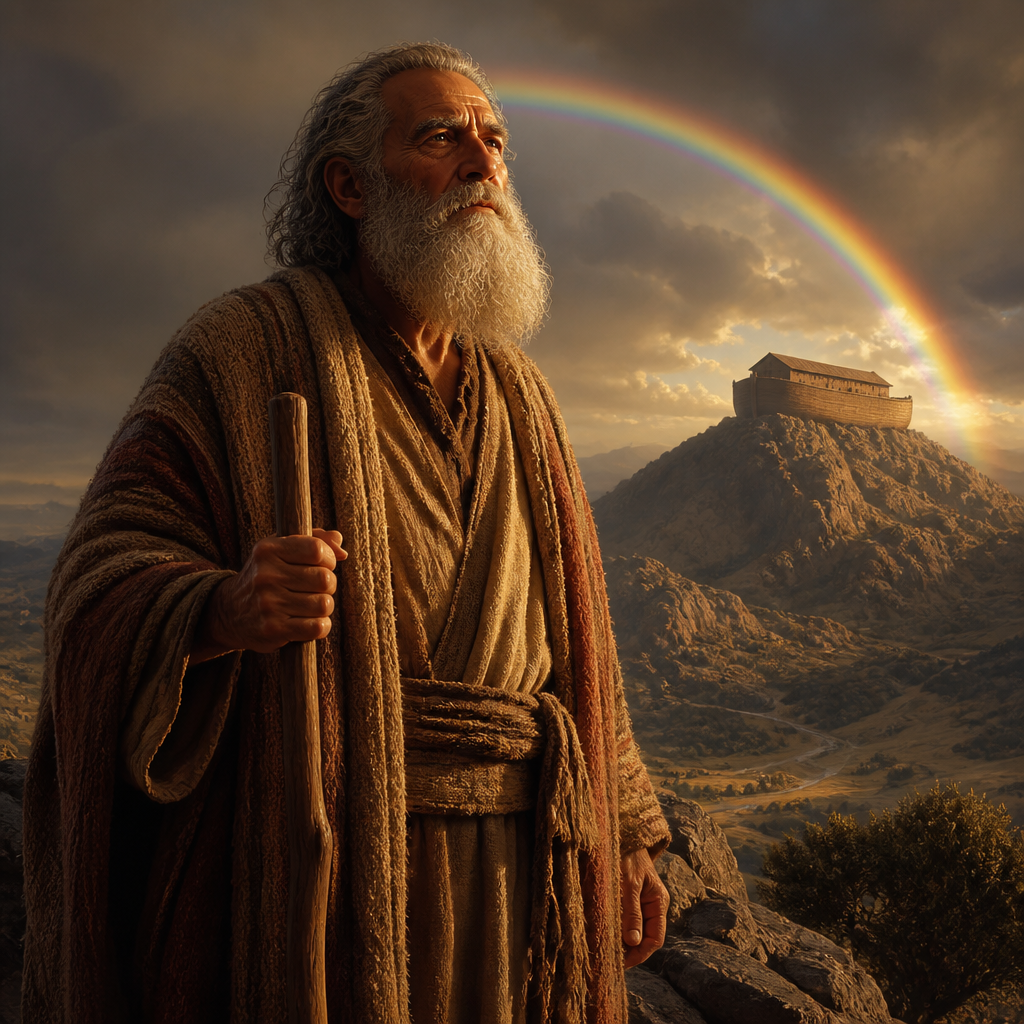
A righteous patriarch who built an ark to preserve humanity and animals from a divine global flood, becoming the second father of the human race.
Noah was a pivotal patriarch in the book of Genesis, recognized as the tenth of the pre-flood (antediluvian) patriarchs in the line of Seth. He is primarily known for his role in the Great Flood narrative, where he was chosen by God to survive a catastrophic judgment against a world filled with corruption and violence. According to the biblical record, Noah was a man of exceptional character, described as righteous and blameless among the people of his time, and one who walked faithfully with God.
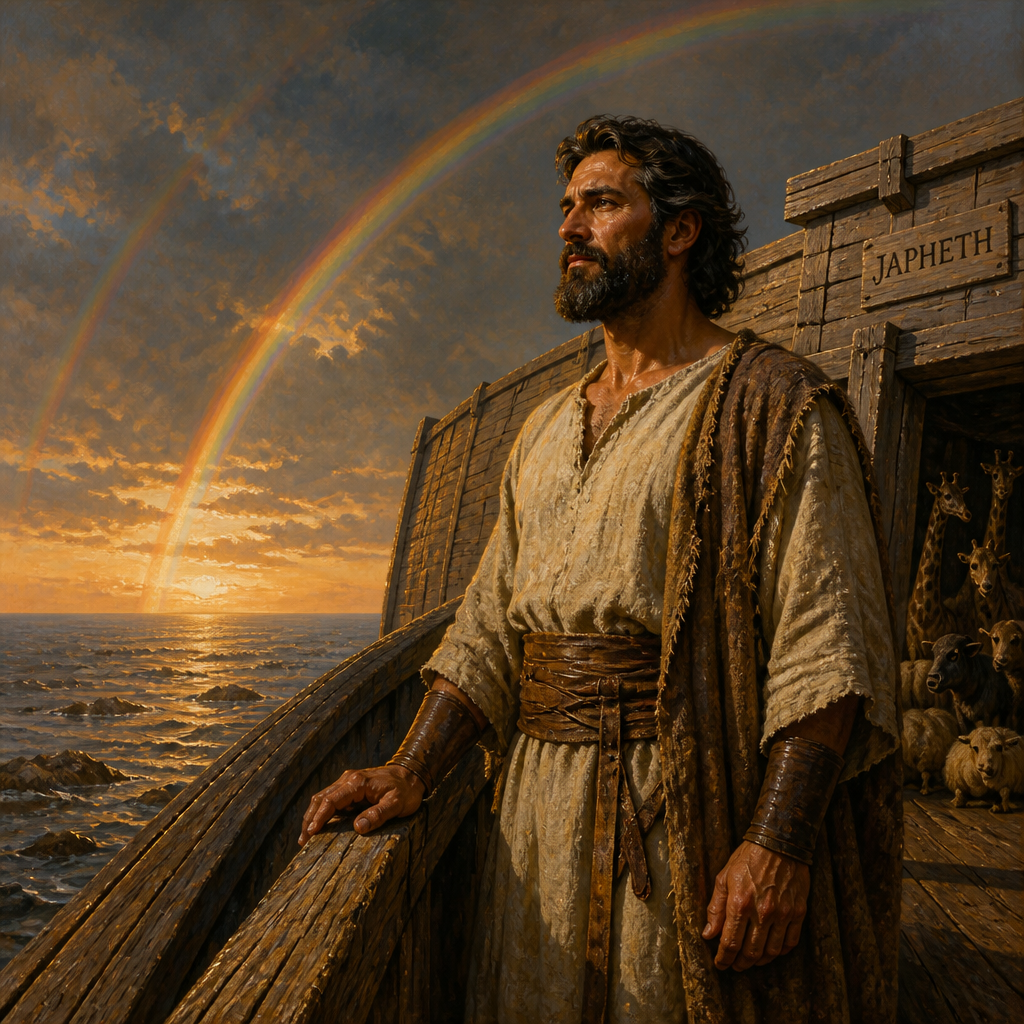
His life marks a major transition in the biblical narrative, shifting from the primordial history of the world to the establishment of a formal covenant between God and all living creatures. Following the flood, Noah became a symbolic father figure for all subsequent nations, as the human population was replenished through his three sons: Shem, Ham, and Japheth. His legacy is one of obedience, preservation, and the enduring promise of divine mercy represented by the rainbow.
Background and Family
Noah was the son of Lamech and a grandson of Methuselah, making him part of the tenth generation of humanity according to the genealogies in Genesis 5. His name is traditionally interpreted to mean 'rest' or 'comfort,' a name given by his father in the hope that Noah would provide relief from the toil of the ground which God had cursed. He lived during a period of extreme moral decline, characterized by pervasive wickedness and violence. Noah was the father of three sons—Shem, Ham, and Japheth—all of whom were born after Noah had reached the age of 500.
Major Life Events
The Command and the Ark
The central event of Noah’s life began when God, grieving the state of His creation, decided to bring a flood to destroy all life on earth. However, because Noah 'found favor in the eyes of the Lord,' God provided him with specific instructions to build a massive wooden vessel known as an ark. This vessel was to be constructed of gopher wood and sealed with pitch, measuring approximately 300 cubits long, 50 cubits wide, and 30 cubits high. Noah was commanded to bring his wife, his sons, and his sons' wives into the ark, along with pairs of every kind of animal to ensure the survival of each species.
The Great Flood
When Noah was 600 years old, the floodwaters came upon the earth, originating from both the 'fountains of the great deep' and the 'windows of the heavens.' For forty days and nights, rain fell, submerging even the highest mountains. Noah and his family remained within the ark for over a year (370 days by most scholarly calculations) as the waters gradually receded. To test the condition of the earth, Noah released a raven and later a dove; it was the second flight of the dove, returning with an olive leaf, that signaled the return of vegetation.
The Covenant and the Rainbow
Upon exiting the ark on the mountains of Ararat, Noah’s first act was to build an altar and offer sacrifices to God. In response, God promised never again to destroy the earth with a flood and established the Noahic Covenant. As a sign of this perpetual promise, God placed a rainbow in the clouds. This covenant also included the 'Noahide Laws,' which gave humanity permission to eat meat (excluding blood) and established the prohibition of murder.
Relationship to Other Biblical Figures
Noah serves as a bridge between the world of Adam and the world of the later patriarchs like Abraham. He is often compared to Adam; just as Adam was told to 'be fruitful and multiply,' Noah received the same command to restart human civilization. In the New Testament, Noah is linked to the ministry of Jesus and the apostles. The author of Hebrews includes him in the 'Hall of Faith,' while the apostle Peter refers to him as a 'herald of righteousness,' suggesting that Noah spent his time during the ark's construction warning his contemporaries of the coming judgment.
Spiritual Significance
In biblical theology, Noah is a prototype of the 'righteous remnant.' He represents the idea that God preserves a faithful few even in times of universal apostasy. The Ark is frequently used in Christian typology as a symbol of the Church or of salvation through Christ, providing safety from judgment. Furthermore, the Flood is interpreted in the New Testament (specifically 1 Peter 3) as a prefiguration of baptism. Noah’s life demonstrates the principle of 'salvation by faith,' as he acted on divine warnings regarding events he could not yet see, illustrating a total reliance on the word of God over physical evidence.
Spiritual Significance
Noah serves as a foundational figure in the legal and covenantal history of the Bible. The Noahic Covenant is unique because it is universal, applying not just to a specific nation or tribe, but to all of humanity and every living creature. It establishes the sanctity of life and the basic moral framework for human society.
Theologically, Noah is the ultimate example of perseverance and obedience. His willingness to build a massive vessel in a pre-rain environment (according to some interpretations) showcases a radical commitment to divine instruction. In the New Testament, Jesus uses the 'days of Noah' as a warning for the end times, emphasizing that Noah’s lifestyle of readiness and righteousness is the standard for those awaiting the final judgment.
Frequently Asked Questions
How long did it take Noah to build the ark?
While the Bible does not give a specific start date, Genesis 6:3 mentions a period of 120 years before the flood, which many scholars interpret as the window of time Noah had to build the ark and preach repentance.
How old was Noah when he died?
Noah lived to be 950 years old, dying 350 years after the Great Flood.
What kind of wood was the ark made of?
The Bible specifies 'gopher wood,' though the exact botanical identity of this wood remains a subject of debate among linguists and historians, with suggestions ranging from cypress to cedar.
Where did the ark land?
According to Genesis 8:4, the ark came to rest on the 'mountains of Ararat,' a region in modern-day eastern Turkey.
How many of each animal did Noah take?
Noah was instructed to take two of every kind of animal, but for 'clean' animals and birds, he was told to take seven pairs (or seven individuals).