Japheth
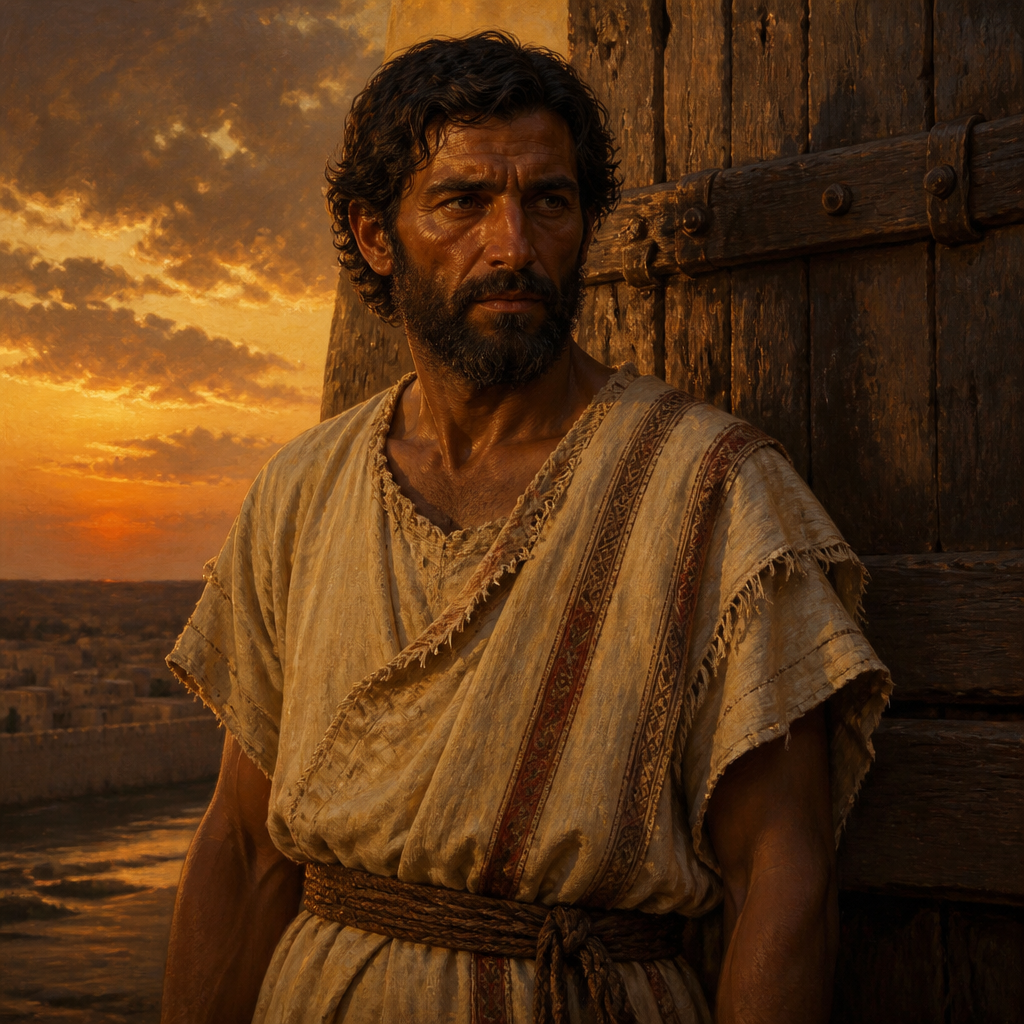
Japheth was one of the three sons of Noah and a survivor of the Great Flood, traditionally viewed as the progenitor of the Indo-European and Aegean peoples.
Japheth is a pivotal figure in the primeval history of the Bible, appearing in the Book of Genesis as one of the three sons of Noah. Along with his father, mother, brothers, and their respective wives, Japheth was one of the eight individuals who survived the global deluge by taking refuge within the Ark. This event marks him as a biological link between the antediluvian world and the post-flood reconstruction of human civilization.
While he is frequently listed third in the sequence of Noah’s sons (Shem, Ham, and Japheth), biblical scholars often debate his birth order, as certain genealogical notes suggest he may have been the eldest or second-born. Regardless of his specific age ranking, Japheth occupies a position of honor within the Noachic narrative, particularly in his respectful conduct toward his father following the flood. This behavior resulted in a significant blessing that scholars suggest defined the geopolitical and spiritual trajectory of his descendants.
In the broader context of the Table of Nations, Japheth is identified as the ancestor of the 'Isles of the Gentiles.' His lineage includes groups historically associated with the regions surrounding the Black and Caspian Seas, as well as the Mediterranean coastlines. Consequently, he is a foundational figure in the biblical explanation of the dispersion of humanity and the diversity of languages and cultures that emerged in the wake of the Tower of Babel.
Background and Family
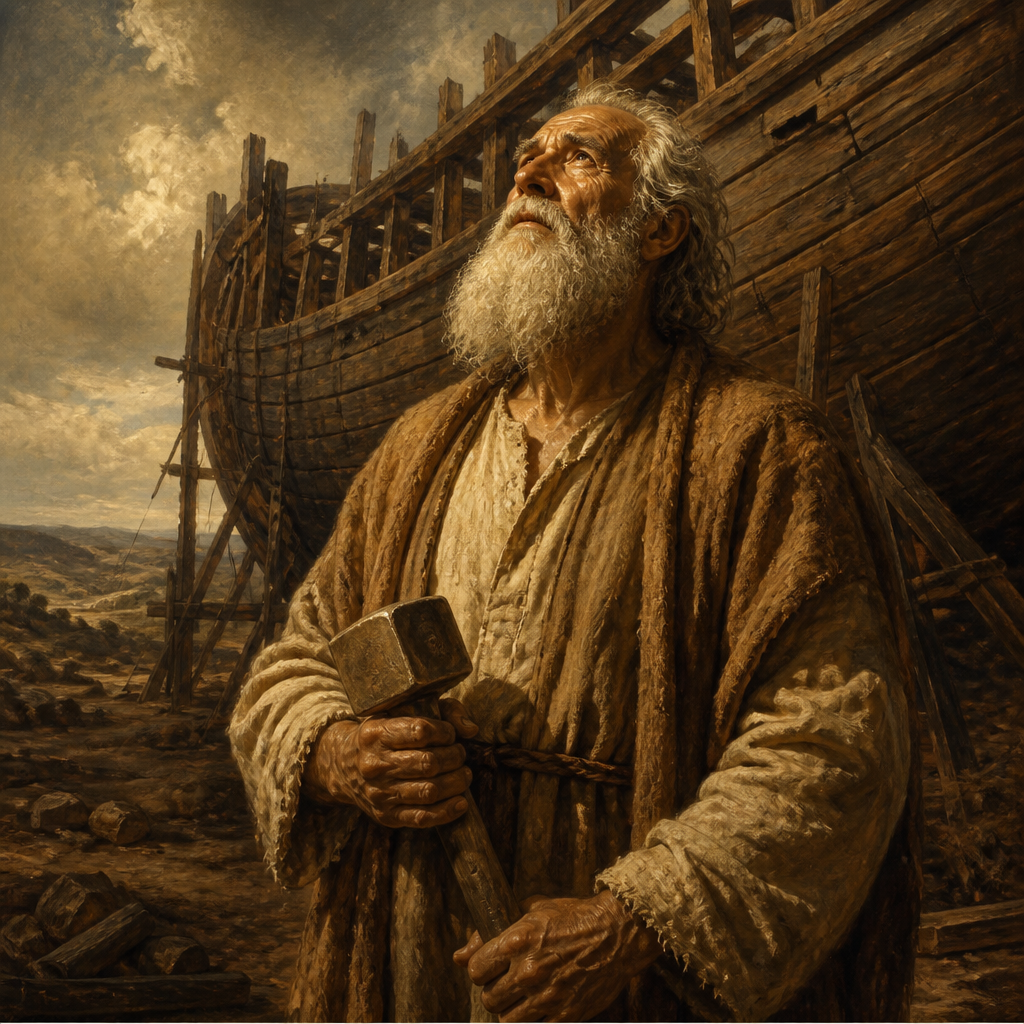
Japheth is first introduced in Genesis 5:32, where the text states that Noah was five hundred years old when he became the father of Shem, Ham, and Japheth. His family occupied a unique position in the biblical narrative, existing as the sole righteous household in a generation described as being filled with violence and corruption. Japheth’s domestic life was defined by the impending judgment of God; he and his brothers were instrumental in assisting their father in the massive undertaking of constructing the Ark according to divine specifications.
The biblical record does not name Japheth's mother or his wife, though his wife's presence on the Ark is explicitly mentioned in Genesis 7:13. Following the flood, Japheth became the father of seven sons: Gomer, Magog, Madai, Javan, Tubal, Meshech, and Tiras. These descendants formed the basis of the 'Japhetic' nations, which the text associates with the maritime and northern territories of the known world.
Major Life Events
The central event of Japheth’s life was the survival of the Great Flood. As one of the survivors, he witnessed the total destruction of the old world and the physical renewal of the earth. Upon exiting the Ark at Mount Ararat, Japheth participated in the first post-flood sacrifice and received the divine covenant and command to be fruitful and multiply.
A defining moral moment for Japheth occurred shortly after the flood involving his father, Noah. When Ham discovered their father in a state of nakedness and indiscretion caused by wine, Japheth and his brother Shem acted with profound modesty. Taking a garment, they laid it upon their shoulders and walked backward into their father’s tent to cover him, purposefully averting their eyes to preserve his dignity. This act of filial piety stands in stark contrast to Ham’s behavior and prompted a prophetic declaration from Noah upon his awakening.
Relationship to Other Biblical Figures
Japheth’s relationship with his father, Noah, is characterized by obedience and reverence. While the biblical text focuses heavily on Noah as the protagonist of the flood narrative, the sons represent the future of humanity. The relationship between Japheth and his brother Shem is also noteworthy; they are presented as allies in the preservation of their family's honor.
In the genealogical records of Genesis 10 and 1 Chronicles 1, Japheth is linked to numerous tribal groups. His sons Gomer and Magog, for instance, appear later in prophetic literature (specifically Ezekiel) as powerful northern entities. The relationship between Japheth’s lineage and the lineage of Shem is particularly significant in the light of the Noachic blessing, which envisioned a future where the descendants of Japheth would dwell in the tents of Shem, suggesting a harmonious or integrated spiritual destiny between the two lines.
Spiritual Significance
The spiritual significance of Japheth centers on the expansion and inclusion of the Gentile nations. Noah’s blessing in Genesis 9:27 states, 'May God enlarge Japheth, and let him dwell in the tents of Shem.' The Hebrew name Japheth is related to a root meaning 'to enlarge' or 'to be fair.' Theologians have interpreted this enlargement as both a physical expansion of territory and a symbolic inclusion in the spiritual blessings given to the Semitic peoples.
Throughout church history, this passage has been viewed as a prophecy regarding the conversion of the Gentile world to the God of Israel. As the descendants of Japheth moved into the European and Mediterranean regions, they remained outside the direct lineage of the Abrahamic covenant for centuries. However, the 'dwelling in the tents of Shem' is often seen as being fulfilled through the New Testament church, where Gentiles (Japhetic) are brought into the spiritual heritage of the Israelites (Shemitic). Thus, Japheth stands as a representative figure for the vast portion of humanity that would eventually be reconciled to God through the Messiah.
Spiritual Significance
Japheth's theological importance lies in his role as the father of the Gentile nations and his participation in the preservation of the human race. By honoring his father, he secured a blessing of 'enlargement,' which has been interpreted as a precursor to the global spread of the Gospel. His survival of the flood makes him a foundational figure in the biblical doctrine of divine judgment and mercy, serving as a reminder of the renewal of the covenant following the destruction of the world.
Furthermore, the Table of Nations provides a blueprint for the biblical understanding of ethnicity and geography, with Japheth representing the northern and western branches of humanity. This categorization reinforces the biblical theme that all people groups, regardless of their eventual cultural or linguistic divergence, share a common ancestry and a common accountability to the Creator.
Frequently Asked Questions
Was Japheth the oldest or youngest son of Noah?
The biblical text is slightly ambiguous. While Genesis 5:32 lists him third, Genesis 10:21 refers to Shem as the brother of 'Japheth the elder' in many translations, suggesting Japheth may have been the firstborn.
What regions did Japheth's descendants inhabit?
His descendants, known as the Japhethites, traditionally settled in the regions of Europe, Asia Minor, and the Caucasus, often referred to in the Bible as the 'coastlands' or 'isles of the Gentiles'.
What is the meaning of the name Japheth?
The name is generally thought to mean 'enlarged,' 'opened,' or 'fair,' reflecting Noah's prophetic blessing that God would enlarge his territory and influence.
How did Japheth and Shem show respect to Noah?
They walked backward with a garment to cover their father's nakedness without looking at him, an act of honor that protected Noah from further shame.
What does it mean to 'dwell in the tents of Shem'?
Theological scholars often interpret this as a prophecy that Japheth's descendants would eventually share in the religious and spiritual heritage of Shem's descendants (the Israelites).