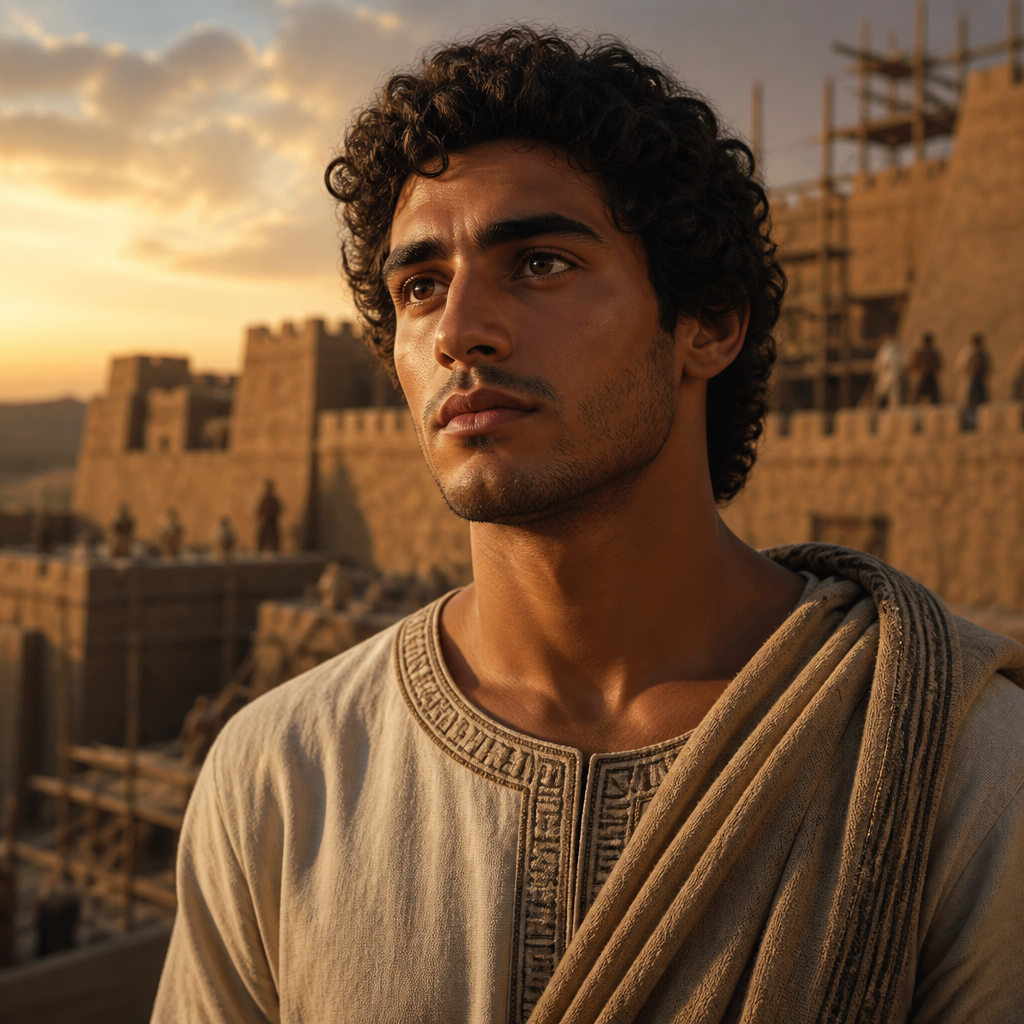
Methuselah
Methuselah was a biblical patriarch of the line of Seth, famously known for being the longest-lived human being in the Bible, reaching the age of 969 years.
Methuselah is a primary figure within the antediluvian (pre-Flood) genealogy of the Old Testament. As the eighth generation after Adam, he is a central link in the genealogical chain that connects the first humans to the survivors of the Great Flood. He is most prominent for his staggering lifespan, recorded in the Book of Genesis as 969 years, a figure that has become synonymous with longevity in Western culture.
His place in history is marked by the unique spiritual heritage he received from his father, Enoch, and the legacy he passed to his grandson, Noah. While the biblical text provides few details regarding his specific actions or character, his chronological placement serves as a witness to the transition between the primordial world and the post-diluvian restoration. Scholarly interest in Methuselah often focuses on the implications of his death year and the symbolic weight of his name.
Background and Family
Methuselah appears in the Hebrew Bible in the fifth chapter of Genesis as part of the "Book of the Generations of Adam." He was the son of Enoch, the man who famously "walked with God" and was taken by God so that he did not see death. According to the Masoretic Text, Methuselah was born when Enoch was sixty-five years old. The line he belongs to—the line of Seth—is contrasted in biblical tradition with the line of Cain; whereas Cain’s descendants are associated with the development of worldly civilization and violence, Seth’s descendants are generally presented as those who preserved the knowledge and worship of Yahweh.
Methuselah’s family tree is a bridge between the creation of man and the new beginning following the Flood. He was the father of Lamech (born when Methuselah was 187) and the grandfather of Noah. This lineage is crucial to the biblical narrative because it represents the surviving remnant of humanity. The names within this line often carry significant meaning; scholars have debated the meaning of 'Methuselah,' with interpretations ranging from 'Man of the Dart' or 'Man of the Javelin' to 'His death shall bring,' the latter of which suggests a prophetic omen regarding the Flood.
Major Life Events
The most significant event in the life of Methuselah, as recorded in scripture, is his exceptional longevity. He lived for 969 years, surpassing his grandfather Jared (who lived 962 years) and his father Enoch (who lived 365 years before being translated). Within the context of Genesis 5, the repetitive structure of 'and he died' marks the inevitability of human mortality following the fall in Eden, even for those gifted with nearly a millennium of life.
Chronologically, Methuselah’s life spans almost the entire period of the antediluvian world. A careful study of the dates provided in the Masoretic Text reveals a striking detail: Methuselah died in the very year that the Great Flood began. This has led to two primary interpretations. The first is that he perished in the Flood as part of the judgment on mankind. The second, more common in Jewish and Christian tradition, is that he died just days or weeks before the Flood, and that God delayed the judgment until the mourning period for this righteous patriarch was complete.
Relationship to Other Biblical Figures
Methuselah’s relationship with his father, Enoch, is particularly noteworthy. Genesis specifies that Enoch walked with God after he fathered Methuselah, suggesting that the birth of his son may have been a catalyst for his spiritual journey or that he received a revelation at that time. As a result, Methuselah was raised by a man of unsurpassed piety who was removed from the earth without dying.
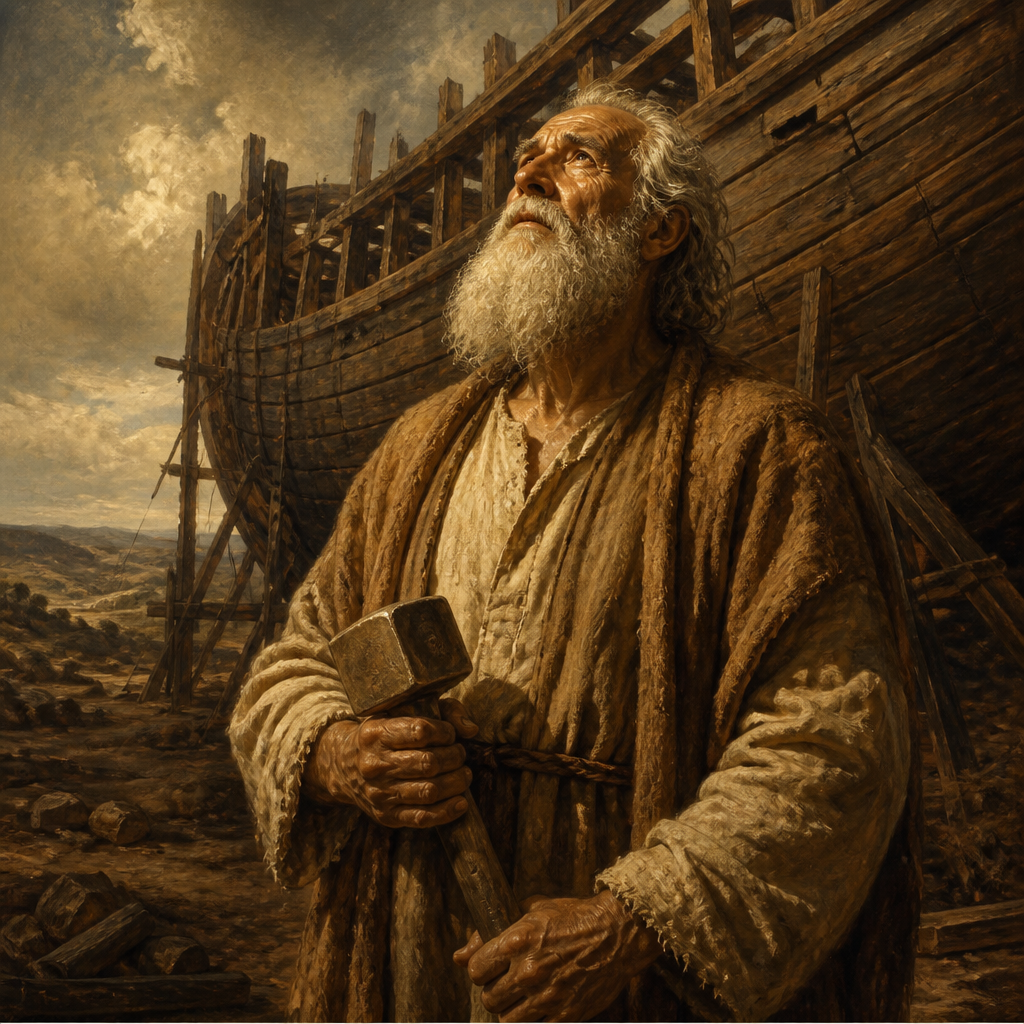
Following in the generational line, Methuselah became the grandfather of Noah, the central figure of the Flood narrative. Methuselah would have been alive during the entire time Noah was building the ark. This suggests that for over a century, the two longest-lived patriarchs of that era likely co-existed, potentially sharing the traditions and promises given to Adam and Seth. Methuselah serves as the literal link between the world that was and the world that followed, as he was a contemporary of Adam for 243 years and a contemporary of Noah for 600 years.
Spiritual Significance
Theologically, Methuselah represents the peak of human biological potential and the grace of God's patience. His extreme age is often interpreted by theologians as a sign of God’s long-suffering nature. If the interpretation of his name ('His death shall bring') is correct, then every year added to Methuselah’s life was an extension of the window for humanity to repent before the judgment of the Flood arrived.
In the New Testament, Methuselah appears in the genealogy of Jesus Christ in Luke 3:37. This confirms his status not just as a figure of ancient lore, but as a historical ancestor of the Messiah. His inclusion in this list emphasizes the continuity of God’s plan of redemption through history. Ultimately, Methuselah stands as a testament to the reality that despite great age, the decree of Genesis 3:19—'to dust you shall return'—remained in effect until the coming of the one who would conquer death.
Spiritual Significance
Methuselah's primary theological significance lies in his role as a witness to the transition between the world of the garden and the world of the flood. His extreme longevity serves as a marker of the 'golden age' of human vitality that steadily declined after the Fall and dropped sharply after the Flood. He represents the final vestige of the original created order's physical resilience.
In a broader sense, Methuselah exemplifies the concept of Divine Patience. By allowing the man whose death would signal the end of an age to live longer than any other human being, God is depicted as being 'slow to anger and abounding in steadfast love,' providing the maximal opportunity for the antediluvian world to turn from its violence before the waters of judgment were released.
Frequently Asked Questions
How long did Methuselah live?
According to Genesis 5:27, Methuselah lived for a total of 969 years.
Did Methuselah die in the Flood?
The Bible does not explicitly state how he died. However, chronological calculations show he died in the same year the Flood began. Jewish tradition suggests he died seven days before the Flood began, and God delayed the rains to allow for his mourning period.
Who was Methuselah's father?
His father was Enoch, the prophet who was 'taken by God' and did not experience a natural death.
Is Methuselah mentioned in the New Testament?
Yes, he is mentioned in the Gospel of Luke (3:37) as part of the genealogy of Jesus Christ.
What does the name 'Methuselah' mean?
The name is often translated from Hebrew as 'Man of the Dart' or 'Man of the Javelin.' Some scholars also interpret it as 'When he dies, it shall be sent,' referring to the Flood.