Enoch
The firstborn son of Cain and the namesake of the first city recorded in the Bible, signifying the beginning of autonomous human civilization.
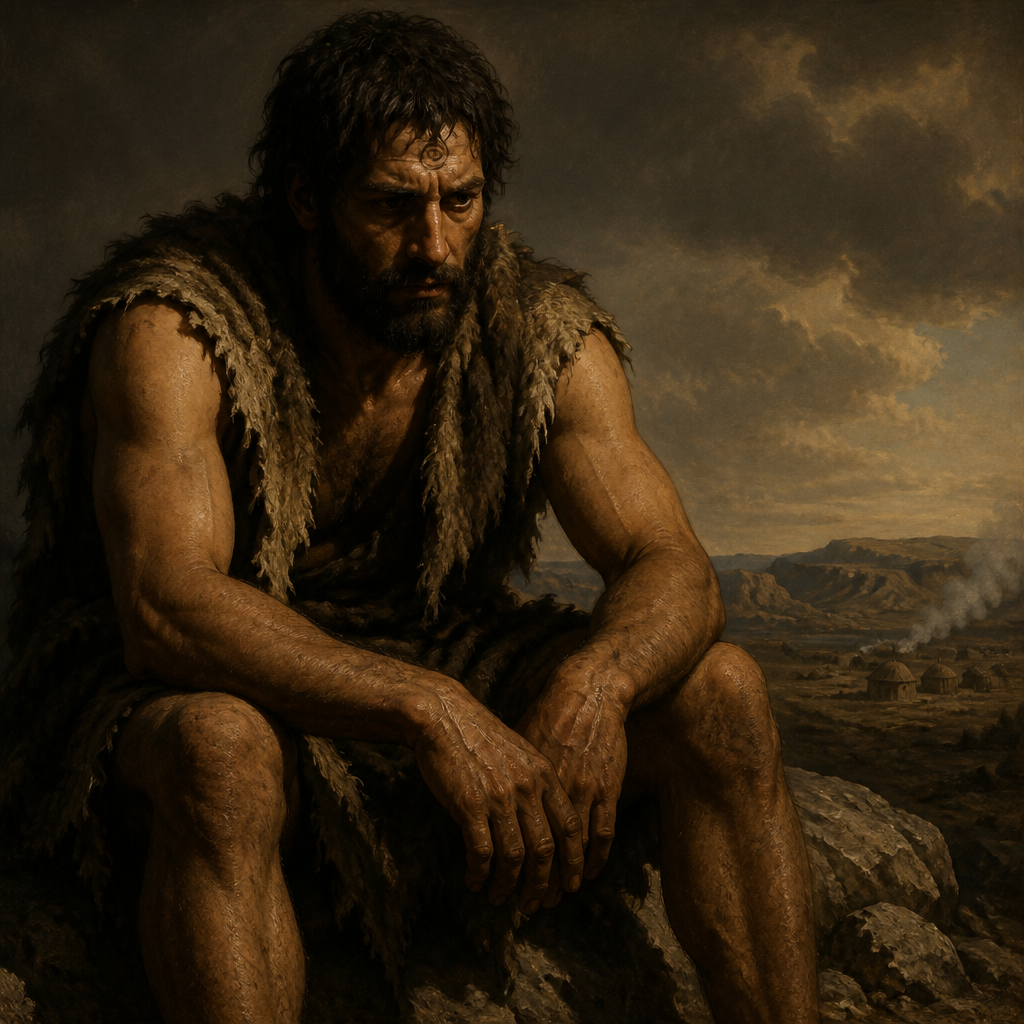
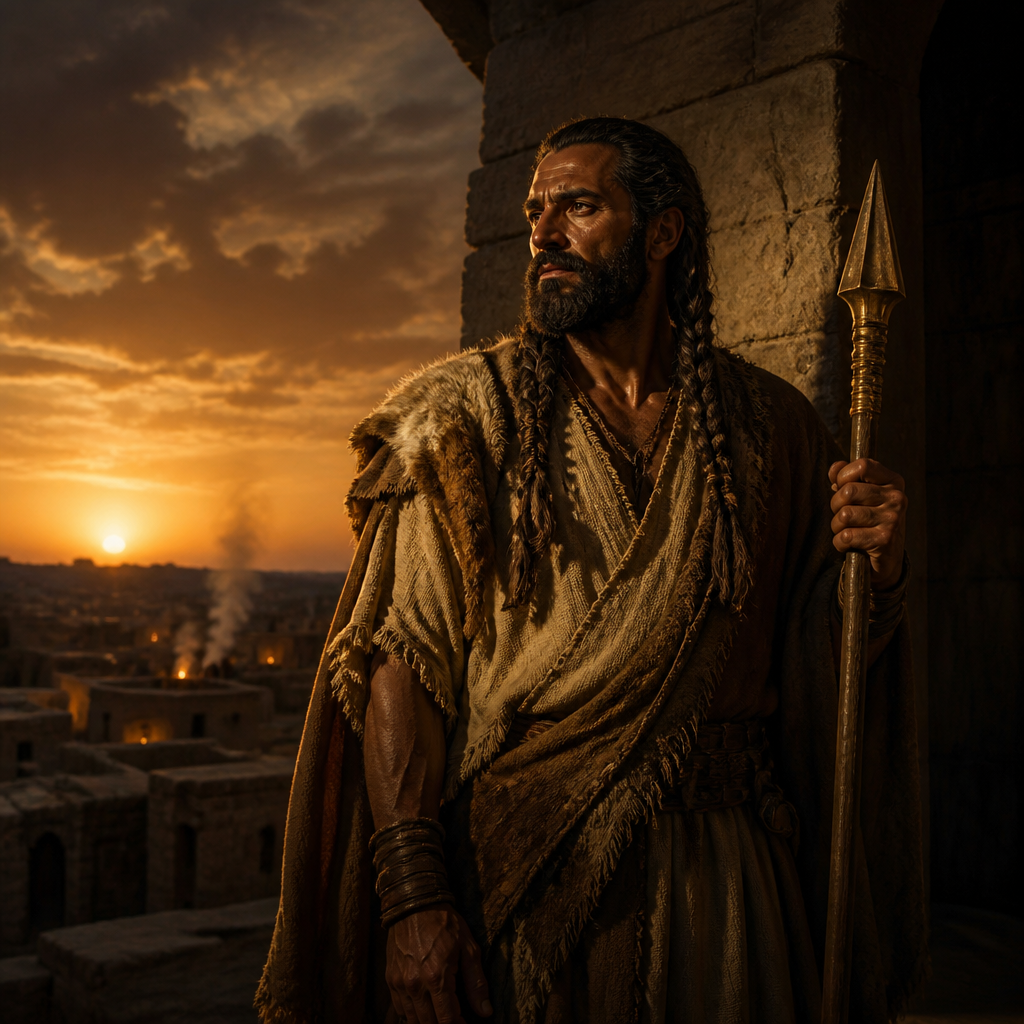
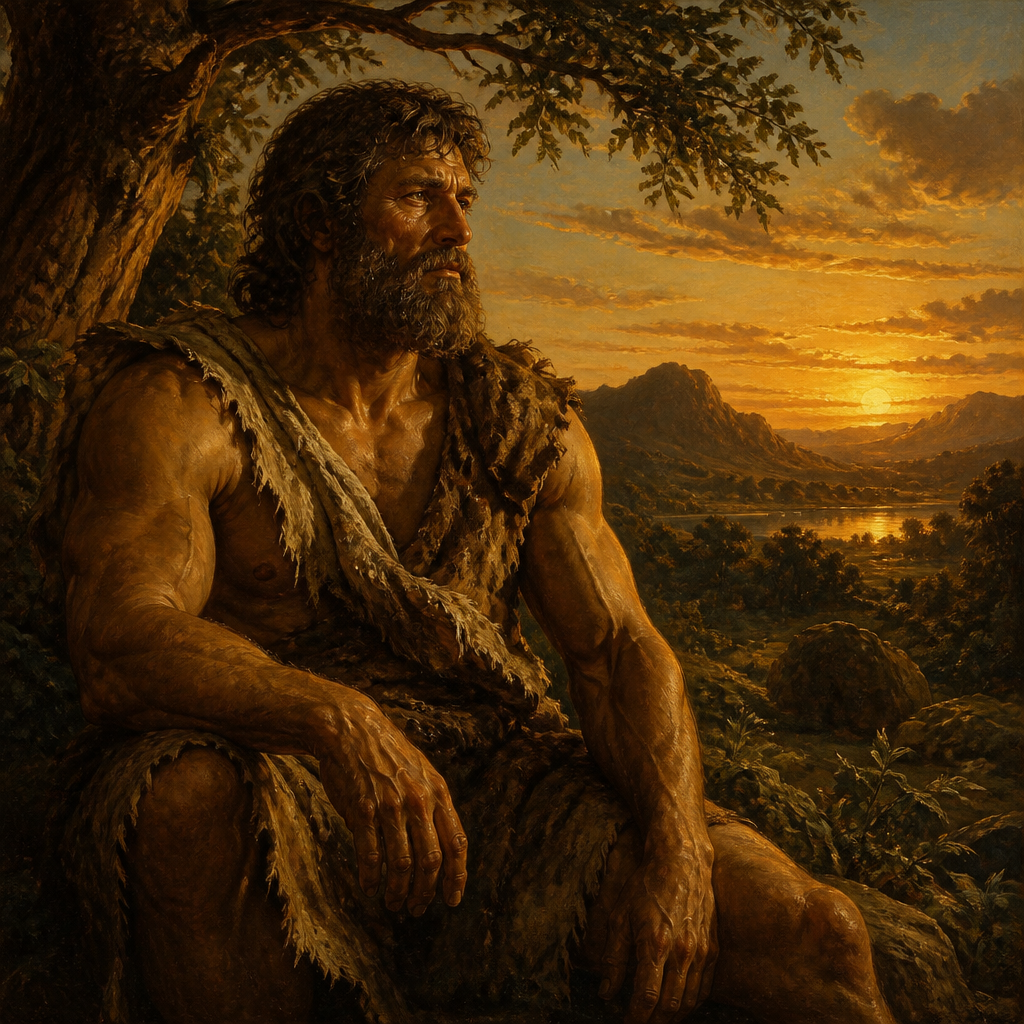
Enoch was the eldest son of Cain, the first person born to the lineage of Adam's first son after his exile to the land of Nod. His birth marks a significant transition in the Genesis narrative from nomadic wandering to settled urban life. According to the biblical record, his father Cain built a city and named it after Enoch, establishing him as a central figure in the dawn of human architectural and social development.
While his life is relatively brief in terms of textual space, his inclusion in the genealogy of Cain serves as a foundational link in the development of prehistoric society. He represents the first generation of humans born outside of the immediate Edenic context, emerging within a family line defined by both technical progress and moral separation from the divine presence.
Background and Family
The background of Enoch is intrinsically tied to the aftermath of the first recorded homicide in human history. Following the murder of Abel, Cain was cursed to be a 'fugitive and a wanderer on the earth' (Genesis 4:12). However, after settling in the land of Nod, east of Eden, Cain 'knew his wife,' and she conceived and bore Enoch. This transition suggests a stabilization of Cain’s lineage despite the divine curse. Enoch occupies the position of Cain's heir, the first to be born into the specific cultural and geographical reality of the post-exilic world. The name Enoch (Hanoch) is traditionally associated with the Hebrew root 'ḥ-n-k,' meaning to 'dedicate,' 'train,' or 'initiate,' which biblically underscores his role as the initiator of a new phase of human existence.
Major Life Events
The most significant event associated with Enoch is not an action he performed, but an action taken by his father on his behalf: the construction of the first city. Genesis 4:17 states, 'And he [Cain] built a city, and called the name of the city after the name of his son, Enoch.'
This act is historically and theologically profound within the context of the Primeval History. Prior to this, humanity is depicted in agrarian or pastoral terms. The naming of the city 'Enoch' signifies a desire for permanence and a rejection of the wandering status God had imposed upon Cain. By naming the city after his son, Cain attempts to establish a legacy and a safe haven, effectively making the young Enoch the symbol of human self-sufficiency and the architect of a new social order independent of the divine garden. This city-building represents the birth of secular civilization, where protection and provision are sought through walls and infrastructure rather than divine providence.
Relationship to Other Biblical Figures
Enoch serves as the bridge between Cain and the subsequent generations of 'Cainites' who would define the pre-flood world. He was the father of Irad, who in turn was the ancestor of Mehujael, Methushael, and Lamech. Within this genealogical structure, Enoch stands at the head of a line characterized by rapid cultural and technological advancement. While the text does not record his interactions with his siblings or cousins from the line of Seth, his position defines the contrast between the two genealogical branches of humanity.
His relationship with his father, Cain, is particularly noteworthy. In ancient Near Eastern culture, naming a city after a son was a way to confer honor and ensure the son's immortality through the built environment. Thus, Enoch is inextricably linked to his father’s defiance and his father's attempts to rebuild a life after leaving the presence of Yahweh.
Spiritual Significance
In biblical studies, Enoch (son of Cain) represents the 'secularization' of the human spirit. The city named after him is often viewed by theologians as the beginning of the 'City of Man,' a concept later popularized by Augustine of Hippo as the earthly city which seeks its own glory in contrast to the City of God.
His spiritual significance lies in the irony of his name. While he is 'dedicated,' he is dedicated to a world built by the hands of a man who fled from God. The transition from the 'wanderer' to the 'city-dweller' through Enoch demonstrates the human tendency to use culture and technology as a buffer against spiritual insecurity. Therefore, while Enoch himself is not recorded as having committed a sin, his identity is consumed by the structure of the city that bears his name—a monument to human achievement and the first step toward the hubris eventually seen at the Tower of Babel. He stands as the prototype for the urbanized man, whose identity is rooted in his location and his lineage rather than his relationship with the Creator.
Spiritual Significance
Theologically, Enoch represents the birth of human institutionalism and the urban impulse. His name is permanently attached to the first city, making him a symbol of the shift from reliance on God to reliance on human-made defenses and social structures. Historically, he is the first link in the genealogy that leads to the development of metallurgy, music, and livestock management, showing that even within a fallen lineage, human potential for creativity remains present, albeit redirected away from the divine.
Frequently Asked Questions
Who was Enoch's mother?
The Bible does not name Enoch's mother; she is simply referred to as Cain's wife in Genesis 4:17.
What is the meaning of the name Enoch?
The name Enoch (Hebrew: Chanoch) means 'Dedicated' or 'Initiated,' possibly referring to the dedication of the city built in his name.
What did Enoch do for a living?
The Bible does not specify his occupation, though he was likely involved in the administration or life of the city his father built and named after him.
Is this the same Enoch who was taken up to heaven?
No. This Enoch is the son of Cain. The Enoch who 'walked with God' was a descendant of Seth, born several generations later.
What city was named after Enoch?
The city was also named Enoch, located in the Land of Nod, east of Eden. It is the first city mentioned in the Bible.