Ezekiel's Wife
Who was Ezekiel's Wife in the Bible?
The wife of the prophet Ezekiel whose sudden death served as a silent, prophetic sign to the exiles of Judah regarding the destruction of Jerusalem.
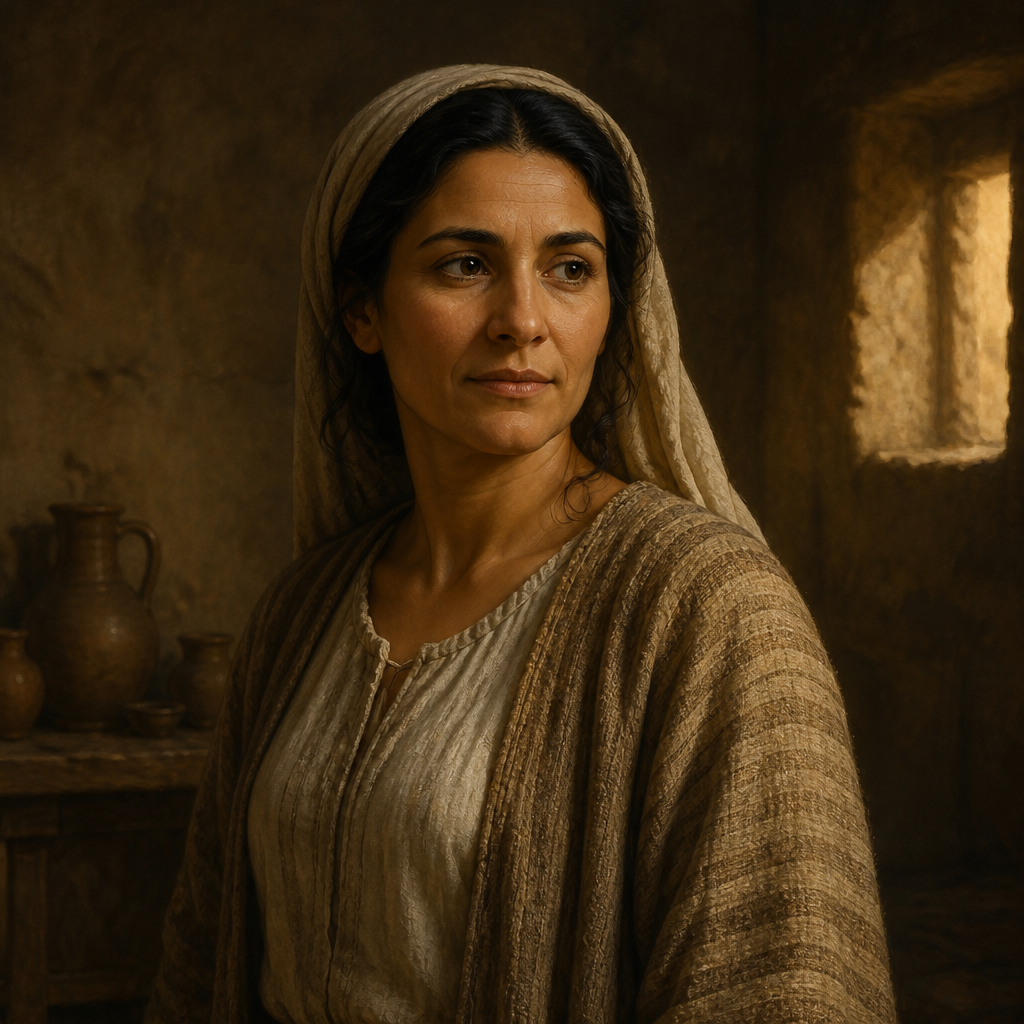
The wife of Ezekiel is an unnamed figure mentioned briefly but pivotally in the book of Ezekiel during the Divided Monarchy and early Exilic period. She is described by God as 'the desire of Ezekiel's eyes,' indicating a relationship of deep affection and value. Her primary role in the biblical narrative is linked to a specific prophetic sign-act commanded by God to her husband.
Her life and sudden death occur in the context of the Babylonian Captivity. As Ezekiel lived among the exiles by the River Kebar, his personal life was conscripted by God to serve as a living metaphor for the impending trauma facing the Jewish people. Her presence in the text is defined entirely by her relationship to the prophet and the timing of her passing.
Background and Family
Ezekiel’s wife lived during the turbulent period of the era of exile and return's end, specifically during the initial waves of the Babylonian exile (c. 597 BC). While her name, lineage, and tribe are not recorded in the Masoretic Text, she is identified as the spouse of Ezekiel, a priest and prophet of the house of Levi. The couple resided in a house at Tel-abib (Ezekiel 3:15, 24:18), living among the Judean captives who had been deported by Nebuchadnezzar II.
Major Life Events
The only recorded event concerning Ezekiel's wife is her sudden death, which was foretold to Ezekiel by God. The Lord informed the prophet that He was about to take away 'the desire of his eyes' with a single blow (Ezekiel 24:16). Unlike other tragic events in the lives of the prophets, Ezekiel was strictly forbidden from performing the customary rites of mourning. He was told not to weep, not to shed tears, and not to observe the traditional rituals such as covering his upper lip or eating the 'bread of mourners.'
"So I spoke to the people in the morning, and in the evening my wife died. And the next morning I did as I had been commanded." (Ezekiel 24:18)
Following her death in the evening, Ezekiel appeared in public the next morning without the outward signs of grief. This anomalous behavior prompted the community to ask what these things meant for them, leading to the delivery of a harrowing message regarding the fall of the Temple in Jerusalem.
Relationship to Other Biblical Figures
Her primary and only recorded relationship is with her husband, Ezekiel. The text emphasizes his personal devotion to her by referring to her as his 'delight' or 'desire.' Her death is the catalyst for the prophet's final message to the exiles before a long period of silence that lasted until the news of Jerusalem’s fall reached the camp.
Spiritual Significance
In the thin record of her life, Ezekiel's wife represents the 'sign of the silent mourner.' Her death served as a physical manifestation of the impending destruction of the Temple in Jerusalem—the 'delight' of the nation's eyes. Just as Ezekiel was forbidden from mourning his wife, the people of Judah would be so overwhelmed by the magnitude of the coming slaughter and the loss of their sanctuary that they would be unable to perform traditional mourning rites, instead 'pining away' in their sins.
Her sudden departure stands as one of the most poignant examples of the personal cost of the prophetic calling. The inclusion of this detail in the biblical record underscores the idea that the prophet’s entire existence, including his most intimate domestic losses, was subrogated to the divine message.
The death of Ezekiel's wife is one of the most tragic 'sign-acts' in the Old Testament. She serves as a living (and then dying) metaphor for the Temple in Jerusalem. Her significance lies in the emotional weight her loss carries, which God uses to illustrate the depth of the tragedy about to befall the nation of Judah. By losing her, Ezekiel becomes a mirror for the collective grief of the exiles.
The theological implication focuses on the 'delight of the eyes.' Just as the prophet cherished his wife, the people cherished the Temple; yet, because of their spiritual infidelity, God allowed both to be taken. The lack of mourning permitted to Ezekiel signaled that the coming judgment would be so absolute and justified that the standard human expressions of grief would be insufficient or inappropriate.
Frequently Asked Questions
What was the name of Ezekiel's wife?
The Bible does not record her name; she is referred to only as the prophet's wife and the 'desire of his eyes.'
How did Ezekiel's wife die?
The text states she died suddenly after God told Ezekiel He was taking her away 'with a blow,' though the specific medical or physical cause is not mentioned.
Why was Ezekiel forbidden from mourning her?
His lack of mourning was a prophetic sign to the exiles that when Jerusalem and the Temple fell, their grief would be too deep for traditional rituals, and they would realize the judgment was from God.
Where did Ezekiel and his wife live?
They lived in a house in the settlement of Tel-abib by the River Kebar in Babylonia during the exile.
Family & Relationships
 EzekielHusbandEzekiel 24:18Stated
 Ezekiel's WifeThis page
Connected Figures
Family
Husband · Ezekiel 24:18
A priest and prophet of the Exilic Period who served as a sign to the house of Israel while in the land of the Chaldeans.
Exile and ReturnFirst: Ezekiel 1:33 versesPriest and Prophet
Categories
Mentions by Book
- Ezekiel2
Scripture References
All 2 indexed verses, in canonical order, from the Berean Standard Bible.
Ezekiel · 2
- Ezekiel 1:3Partial
the word of the LORD came directly to Ezekiel the priest, the son of Buzi, in the land of the Chaldeans by the River Kebar. And there the LORD’s hand was upon him.
Cited as evidence on a family card; added so References, Key Verses and Mentions by Book share one index.
- Ezekiel 24:18
So I spoke to the people in the morning, and in the evening my wife died. And the next morning I did as I had been commanded.