Herod Antipas
Who was Herod Antipas in the Bible?
The regional ruler of Galilee and Perea who beheaded John the Baptist and participated in the trial of Jesus Christ.
This is one of 3 people named Herod in the Bible. See all 3 →
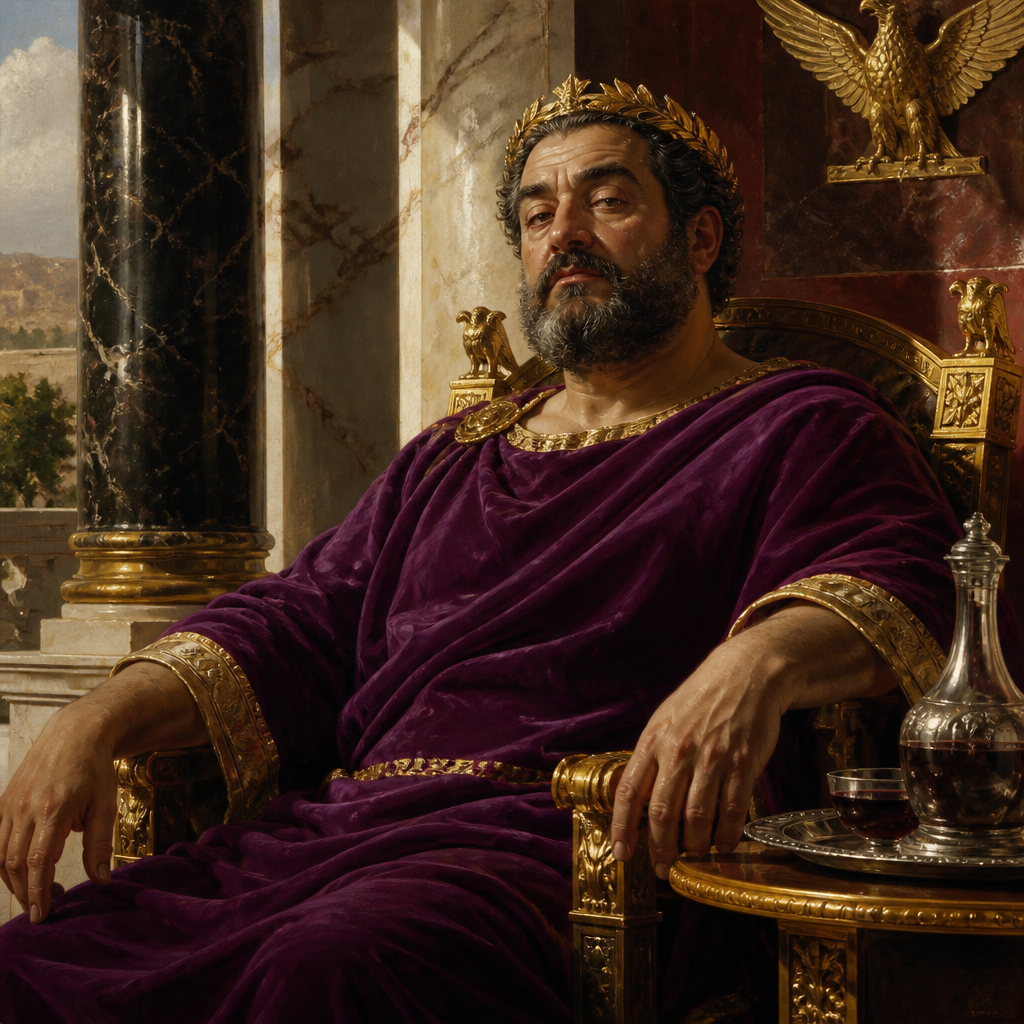
Herod the Tetrarch, also known in historical contexts as Herod Antipas, was a first-century ruler who governed Galilee and Perea during the ministry of Jesus. A son of the previous King Herod, he functioned as a client ruler under the Roman Empire. His presence in the New Testament is marked by significant moral conflict, specifically his illegal marriage to his brother’s wife and his subsequent execution of the prophet John the Baptist.
Throughout the Gospels, Herod is portrayed as a figure of curiosity and political calculation. While he expressed a desire to see Jesus, his motives were largely superficial, driven by a wish to witness miracles rather than a search for spiritual truth. He is one of the few individuals to interact directly with Jesus during the passion narrative, yet he is noted for his failure to find any legal guilt in the Christ, despite mocking Him.
Background and Family
Herod the Tetrarch was a member of the Herodian dynasty, a family of Idumaean descent that rose to power under Roman patronage. The biblical record identifies him as a child of Herod and a sibling to Archelaus and two brothers named Philip (Matthew 14:3; Luke 3:1). Upon the death of his father, the kingdom was divided, and Herod was granted the tetrarchy of Galilee and Perea, a position he held during the fifteenth year of Tiberius Caesar’s reign (Luke 3:1).
The most prominent and controversial aspect of Herod’s personal life was his relationship with Herodias. According to Matthew 14:3 and Mark 6:17, Herod took Herodias, the wife of his brother Philip, to be his own partner. This union was a direct violation of Jewish law, leading to public condemnation by John the Baptist. The biblical text highlights the complexity of his household, mentioning figures like Chuza, his household manager, whose wife Joanna became a follower of Jesus (Luke 8:3), and Manaen, a teacher in the early church who had been brought up with Herod (Acts 13:1).
Major Life Events
The Execution of John the Baptist
Herod’s interaction with John the Baptist is characterized by a strange mixture of respect and resentment. Mark 6:20 records that Herod feared John, knowing him to be a "righteous and holy man," and even protected him for a time, listening to his words with great perplexity and interest. However, because John rebuked him for his marriage to Herodias, Herod eventually imprisoned the prophet.
The situation reached a climax during Herod’s birthday banquet, attended by nobles, military commanders, and the leading men of Galilee. When the daughter of Herodias danced for the guests, Herod was so pleased that he impulsively promised her anything she requested, up to half his kingdom. Prompted by her mother, she asked for the head of John the Baptist on a platter. Though Herod was deeply distressed by the request, his concern for his reputation among his guests led him to order the execution (Matthew 14:6–11; Mark 6:21–28).
The Trial of Jesus
Herod’s jurisdiction over Galilee meant that when Jesus was arrested in Jerusalem, the Roman governor Pontius Pilate sent Jesus to Herod for questioning. Luke 23:8 notes that Herod was "greatly pleased" to see Jesus, having heard reports of His deeds for a long time. He hoped to see Jesus perform a miracle, but Jesus refused to answer any of Herod’s questions.
Frustrated by Jesus' silence, Herod and his soldiers resorted to ridicule. They mocked Him, dressed Him in a fine robe, and sent Him back to Pilate. Interestingly, the Bible notes that this interaction led to a reconciliation between Herod and Pilate, who had previously been enemies (Luke 23:12). Ultimately, Herod concurred with Pilate that Jesus had done nothing deserving of death (Luke 23:15).
Relationship to Other Biblical Figures
Herod’s relationship with Jesus was one of distant curiosity turned to contempt. At one point, Pharisees warned Jesus that Herod wanted to kill Him, to which Jesus referred to the ruler as "that fox" (Luke 13:31–32). This epithet suggested Herod’s cunning but ultimately powerless nature in the face of God’s timeline.
His relationship with John the Baptist was defined by a moral stalemate; he was fascinated by John’s holiness but enslaved by his own social standing and the influence of Herodias. In the book of Acts, Herod is remembered by the early church as one who conspired with Pontius Pilate and the Gentiles against Jesus, fulfilling prophetic scripture regarding the opposition of earthly kings to the Lord’s Anointed (Acts 4:27).
Spiritual Significance
Herod the Tetrarch serves as a biblical archetype of the "stony ground" hearer—someone who receives the word with interest but is ultimately choked by the cares of the world and personal sin. Despite having access to the greatest prophet of the Old Covenant (John) and the Messiah of the New Covenant (Jesus), Herod remained unchanged. His fear of man, exemplified by his reluctance to lose face at his banquet, outweighed his fear of God. His life illustrates the danger of seeking miracles and spiritual entertainment while rejecting the moral call to repentance.
Herod the Tetrarch represents the intersection of Roman political authority and the unfolding of the Gospel. His legal opinion that Jesus was innocent of capital crimes (Luke 23:15) serves as a divine testimony to the sinlessness of Christ, even from a corrupt source. Furthermore, his life highlights the continuity between the prophets and Christ, as both John and Jesus were rejected by the same earthly power.
In the early church, Herod’s actions were viewed as the fulfillment of Psalm 2, where the kings of the earth take counsel against the Lord. His upbringing alongside Manaen, who later became a Christian leader (Acts 13:1), serves as a poignant contrast between two men from the same household: one who chose the path of political power and another who chose the way of the Cross.
Josephus makes him a son of Herod the Great, a brother of Archelaus, and the ruler whose territory later passed to Agrippa I; Scripture states only that he was tetrarch, that Philip was his brother, and that he married Herodias (Mark 6:17; Luke 3:1).
Frequently Asked Questions
Why did Herod behead John the Baptist?
Herod beheaded John the Baptist because of a rash promise he made to the daughter of Herodias. After she danced at his birthday banquet, he promised her anything she wanted. Prompted by her mother, she asked for John's head, and Herod complied to save face before his guests.
What did Jesus call Herod?
Jesus referred to Herod as 'that fox' in Luke 13:32 when warned by Pharisees that Herod intended to kill Him. This term likely referred to Herod’s craftiness and his inability to thwart God's purposes.
Why did Pilate send Jesus to Herod?
Pilate sent Jesus to Herod because Jesus was a Galilean, and Galilee fell under Herod’s jurisdiction. Pilate saw it as an opportunity to defer the difficult judgment to Herod and to mend their strained political relationship.
Did Herod believe Jesus was John the Baptist risen from the dead?
Yes, according to Matthew 14:1–2 and Mark 6:14–16, when Herod heard of Jesus' miracles, he was plagued by a guilty conscience and told his servants, 'John, whom I beheaded, has risen from the dead!'
What was Herod's reaction when he finally met Jesus?
Herod was initially glad because he hoped to see Jesus perform a miracle. However, when Jesus refused to speak or perform for him, Herod mocked Him, treated Him with contempt, and sent Him back to Pilate in a mocking robe.
Family & Relationships
 HerodiasWifeMark 6:17Stated
 Herod AntipasThis page
 Philip, Son of Herod the GreatBrotherMark 6:17Stated
 Philip the TetrarchBrotherLuke 3:1Stated
Connected Figures
Family
Wife · Mark 6:17
Herodias was a member of the Herodian dynasty who left her husband Philip to marry his brother Herod Antipas; when John the Baptist condemned the marriage, she prompted her daughter to ask for his head.
The GospelsFirst: Matthew 14:38 versesPrincess of Judea
Brother · Mark 6:17
Philip was a member of the Herodian dynasty and the original husband of Herodias, whose subsequent marriage to Herod Antipas led to the imprisonment of John the Baptist.
Brother · Luke 3:1
Philip the Tetrarch was a son of Herod the Great who ruled the northern territories of Roman Palestine for 37 years with a reputation for justice and moderation.
The GospelsFirst: Luke 3:15 versesTetrarch (Regional Governor)
Categories
Mentions by Book
- Matthew4
- Mark8
- Luke11
- Acts2
Scripture References
All 25 indexed verses, in canonical order, from the Berean Standard Bible.
- Matthew 2:22Partial
But when he learned that Archelaus was reigning in Judea in place of his father Herod, he was afraid to go there. And having been warned in a dream, he withdrew to the district of Galilee,
Cited as evidence on a family card; added so References, Key Verses and Mentions by Book share one index.
- Matthew 14:1
At that time Herod the tetrarch heard the reports about Jesus
- Matthew 14:3
Now Herod had arrested John and bound him and put him in prison on account of Herodias, his brother Philip’s wife,
- Matthew 14:6Partial
On Herod’s birthday, however, the daughter of Herodias danced before them and pleased Herod
- Mark 6:14
Now King Herod heard about this, for Jesus’ name had become well known, and people were saying, “John the Baptist has risen from the dead! That is why miraculous powers are at work in him.”
- Mark 6:16
But when Herod heard this, he said, “John, whom I beheaded, has risen from the dead!”
- Mark 6:17
For Herod himself had ordered that John be arrested and bound and imprisoned, on account of his brother Philip’s wife Herodias, whom Herod had married.
- Mark 6:18
For John had been telling Herod, “It is not lawful for you to have your brother’s wife!”
- Mark 6:20
because Herod feared John and protected him, knowing that he was a righteous and holy man. When he heard John’s words, he was greatly perplexed; yet he listened to him gladly.
- Mark 6:21
On Herod’s birthday, her opportunity arose. Herod held a banquet for his nobles and military commanders and the leading men of Galilee.
- Mark 6:22
When the daughter of Herodias came and danced, she pleased Herod and his guests, and the king said to the girl, “Ask me for whatever you wish, and I will give it to you.”
- Mark 8:15
“Watch out!” He cautioned them. “Beware of the leaven of the Pharisees and of Herod.”
- Luke 3:1
In the fifteenth year of the reign of Tiberius Caesar, while Pontius Pilate was governor of Judea, Herod tetrarch of Galilee, his brother Philip tetrarch of Ituraea and Trachonitis, and Lysanias tetrarch of Abilene,
- Luke 3:19Partial
But when he rebuked Herod the tetrarch regarding his brother’s wife Herodias and all the evils he had done,
- Luke 8:3
Joanna the wife of Herod’s household manager Chuza, Susanna, and many others. These women were ministering to them out of their own means.
- Luke 9:7
When Herod the tetrarch heard about all that was happening, he was perplexed. For some were saying that John had risen from the dead,
- Luke 9:9
“I beheaded John,” Herod said, “but who is this man I hear such things about?” And he kept trying to see Jesus.
- Luke 13:31
At that very hour, some Pharisees came to Jesus and told Him, “Leave this place and get away, because Herod wants to kill You.”
- Luke 23:7Partial
And learning that Jesus was under Herod’s jurisdiction, he sent Him to Herod, who himself was in Jerusalem at that time.
- Luke 23:8
When Herod saw Jesus, he was greatly pleased. He had wanted to see Him for a long time, because he had heard about Him and was hoping to see Him perform a miracle.
- Luke 23:11
And even Herod and his soldiers ridiculed and mocked Him. Dressing Him in a fine robe, they sent Him back to Pilate.
- Luke 23:12
That day Herod and Pilate became friends; before this time they had been enemies.
- Luke 23:15
Neither has Herod, for he sent Him back to us. As you can see, He has done nothing deserving of death.
- Acts 4:27
In fact, this is the very city where Herod and Pontius Pilate conspired with the Gentiles and the people of Israel against Your holy servant Jesus, whom You anointed.
- Acts 13:1
Now in the church at Antioch there were prophets and teachers: Barnabas, Simeon called Niger, Lucius of Cyrene, Manaen (who had been brought up with Herod the tetrarch), and Saul.
Others Named Herod Antipas
Compare all 3 bearers →Herod Agrippa IActs 12:1
A grandson of Herod the Great who executed the apostle James and imprisoned Peter in an effort to suppress the early Christian movement in Judea.
Herod the GreatMatthew 2:1
The Roman-appointed King of Judea who sought to kill the infant Jesus and ordered the Massacre of the Innocents in Bethlehem.