The Daughter of Herodias
Who was the Daughter of Herodias in the Bible?
The daughter of Herodias and Philip who famously danced for Herod Antipas, leading to the execution of John the Baptist.
Salome, historically identified as the daughter of Herodias and Philip (son of Herod the Great), is a figure primarily known for her role in the martyrdom of John the Baptist. Although she is not named explicitly in the New Testament texts—referred to only as the 'daughter of Herodias'—historical records and internal biblical genealogies confirm her identity.
Her presence in the biblical narrative is brief but pivotal, centered entirely on a performance during a birthday banquet for her stepfather, Herod Antipas. This event, driven by her mother's long-standing animosity toward the prophet John, serves as a significant turning point in the Gospel accounts of the life of Jesus, illustrating the political and moral tensions of the era.
Background and Family
Salome was born into the complex and often volatile Herodian dynasty. According to the genealogical details provided in the Gospels and supported by external historical records, she was the daughter of Herodias and Philip, the son of Herod the Great (Matthew 14:6; Mark 6:17-22). This Philip was not the tetrarch of the same name, but a half-brother of Herod Antipas. Her mother, Herodias, later divorced Philip to marry Antipas, an act that John the Baptist publicly condemned as unlawful under Jewish law. This familial background set the stage for the tragic events described in the Gospel of Matthew.
Major Life Events
The single recorded event for Salome in the biblical text occurs during Herod Antipas’s birthday celebration. As recorded in Matthew 14:6, she 'danced before' the assembled guests. The performance was so pleasing to Herod that he impulsively swore to give her whatever she requested, even up to half his kingdom.
After consulting her mother, Salome requested the head of John the Baptist on a platter. While the biblical text focuses on Herod's distress and eventual compliance with the request to maintain his reputation before his guests, Salome functions as the immediate instrument through which Herodias achieved her revenge against the prophet. The text notes that the head was brought to the girl, and she, in turn, presented it to her mother.
Relationship to Other Biblical Figures
Salome’s primary relationships in the text are defined by her parents and her stepfather. She is the daughter of Herodias and Philip, and the stepdaughter/niece of Herod Antipas. Her interaction with John the Baptist is entirely indirect and adversarial; she acts as the petitioner for his death. While she does not interact with Jesus directly, the execution of John the Baptist was a significant event that prompted Jesus to withdraw to a solitary place upon hearing the news.
Spiritual Significance
The biblical account of Salome is often cited in theological study as a cautionary tale regarding the influence of parental guidance and the moral bankruptcy of the Herodian court. The text portrays her as a youth manipulated by her mother’s bitterness. Unlike other women in the Life of Jesus who are characterized by their faith or service, Salome’s inclusion in the narrative serves to highlight the spiritual darkness and political corruption that opposed the ministry of John the Baptist and, by extension, the ministry of Jesus Christ. Her role is strictly historical and narrative, marking the end of the forerunner’s ministry.
Salome serves as the catalyst for the death of John the Baptist, the forerunner of Christ. Her actions represent the culmination of the legal and moral conflicts between the Herodian dynasty and the prophetic voice of John. Theologically, her story emphasizes the high cost of discipleship and the worldly opposition faced by those who proclaim the truth.
Frequently Asked Questions
Does the Bible actually name her Salome?
No, the New Testament refers to her only as the 'daughter of Herodias.' The name Salome is known from the writings of the historian Flavius Josephus and is traditionally accepted in biblical scholarship to identify this specific individual.
Who were Salome's parents?
She was the daughter of Philip (son of Herod the Great) and Herodias. Her mother later married her uncle, Herod Antipas.
Why did Salome ask for John the Baptist's head?
She asked for it at the prompting of her mother, Herodias, who held a grudge against John because he had condemned her marriage to Herod Antipas as unlawful.
In which book of the Bible does Salome appear?
She appears in the account of Herod's birthday feast found in Matthew 14:6 (and the parallel account in Mark 6).
Family & Relationships
Parents
 HerodiasMotherMatthew 14:6Stated
 Philip, Son of Herod the GreatFatherMark 6:17
Inferred
Mark 6:22 calls her the daughter of Herodias and Mark 6:17 names Herodias the wife of Philip; no verse names her father directly.Evidence: Mark 6:17; Mark 6:22
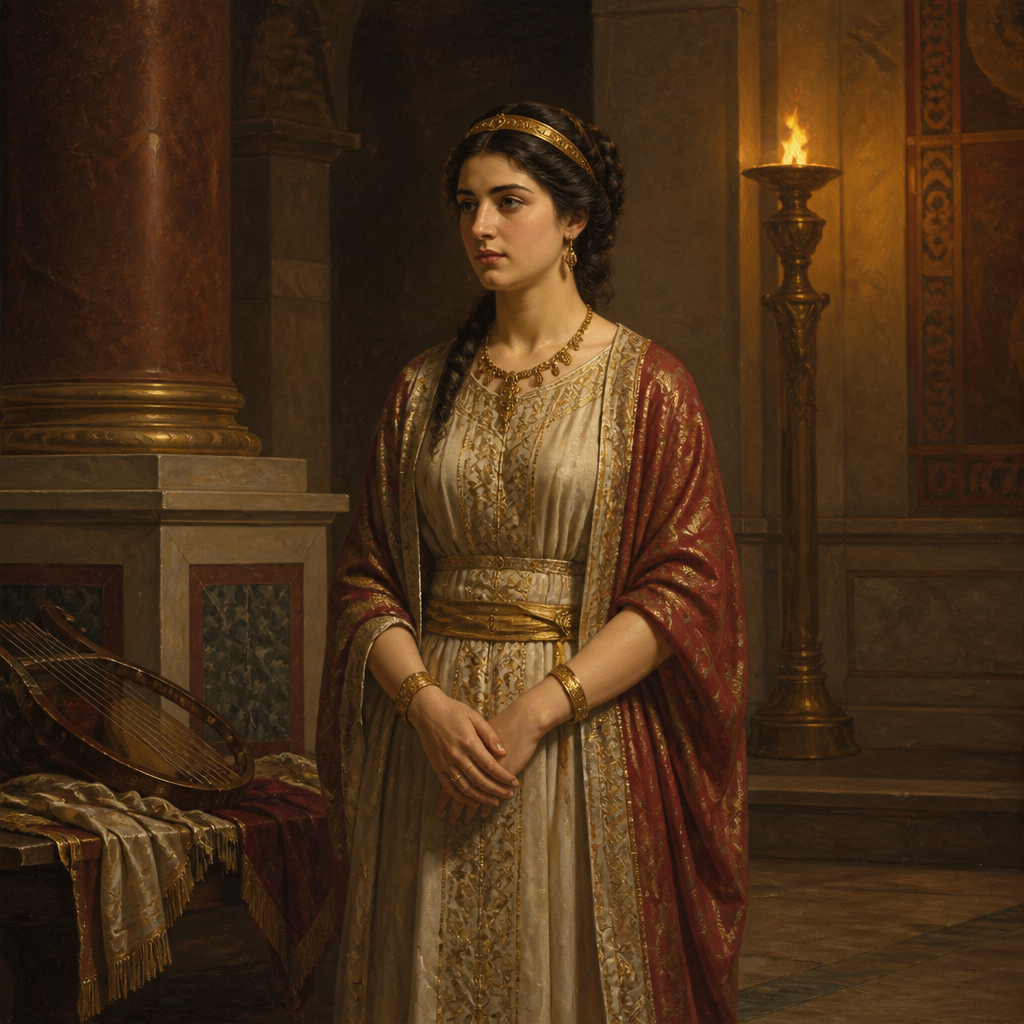 The Daughter of HerodiasThis page
Connected Figures
Family
Mother · Matthew 14:6
Herodias was a member of the Herodian dynasty who left her husband Philip to marry his brother Herod Antipas; when John the Baptist condemned the marriage, she prompted her daughter to ask for his head.
The GospelsFirst: Matthew 14:38 versesPrincess of Judea
Father · Mark 6:17
Philip was a member of the Herodian dynasty and the original husband of Herodias, whose subsequent marriage to Herod Antipas led to the imprisonment of John the Baptist.
Categories
Mentions by Book
- Matthew1
- Mark6
Scripture References
All 7 indexed verses, in canonical order, from the Berean Standard Bible.
Matthew · 1
- Matthew 14:6
On Herod’s birthday, however, the daughter of Herodias danced before them and pleased Herod
Mark · 6
- Mark 6:17Partial
For Herod himself had ordered that John be arrested and bound and imprisoned, on account of his brother Philip’s wife Herodias, whom Herod had married.
Cited as evidence on a family card; added so References, Key Verses and Mentions by Book share one index.
- Mark 6:18Partial
For John had been telling Herod, “It is not lawful for you to have your brother’s wife!”
Cited as evidence on a family card; added so References, Key Verses and Mentions by Book share one index.
- Mark 6:19Partial
So Herodias held a grudge against John and wanted to kill him. But she had been unable,
Cited as evidence on a family card; added so References, Key Verses and Mentions by Book share one index.
- Mark 6:20Partial
because Herod feared John and protected him, knowing that he was a righteous and holy man. When he heard John’s words, he was greatly perplexed; yet he listened to him gladly.
Cited as evidence on a family card; added so References, Key Verses and Mentions by Book share one index.
- Mark 6:21Partial
On Herod’s birthday, her opportunity arose. Herod held a banquet for his nobles and military commanders and the leading men of Galilee.
Cited as evidence on a family card; added so References, Key Verses and Mentions by Book share one index.
- Mark 6:22
When the daughter of Herodias came and danced, she pleased Herod and his guests, and the king said to the girl, “Ask me for whatever you wish, and I will give it to you.”
Cited as evidence on a family card; added so References, Key Verses and Mentions by Book share one index.
Others Named The Daughter of Herodias
Compare all 2 bearers →Salome, Mother of the Sons of ZebedeeMark 15:40
A devoted follower of Jesus and the mother of the apostles James and John, present at both the crucifixion and the empty tomb.