Archelaus
Who was Archelaus in the Bible?
Herod Archelaus, son of Herod the Great, ruled Judea, Samaria, and Idumea after his father; Joseph was afraid to go there and, after a warning in a dream, settled his family in Nazareth.
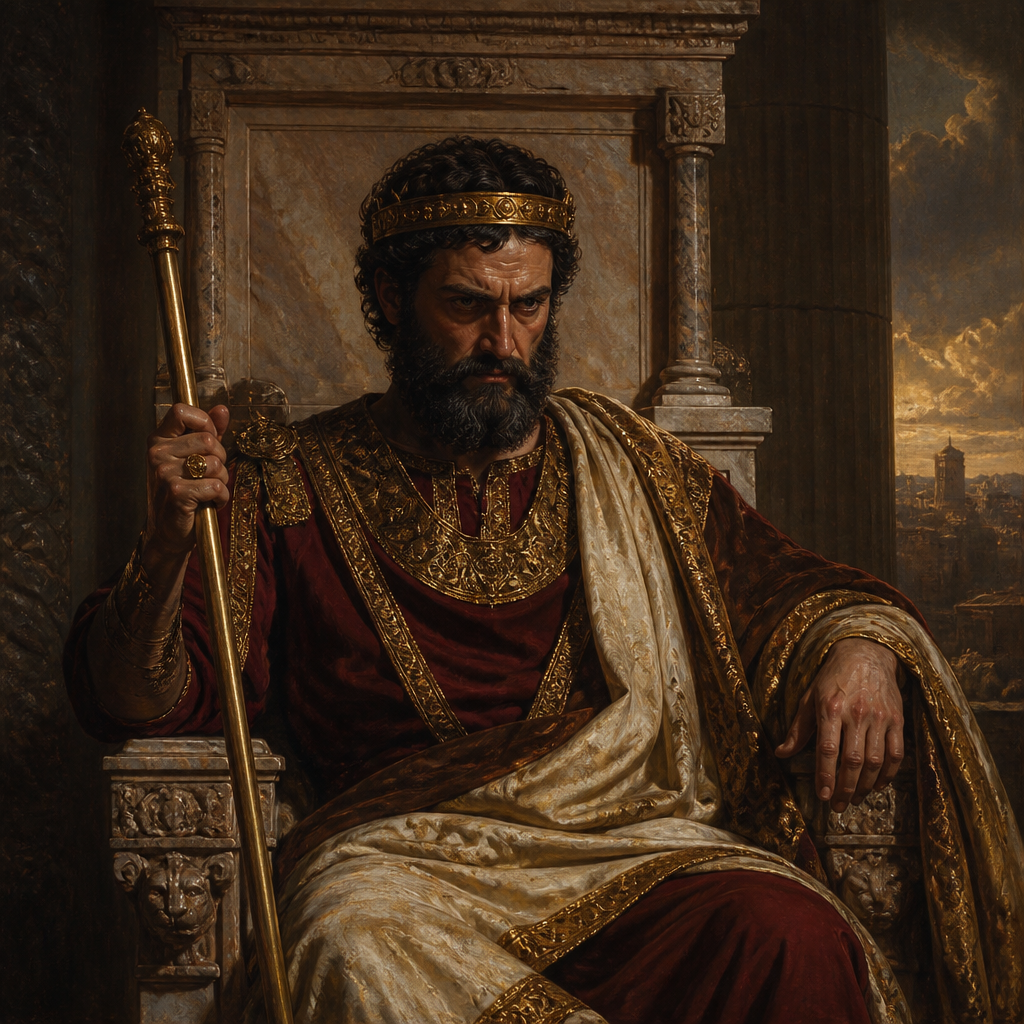
Herod Archelaus (reigned 4 BC – AD 6) was the son of Herod the Great and Malthace, a Samaritan. Following the death of his father, Archelaus was appointed ethnarch over the core regions of the Herodian Kingdom, including Judea, Samaria, and Idumea. Unlike his father, who held the title of 'King,' Archelaus was never granted the royal title by the Roman Emperor Augustus, though he lived and ruled with the same despotic ambition.
Historically, Archelaus is remembered as one of the most volatile and incompetent of the Herodian rulers. His short, decade-long reign was characterized by extreme domestic unrest and a heavy-handed military response to dissent. In biblical history, he serves as a pivotal figure in the narrative of the Nativity, acting as the primary reason why the Holy Family avoided returning to Bethlehem and instead relocated to the region of Galilee.
Background and Family
Herod Archelaus was born into a dynasty defined by political intrigue and architectural grandeur. He was the son of Herod the Great, the monarch known for rebuilding the Second Temple, and Malthace, many of whose children were caught in the crosshairs of Herod the Great's paranoia. Archelaus was educated in Rome, a common practice for the scions of client kings, which aimed to ensure loyalty to the Roman Empire while preparing them for administrative duties.
Upon the death of Herod the Great in 4 BC, his will initially named Archelaus as his primary successor. However, his brothers, Herod Antipas and Herod Philip, also laid claims to parts of the kingdom. The dispute was settled in Rome by Emperor Augustus. Archelaus was granted the largest and most politically sensitive portion of the territory—Judea, Samaria, and Idumea—but was denied the title of 'King' (basileus). Instead, he was titled 'Ethnarch,' a term implying ruler of a people or ethnic group. This distinction was a calculated move by Rome to keep the young ruler on probation.
Major Life Events
Archelaus’s reign began in blood. Immediately following his father’s death and before his position was ratified by Rome, a riot broke out in the Temple courts during the Passover. The pilgrims were protesting the execution of several teachers who had pulled down a Roman eagle from the Temple gate under the previous regime. Archelaus, fearing a full-scale insurrection, sent in a body of troops and eventually his entire army. According to the historian Josephus, approximately 3,000 Jews were slaughtered during the incident, and the Passover festival was cancelled.
This act of violence set the tone for his decade of rule. Archelaus was consistently accused of brutality and the violation of Jewish laws. He notoriously deposed several High Priests at his whim and entered into an illegal marriage with Glaphyra, the widow of his half-brother Alexander, which was a direct violation of Mosaic law since Glaphyra had children by her previous husband.
His administrative incompetence and tyranny eventually led to a rare moment of unity among his subjects: a joint delegation of Judean and Samaritan leaders traveled to Rome in AD 6 to formally complain about his conduct. Emperor Augustus, recognizing that Archelaus was a liability to regional stability, summoned him to Rome, deposed him, and banished him to Vienne in Gaul (modern-day France). His territories were subsequently placed under direct Roman rule via prefects, the most famous of whom would later be Pontius Pilate.
Relationship to Other Biblical Figures
Archelaus’s primary interaction with the biblical narrative is foundational to the geographical identity of Jesus of Nazareth. Following the death of Herod the Great, Joseph was instructed by an angel in a dream to return to Israel from Egypt. However, upon hearing that Archelaus had succeeded his father in Judea, Joseph was afraid to return to the vicinity of Bethlehem and Jerusalem.
"But when he heard that Archelaus was reigning in Judea in place of his father Herod, he was afraid to go there. Having been warned in a dream, he withdrew to the district of Galilee." (Matthew 2:22)
This fear was empirically justified given Archelaus’s reputation for massacres. By steering the Holy Family toward Galilee—which was ruled by the slightly more predictable Herod Antipas—the presence of Archelaus inadvertently fulfilled the prophecy that the Messiah would be called a "Nazarene."
Some scholars also believe Archelaus served as the inspiration for the 'Parable of the Ten Minas' in Luke 19:12-27. In the parable, Jesus speaks of a nobleman who "went into a far country to receive for himself a kingdom and then return," only to be hated by his citizens who sent a delegation after him saying, "We do not want this man to reign over us." This sequence closely mirrors Archelaus’s journey to Rome to secure his ethnarchy despite the protests of the Jewish people.
Spiritual Significance
Archelaus is historically significant as the ruler whose cruelty necessitated the Holy Family's move to Galilee, thereby establishing Jesus's identity as a Nazarene. His deposition in AD 6 also marked a turning point in Judean history, moving the region from client-kingship to direct Roman governance, which defined the political landscape of the New Testament.
Theologically, he serves as a foil to the peaceable Kingdom of Christ. His mention in Matthew 2 underscores the reality of the threats surrounding the infant Messiah and demonstrates God's protective guidance over Joseph and Mary through divine warnings and geographic shifts.
In a theological context, Archelaus represents the persistent opposition of earthly powers to the Kingdom of God. Like his father, he symbolizes the 'corrupt state' that seeks to maintain control through violence and fear. However, his inclusion in the Gospel of Matthew highlights the theme of Divine Providence. Even the cruelty of a tyrant like Archelaus is utilized by God to place the young Jesus in the specific location—Nazareth—required for the fulfillment of the divine plan.
Furthermore, the transition from Archelaus's rule to direct Roman administration (the era of the prefects) created the specific political environment of Jesus’s adult ministry. Without the deposition of Archelaus, the Roman governors would not have been in place to oversee the eventual trial and crucifixion of Jesus, illustrating how the rise and fall of secular rulers are woven into the fabric of salvation history.
Frequently Asked Questions
Was Archelaus a king?
No, although he wanted the title of king like his father, Emperor Augustus only granted him the title of 'Ethnarch' (ruler of a people).
Why did Joseph avoid Archelaus?
Matthew says Joseph was afraid to go to Judea because Archelaus was reigning there, and after a warning in a dream he went to Galilee (Matthew 2:22). The historian Josephus reports that Archelaus began his rule by killing about 3,000 people at the temple.
How long did Archelaus rule?
He ruled for approximately ten years, from 4 BC to AD 6.
What happened to Archelaus?
He was deposed by Emperor Augustus after Judean and Samaritan leaders complained of his tyranny, and he was exiled to Gaul.
Which of Jesus's parables might refer to Archelaus?
The Parable of the Ten Minas (Luke 19) contains details that mirror Archelaus's journey to Rome to claim his kingdom against the wishes of his citizens.
Family & Relationships
Parents
 Herod the GreatFatherMatthew 2:22Stated
 ArchelausThis page
Connected Figures
Family
Father · Matthew 2:22
The Roman-appointed King of Judea who sought to kill the infant Jesus and ordered the Massacre of the Innocents in Bethlehem.
The GospelsFirst: Matthew 2:114 versesKing of Judea
Categories
Mentions by Book
- Matthew3
- Luke1
Scripture References
All 4 indexed verses, in canonical order, from the Berean Standard Bible.
Matthew · 3
- Matthew 2:22
But when he learned that Archelaus was reigning in Judea in place of his father Herod, he was afraid to go there. And having been warned in a dream, he withdrew to the district of Galilee,
- Matthew 14:1Partial
At that time Herod the tetrarch heard the reports about Jesus
Cited as evidence on a family card; added so References, Key Verses and Mentions by Book share one index.
- Matthew 14:3Partial
Now Herod had arrested John and bound him and put him in prison on account of Herodias, his brother Philip’s wife,
Cited as evidence on a family card; added so References, Key Verses and Mentions by Book share one index.
Luke · 1
- Luke 3:1Partial
In the fifteenth year of the reign of Tiberius Caesar, while Pontius Pilate was governor of Judea, Herod tetrarch of Galilee, his brother Philip tetrarch of Ituraea and Trachonitis, and Lysanias tetrarch of Abilene,
Cited as evidence on a family card; added so References, Key Verses and Mentions by Book share one index.