Harhaiah
Who was Harhaiah in the Bible?
A father of a skilled goldsmith who participated in Nehemiah’s project to rebuild the walls of Jerusalem after the Babylonian exile.
Harhaiah is a figure mentioned in the Old Testament during the post-exilic period of Israel's history. He is primarily identified through his son, Uzziel, who was a prominent member of the goldsmiths' guild in Jerusalem. The biblical record places Harhaiah within the context of the Jewish return from the Babylonian captivity, a time of significant national and religious reconstruction under the leadership of Nehemiah.
While Harhaiah does not personally perform recorded actions in the text, his name appears in the formal registry of those whose families contributed to the physical restoration of the holy city. His inclusion in this record signifies his lineage's status and their commitment to the civic and spiritual defense of the Jewish community in the mid-5th century BC.
Background and Family
Harhaiah lived during the era of the Exile and Return, specifically during the mid-5th century BC. His name appears in the genealogy of the laborers who responded to Nehemiah's call to rebuild the broken walls of Jerusalem. According to Nehemiah 3:8, Harhaiah was the father of Uzziel, a man identified as one of the "goldsmiths."
The mention of the goldsmiths suggests that Harhaiah belonged to a family of skilled artisans. In the ancient Near East, such professions were often hereditary, passing from father to son through structured guilds. This indicates that Harhaiah likely held a respected social and economic position within the community of returnees, as the manipulation of precious metals was a specialized craft essential for both commerce and the decoration of the Second Temple.
Major Life Events
Harhaiah’s primary contribution to the biblical narrative is indirect, occurring through the labor of his son. In 445 BC, following the decree of Artaxerxes I, Nehemiah arrived in Jerusalem to find the city in a state of ruin. The rebuilding project was organized by family units and professional guilds. Harhaiah’s son, Uzziel, is recorded as working on a specific section of the wall:
"Next to them, Uzziel son of Harhaiah, one of the goldsmiths, made repairs..." (Nehemiah 3:8, BSB)
This labor took place near the "Broad Wall," a massive fortification that historically protected the western hill of Jerusalem. While the text does not explicitly state whether Harhaiah was alive at the time of the construction, his name is preserved as the patriarch of the house responsible for this critical defensive sector.
Relationship to Other Biblical Figures
Harhaiah is directly linked to his son Uzziel. In the list of builders, he is also placed in proximity to Hananiah, a "perfumer" or maker of ointments. These associations suggest that Harhaiah's family was part of the urban elite or merchant class in Jerusalem, working alongside other specialists rather than the rural laborers or priests who worked on other sections of the wall.
Spiritual Significance
The mention of Harhaiah in the Book of Nehemiah underscores the biblical theme of collective responsibility. His lineage represents the dedication of secular craftsmen to a sacred cause. By ensuring his son was trained in the guild and remained within the covenant community, Harhaiah contributed to the preservation of Jerusalem. The detailed record of his name serves as a testament to the fact that God honors the specific individuals and families who labor for the restoration of His people, regardless of how brief their mention in the scriptures may be.
Harhaiah represents the vital role of specific families and professional guilds in the restoration of Israel's post-exilic community. Although his personal narrative is not detailed, his inclusion in Nehemiah’s register validates the importance of lineage and domestic heritage in the fulfillment of God's promises for the reconstruction of Jerusalem.
Theologically, Harhaiah illustrates that the work of God’s kingdom requires diverse skills, including those of artisans like goldsmiths. His presence in the text confirms that every family name recorded in the restoration efforts serves as a permanent memorial of faithfulness during a period of national renewal.
Frequently Asked Questions
What does the name Harhaiah mean?
The exact etymology of Harhaiah is debated, but it is generally understood to mean 'Jah (God) is flaming' or 'fear of the Lord,' reflecting a Hebrew origin.
Was Harhaiah a goldsmith?
The Bible identifies his son Uzziel as a goldsmith. While it is highly probable Harhaiah was also a goldsmith due to the hereditary nature of guilds, the text does not explicitly state his occupation.
Which section of the Jerusalem wall did Harhaiah’s family repair?
His son Uzziel repaired a portion of the wall located near the 'Broad Wall,' an area that was crucial for the city's defense.
In which book of the Bible is Harhaiah mentioned?
Harhaiah is mentioned only once in the Bible, in the Book of Nehemiah, chapter 3, verse 8.
What era did Harhaiah live in?
He lived during the Post-Exilic Period (Exile and Return), specifically around the time Jerusalem's walls were rebuilt in 445 BC.
Family & Relationships
 HarhaiahThis page
Children
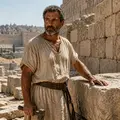 Uzziel, Son of HarhaiahSonNehemiah 3:8Stated
Connected Figures
Family
Son · Nehemiah 3:8
A Jewish goldsmith who helped rebuild the walls of Jerusalem under Nehemiah following the return from Babylonian exile.
Categories
Mentions by Book
- Nehemiah1
Scripture References
All 1 indexed verse, in canonical order, from the Berean Standard Bible.
Nehemiah · 1
- Nehemiah 3:8
Next to them, Uzziel son of Harhaiah, one of the goldsmiths, made repairs. And next to him, Hananiah, one of the perfumers, made repairs. They fortified Jerusalem as far as the Broad Wall.