Kenaz, Son of Elah
Who was Kenaz, Son of Elah, in the Bible?
A member of the tribe of Judah and the son of Elah, mentioned within the genealogical records of the house of Caleb during the era of the conquest and the judges.
This is one of 3 people named Kenaz in the Bible. See all 3 →
Kenaz was a Judean descendant of the illustrious Caleb son of Jephunneh. His identity is preserved within the post-exilic genealogical summaries of the Book of Chronicles, specifically in a section detailing the lineages of the tribe of Judah.
The biblical record for this Kenaz is extremely focused, appearing only in the context of tribal heritage. He lived during the era of the conquest and the judges. While his individual exploits are not detailed in the narrative prose of the Old Testament, his inclusion in the chronicler's list underscores his status as a recognized head of a household or a significant link in the Davidic-era tribal structure.
Background and Family
Kenaz appears in the genealogical records of the tribe of Judah, which is the focus of the opening chapters of 1 Chronicles. According to 1 Chronicles 4:15, he was the son of Elah. His father, Elah, was one of the sons of Caleb son of Jephunneh. The text identifies Kenaz’s brothers (or uncles, depending on the syntactical interpretation of the list) as Iru and Naam.
This specific lineage places Kenaz within the Calebite group, a powerful and influential sub-group within Judah. The Calebites held significant territory in the southern regions of Israel, particularly around Hebron. By the time of the era of the conquest and the judges, these family records served as a constitutional map for the kingdom, identifying the legitimate heirs of the land given by divine decree centuries earlier.
Major Life Events
The biblical text does not record specific biographical events for Kenaz, such as battles, political appointments, or speeches. Instead, his "life event" in the scriptural sense is his birth and his subsequent inclusion in the sacred register. During the era of the conquest and the judges, men like Kenaz were the backbone of the Judean social structure, serving as the heads of their respective fathers' houses (bet ab).
His existence is documented in 1 Chronicles 4:15:
"The sons of Caleb son of Jephunneh: Iru, Elah, and Naam. The son of Elah: Kenaz."
This brief mention ensures that the line of Elah remained distinct within the broader Calebite family.
Relationship to Other Biblical Figures
Kenaz’s primary relationship is to his father, Elah, and his grandfather, Caleb son of Jephunneh. Caleb was the famous spy who, alongside Joshua, brought a favorable report of the Promised Land and was subsequently granted Hebron as an inheritance. Being a grandson of such a monumental figure in Israelite history gave Kenaz a status of hereditary prestige.
Additionally, some interpretations of the genealogical shorthand in 1 Chronicles 4:15 suggest a relationship to Ziph, though the text's primary focus remains on his immediate descent from Elah. He is surrounded by the names of the leaders of Judah who maintained the integrity during its centuries of independence and struggle against neighboring powers.
Spiritual Significance
While Kenaz is a minor figure in terms of narrative space, his presence in the Bible carries spiritual and theological weight regarding the faithfulness of God to families. By listing Kenaz, the text affirms that every member of the tribe of Judah, even those without recorded miracles or speeches, was known to God and essential to the community of faith.
Kenaz represents the "unnamed" faithful who lived through the era of the kings, upholding the traditions of their ancestors and ensuring the continuity of the Messianic tribe. His inclusion proves that in the eyes of the biblical authors, the preservation of the family line was an act of obedience and a testimony to God's enduring promise to the house of Judah.
Kenaz serves as a vital link in the genealogical continuity of the tribe of Judah. In the context of 1 Chronicles, his name validates the legal and spiritual standing of his descendants, reinforcing the idea that God keeps a precise record of His people through all generations, including the era of the era of the conquest and the judges. His placement within the family of Caleb connects him to the heritage of faith and the physical inheritance of the land of Israel.
Frequently Asked Questions
Who was the father of Kenaz in the Divided Monarchy period?
According to 1 Chronicles 4:15, Kenaz was the son of Elah.
Which tribe did Kenaz belong to?
Kenaz was a member of the tribe of Judah, specifically belonging to the clan of Caleb.
What is the only Bible verse that mentions this Kenaz?
This specific Kenaz is mentioned only in 1 Chronicles 4:15.
Family & Relationships
Parents
 Elah, Son of CalebFather1 Chronicles 4:15Stated
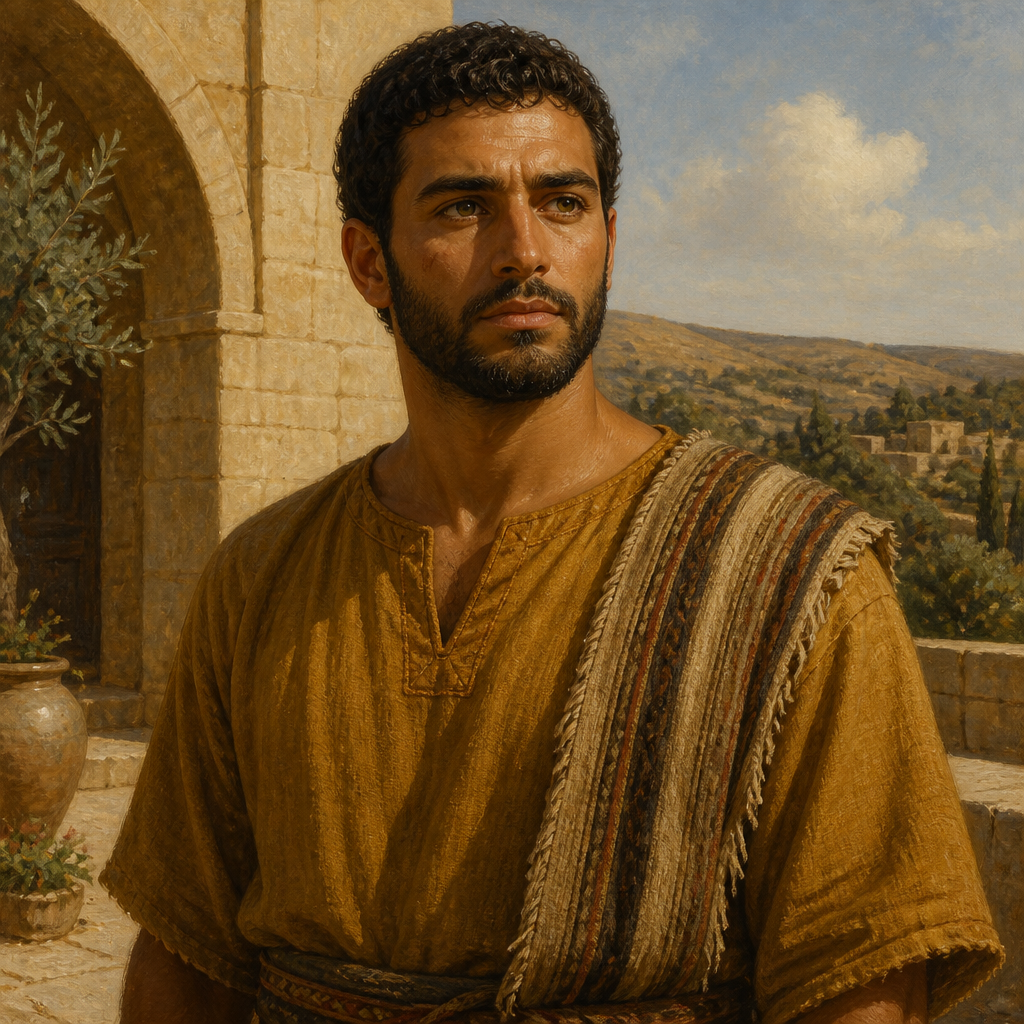 Kenaz, Son of ElahThis page
 Jehallelel, Father of ZiphBrother1 Chronicles 4:15
Inferred
No verse names Kenaz and Jehallelel together; the brother link is carried from the surrounding genealogy and is not stated in Scripture.Evidence: 1 Chronicles 4:15
Extended family
 Caleb son of JephunnehGrandfather1 Chronicles 4:15Stated
Connected Figures
Family
Father · 1 Chronicles 4:15
A descendant of Judah and son of the famous spy Caleb who established a lineage within the patriarchal structure of Israel.
Brother · 1 Chronicles 4:15
A descendant of Judah through the line of Caleb who fathered four sons recorded in the genealogical registers of the Divided Monarchy.
Grandfather · 1 Chronicles 4:15
One of the twelve spies sent by Moses to Canaan, distinguished by his wholehearted faith and courage in claiming his inheritance at Hebron.
Egypt and WildernessFirst: Numbers 13:629 verseswarriorJudah
Mentions by Book
- 1 Chronicles2
Scripture References
All 2 indexed verses, in canonical order, from the Berean Standard Bible.
1 Chronicles · 2
- 1 Chronicles 4:15
The sons of Caleb son of Jephunneh: Iru, Elah, and Naam. The son of Elah: Kenaz.
- 1 Chronicles 4:16Partial
The sons of Jehallelel: Ziph, Ziphah, Tiria, and Asarel.
Cited as evidence on a family card; added so References, Key Verses and Mentions by Book share one index.
Others Named Kenaz
Compare all 3 bearers →Kenaz, Son of EliphazGenesis 36:11
An Edomite chief and grandson of Esau, Kenaz was a prominent tribal leader within the line of Eliphaz during the Patriarchs.
Kenaz, Brother of CalebJoshua 15:13
A prominent figure of the Exodus and Conquest era, Kenaz was the younger brother of Caleb and the father of Othniel, Israel’s first judge.