Abishur
Who was Abishur in the Bible?
A member of the tribe of Judah who was the son of Shammai and the husband of Abihail.
Abishur was a descendant of the tribe of Judah, specifically belonging to the line of Hezron and Jerahmeel. In the biblical record, he is situated within the complex genealogical frameworks of the Old Testament, which serve to establish the legitimacy and continuity of the Judean families. His life is chronicled during the era of the conquest and the judges, a time when tribal identity and land inheritance were of paramount importance to the national identity of Israel.
While the scriptural record concerning Abishur is brief, it provides essential data regarding his domestic life and lineage. He was the son of Shammai and the brother of Nadab. He married a woman named Abihail, with whom he had two sons, Ahban and Molid. His inclusion in the Book of Chronicles highlights his status as a recognized head of a household within the influential Jerahmeelite branch of Judah.
Background and Family
Abishur appears within the genealogical records of 1 Chronicles, specifically in the second chapter, which focuses on the descendants of Judah. According to the text, Abishur was the son of Shammai and the grandson of Onam (1 Chronicles 2:28). His lineage traces back to Jerahmeel, the firstborn son of Hezron, who was one of the grandsons of Judah. This specific branch of the tribe of Judah, the Jerahmeelites, occupied the southern regions of the territory of Judah, often referred to as the Negeb of the Jerahmeelites.
Abishur grew up alongside his brother, Nadab. The record indicates that while both brothers are named, the lineage of Abishur is preserved through the mention of his wife and children, whereas the text provides different trajectories for other members of his immediate family.
Domestic Life and Marriage
The most detailed information provided about Abishur concerns his marriage and his offspring. The text explicitly names his wife: "Abishur’s wife was named Abihail" (1 Chronicles 2:29). This mention is noteworthy, as women are not always named in these ancient genealogies unless they were of significant status or their inclusion was necessary to clarify specific inheritance lines.
Together, Abishur and Abihail had two sons: Ahban and Molid. These sons represent the continuation of this specific Judean sub-lineage during the era of the conquest and the judges. The naming of his children and his wife suggests that Abishur was the established patriarch of a distinct family unit within the larger Shammai clan.
Relationship to Other Biblical Figures
Abishur’s primary relationship to the broader biblical narrative is his place within the tribe of Judah. As a Jerahmeelite, he was part of a group that maintained a distinct identity even within the larger tribal structure.
While Abishur is not recorded as interacting with kings or prophets, his existence serves as a bridge in the genealogical history of Israel. He is a contemporary of the various shifts in the era of the conquest and the judges, representing the stable, albeit quiet, continuation of the Judean population outside of the royal court in Jerusalem.
Spiritual Significance
The presence of Abishur in the biblical canon is primarily found in the context of the Chronicler’s effort to restore the identity of the people of Israel after the Babylonian exile. By documenting figures like Abishur, the Bible emphasizes that every individual and family within the tribe of Judah was accounted for and held a place in the covenant community.
Though no specific deeds or words are attributed to him, his life reflects the biblical theme of the importance of the family unit and the preservation of the heritage of the patriarchs. In the eyes of the biblical authors, Abishur represents the "living links" that connected the ancient promises given to Judah to the reality of the nation's ongoing history.
Abishur's significance lies in the preservation of the Judean lineage. In the post-exilic period, when the books of Chronicles were compiled, establishing a clear ancestry was vital for claiming land and participating in the religious life of the community. Abishur serves as a formal link in the Jerahmeelite line, ensuring that this branch of Judah was recognized as part of the covenant people.
His mention alongside his wife Abihail also provides a glimpse into the genealogical record-keeping of the time, where the naming of a spouse and specific children helped define a clear sub-branch of a tribe. He represents the many 'quiet' figures of the Bible who fulfilled their roles through family and tribal continuity rather than through overt political or prophetic leadership.
Frequently Asked Questions
Who was Abishur's father?
Abishur was the son of Shammai, a descendant of Jerahmeel from the tribe of Judah.
Who was Abishur's wife?
Abishur was married to a woman named Abihail.
Did Abishur have any children?
Yes, the Bible records that Abishur and his wife Abihail had two sons named Ahban and Molid.
What tribe did Abishur belong to?
Abishur belonged to the tribe of Judah, specifically the Jerahmeelite branch.
In which book of the Bible is Abishur mentioned?
Abishur is mentioned in the genealogical records found in 1 Chronicles chapter 2.
Family & Relationships
Parents
 Shammai, Son of OnamFather1 Chronicles 2:28Stated
 Abihail, Wife of AbishurWife1 Chronicles 2:29Stated
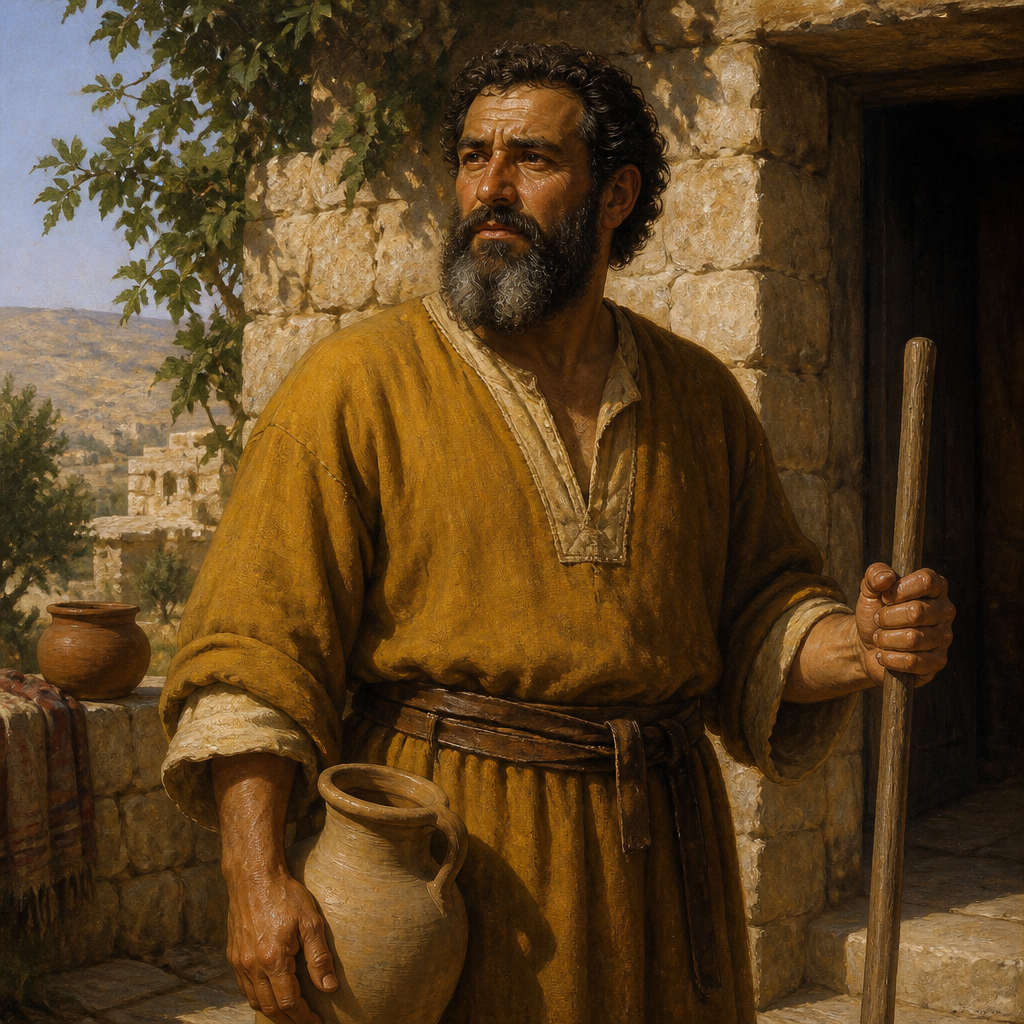 AbishurThis page
 Nadab, Son of ShammaiBrother1 Chronicles 2:28Stated
Connected Figures
Family
Father · 1 Chronicles 2:28
Shammai was a descendant of Judah through the line of Jerahmeel during the Egypt and Wilderness era.
Wife · 1 Chronicles 2:29
Abihail was a woman of the tribe of Judah who married Abishur and became the mother of Ahban and Molid during the era of the conquest and the judges.
Conquest and JudgesFirst: 1 Chronicles 2:291 versesMatriarchJudah

Son · 1 Chronicles 2:29
Ahban was a member of the Tribe of Judah and the son of Abishur and Abihail during the era of the conquest and the judges.

Son · 1 Chronicles 2:29
A descendant of Judah through the line of Jerahmeel, recorded in the genealogical records of the era of the conquest and the judges.
Brother · 1 Chronicles 2:28
A member of the Tribe of Judah through the lineage of Jerahmeel, Nadab was a family patriarch during the era of the conquest and the judges noted for his place in the Chronicler’s genealogy.
Mentions by Book
- 1 Chronicles2
Scripture References
All 2 indexed verses, in canonical order, from the Berean Standard Bible.
1 Chronicles · 2
- 1 Chronicles 2:28
The sons of Onam: Shammai and Jada. The sons of Shammai: Nadab and Abishur.
- 1 Chronicles 2:29
Abishur’s wife was named Abihail, and she bore to him Ahban and Molid.