Zillah
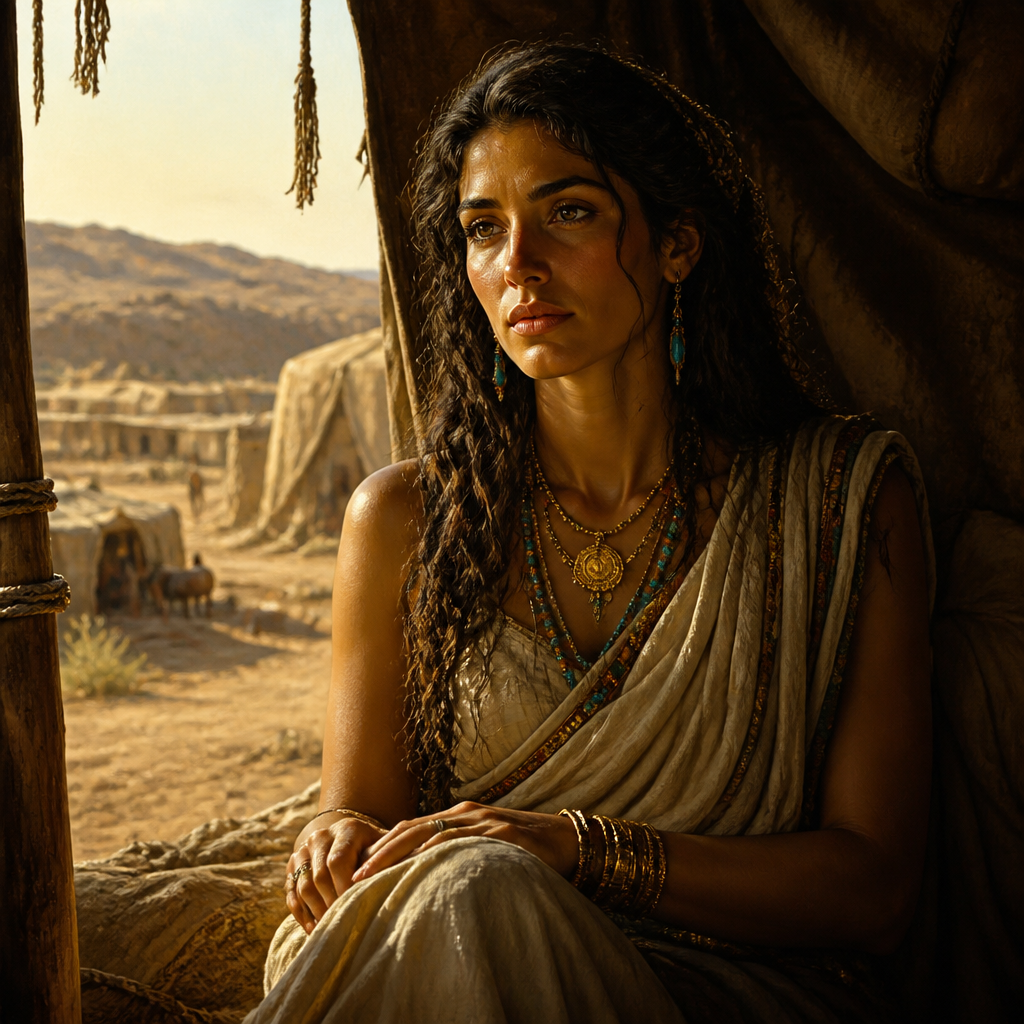
Zillah was the second wife of Lamech in the line of Cain and the mother of Tubal-cain and Naamah, appearing in the foundational genealogies of Genesis.
Zillah is an early figure in the biblical narrative, appearing in the fourth chapter of Genesis. She is identified as one of the two wives of Lamech, a descendant of Cain. Her presence in the text is significant as she is part of the first recorded instance of polygamy in the Bible. Her name is often interpreted from its Hebrew root to mean 'shadow' or 'shade,' though some scholars suggest it may also imply 'tinkling' or 'ringing,' perhaps in reference to the metalworking associated with her son.
Background and Family
Zillah emerges in the context of the antediluvian (pre-Flood) world, specifically within the genealogy of Cain. Following Cain’s exile after the murder of Abel, his descendants built cities and developed various technologies and cultural practices. Zillah appears in the seventh generation from Adam, as the second wife of Lamech. Lamech’s decision to take two wives—Adah and Zillah—marks a distinct departure from the monogamous precedent set in the Garden of Eden. This reflects the increasing complexity and moral deviation attributed to Cain’s lineage.
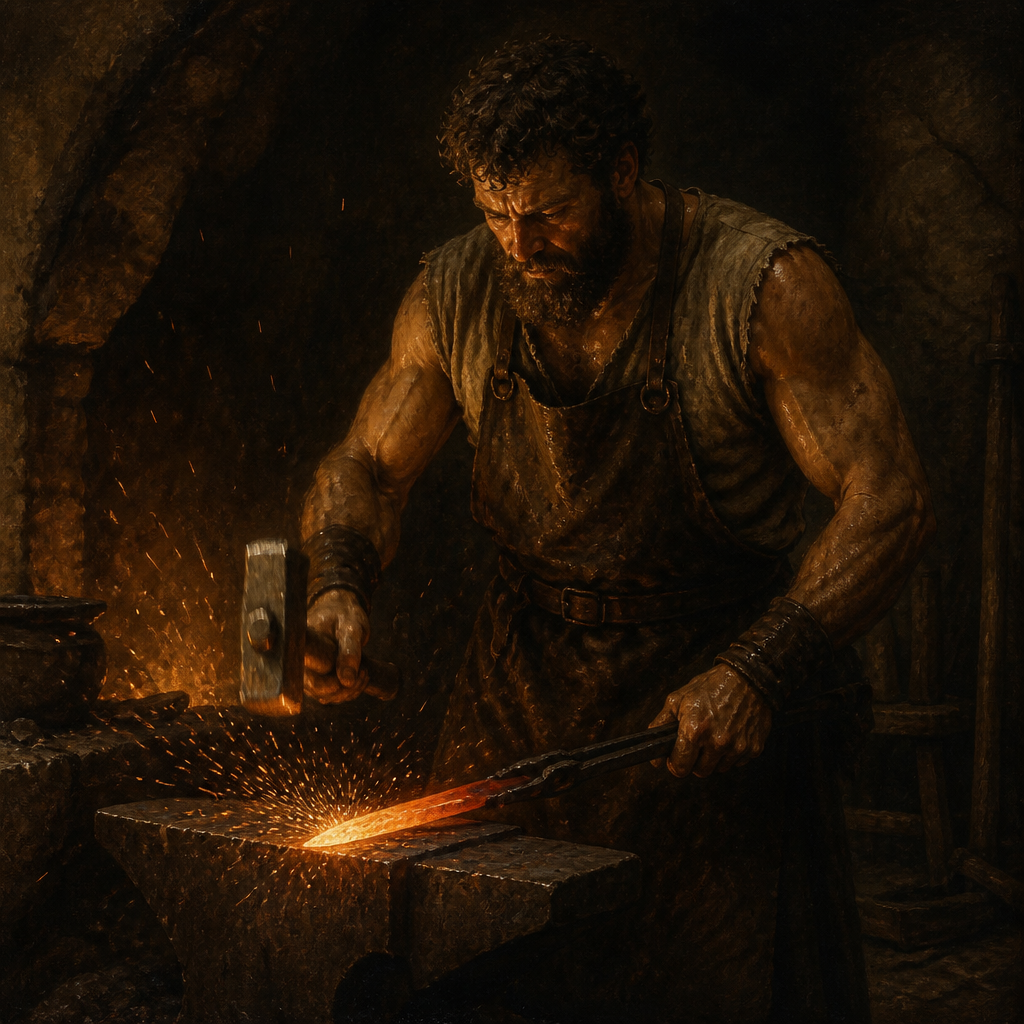
Zillah’s family represents the peak of technological and cultural achievement in the early world. She bore two children: a son, Tubal-cain, and a daughter, Naamah. Tubal-cain is explicitly credited as the 'forger of all instruments of bronze and iron,' indicating that Zillah’s household was at the center of the transition into the metal ages. While the Bible provides few details about Naamah, her inclusion by name in a patriarchal genealogy suggests she was a figure of significant importance in her time.
Major Life Events
The primary narrative event involving Zillah is the 'Song of Lamech,' found in Genesis 4:23–24. In this poetic address, Lamech calls upon his wives, Adah and Zillah, to listen to his confession or boast of violence. This passage is one of the oldest pieces of poetry in the Hebrew Bible.
'Adah and Zillah, hear my voice; you wives of Lamech, listen to what I say: I have killed a man for wounding me, a young man for striking me. If Cain’s revenge is sevenfold, then Lamech’s is seventy-sevenfold.' (Genesis 4:23-24, ESV)
Zillah is a silent witness to this proclamation. This moment highlights her role as a matriarch within a culture increasingly defined by a combination of sophisticated craftsmanship and escalating retributive violence. Scholars debate whether Lamech was confessing a crime to his wives in fear or boasting of his superior strength, perhaps enhanced by the metal weapons produced by Zillah's son, Tubal-cain.
Relationship to Other Biblical Figures
Zillah’s identity is defined largely through her relationships. As the wife of Lamech, she is part of a household that exemplifies the 'Way of Cain.' Her relationship with her co-wife, Adah, is the first such dynamic recorded in scripture; it establishes a pattern of familial complexity that would later appear in the stories of the Patriarchs (such as Sarah and Hagar, or Leah and Rachel), though in Zillah's case, there is no mention of the domestic rivalry that characterized those later accounts.
Her relationship to her children is also pivotal. In the Cainite genealogy, the mothers are rarely named. The inclusion of Zillah and Adah, as well as Zillah’s daughter Naamah, underscores the high status of this specific family unit. Zillah is the mother of the world's first metallurgist, linking her name forever to the birth of human industry and the creation of tools—both for agriculture and for war.
Spiritual Significance
Theologically, Zillah and her family represent the 'city of man'—a civilization that grows in power, art, and technology while moving further away from the divine order. Zillah’s presence in the text serves to illustrate the expansion of the human race and the diversification of human society. However, this expansion is portrayed with an undercurrent of tragedy. While her son creates beautiful and useful things from metal, her husband uses the era's advancements to justify or commit further violence.
In rabbinic tradition, Zillah is sometimes portrayed in a more complex light. Some Midrashic interpretations suggest that Lamech kept one wife for procreation (Adah) and the other for companionship (Zillah), though the biblical text does not explicitly support this division. Instead, the canonical Zillah stands as a silent matriarch at the dawn of history, representing the sophisticated yet spiritually troubled world that would eventually face the judgment of the Great Flood. Her legacy is one of duality: the mother of progress and the witness to man's increasing capacity for vengeance.
Spiritual Significance
Zillah is chronologically important as one of the first women named in the Bible after Eve. Her role in the narrative highlights the introduction of polygamy into human history and the rapid development of human civilization through her children. She serves as a witness to the increasing violence of the pre-Flood world, as documented in the Song of Lamech.
Frequently Asked Questions
What does the name Zillah mean?
The name Zillah is derived from the Hebrew word 'tsel,' meaning 'shadow' or 'shade.' Some also interpret it as 'tinkling' or 'ringing,' possibly relating to the sound of metal.
Who were Zillah's children?
Zillah was the mother of Tubal-cain, who was the first smith of bronze and iron tools, and a daughter named Naamah.
Why is Zillah significant in the book of Genesis?
She is significant because she was one of the first two women involved in a polygamous marriage and belonged to the elite lineage of Cain that pioneered human industry.
Was Zillah around during the Great Flood?
Zillah lived several generations before Noah. While the Bible does not record her death, she belongs to the antediluvian generations that preceded the Flood.
What is the 'Song of Lamech' and how does it involve Zillah?
The Song of Lamech is a poem in Genesis 4 where Lamech addresses his two wives, Adah and Zillah, about a man he has killed, claiming a much greater vengeance than Cain's.