Jabal
Jabal was a descendant of Cain and is identified in the Book of Genesis as the father of those who live in tents and raise livestock.
Jabal is an early antediluvian figure mentioned in the genealogical records of the fourth chapter of Genesis. As a member of the seventh generation of humanity, he represents a significant developmental milestone in the biblical narrative of human civilization. He is uniquely credited with the innovation of nomadic pastoralism, marking a transition in human history from fixed settlements to mobile animal husbandry.
Born into the line of Cain, Jabal's life and contributions are framed within a family known for its technological and cultural advancements. While his lineage is associated with the curse of Cain, the text presents his innovations as foundational to the structure of ancient Near Eastern society. His legacy is defined by his role as a 'father' or founder of a specific socioeconomic lifestyle that would persist throughout the biblical era.
Though his mention in the biblical text is brief, the description of Jabal is rich with historical and cultural implications. He is part of a triad of brothers—including Jubal and Tubal-cain—who are each credited with establishing the core pillars of civilization: agriculture/domestication, the arts, and metallurgy.
Background and Family
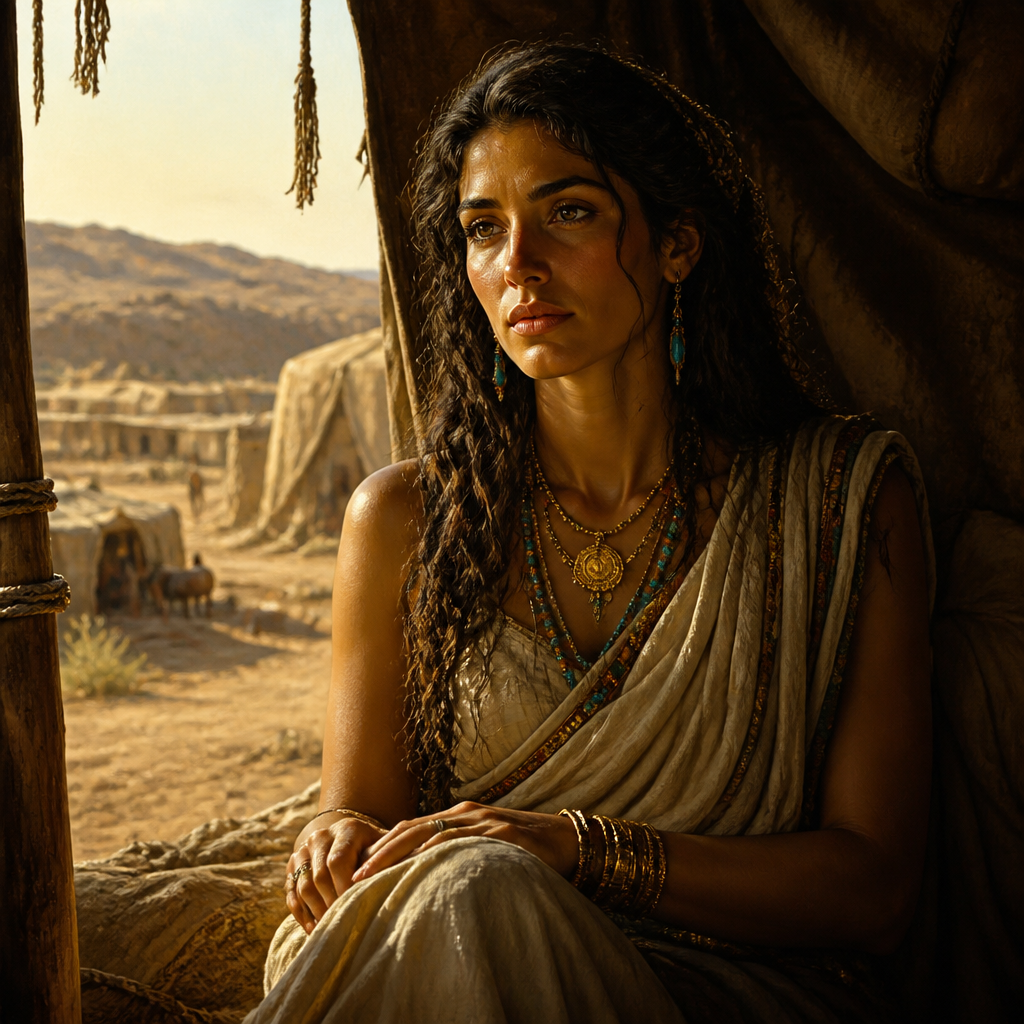
Jabal appears in the genealogical narrative of Genesis 4, specifically within the lineage of Cain. He was the son of Lamech and Adah. His family context is one of the most culturally significant in the primeval history of the Bible. Lamech, his father, is noted for being the first polygamist mentioned in scripture, having married both Adah and Zillah. Within this complex family structure, Jabal was the full brother of Jubal and the half-brother of Tubal-cain and Naamah.
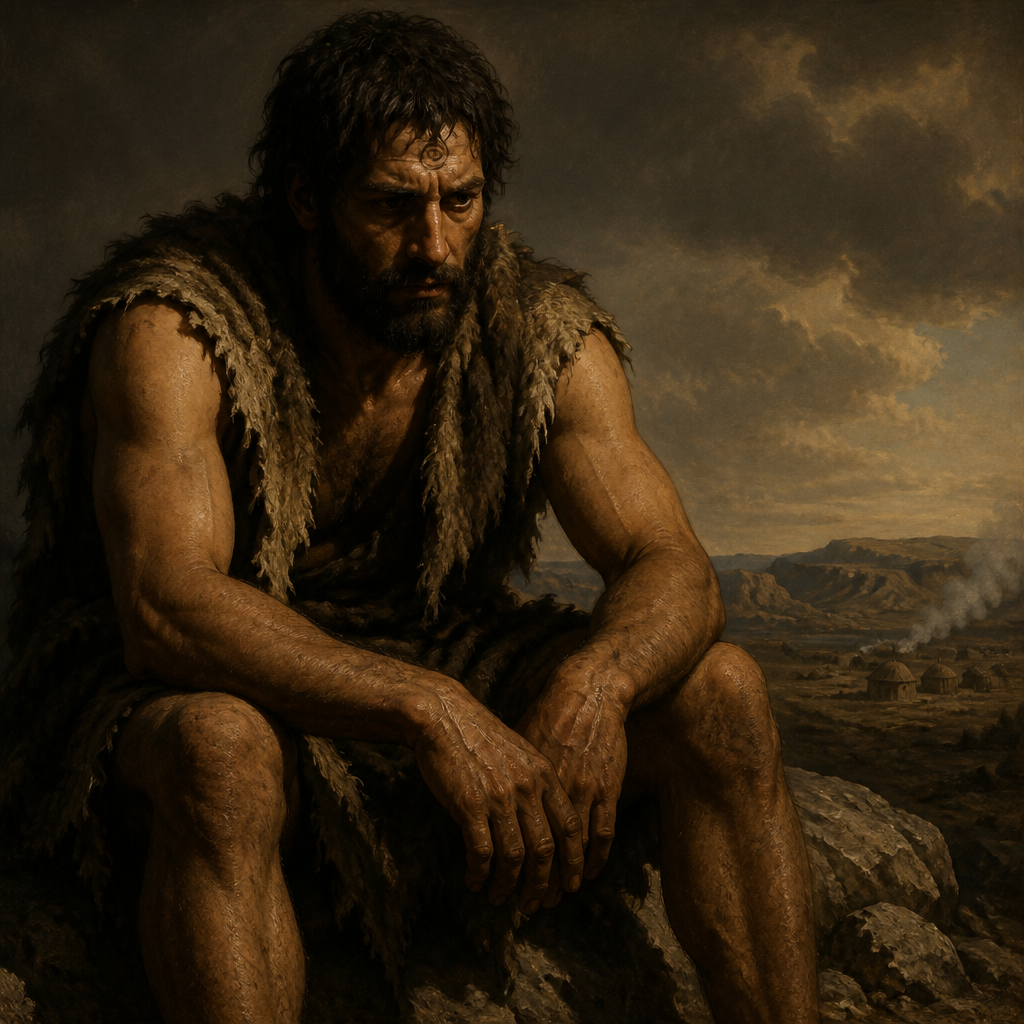
The name 'Jabal' is etymologically linked to Hebrew roots suggesting 'stream,' 'bring,' or 'produce.' In the broader context of the Cainite line, Jabal represents the pinnacle of material success and environmental adaptation. While his ancestor Cain was condemned to be a 'fugitive and a wanderer' who unsuccessfully tried to build a city to escape his fate, Jabal mastered the art of wandering by domesticating the lifestyle itself.
Major Life Events
Unlike the patriarchs in the line of Seth, the Bible does not record the lifespan or the specific deeds of Jabal beyond his professional innovation. However, his life is defined by the statement in Genesis 4:20:
"Adah gave birth to Jabal; he was the father of those who live in tents and raise livestock."
This brief verse encompasses the major 'event' of his life: the establishment of the nomadic pastoralist lifestyle. Before Jabal, the biblical text implies a distinction between sedentary farming (represented by Cain) and shepherding (represented by Abel). Jabal, however, combined mobility with large-scale animal husbandry. By introducing the 'tent' (Hebrew: ohel), he created a portable architecture that allowed humans to move with their herds to find fresh pasture, rather than remaining tied to a specific plot of land.
This shift was not merely a change in housing but a revolution in economics and land use. It allowed for the exploitation of the steppe and semi-arid regions that were unsuitable for permanent agriculture. As the 'father' of this lifestyle, Jabal is honored as the progenitor of the Bedouin-style existence that would later characterize many of the great biblical patriarchs, including Abraham, Isaac, and Jacob.
Relationship to Other Biblical Figures
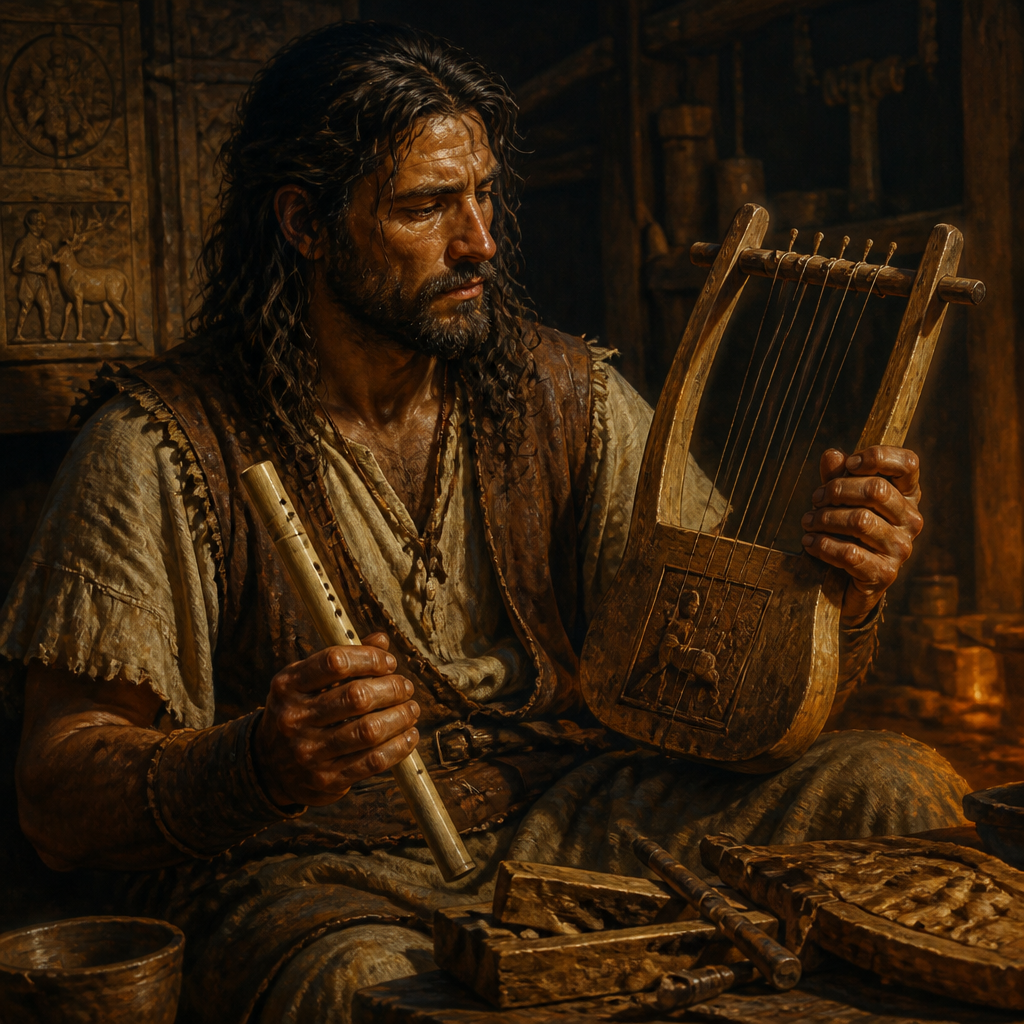
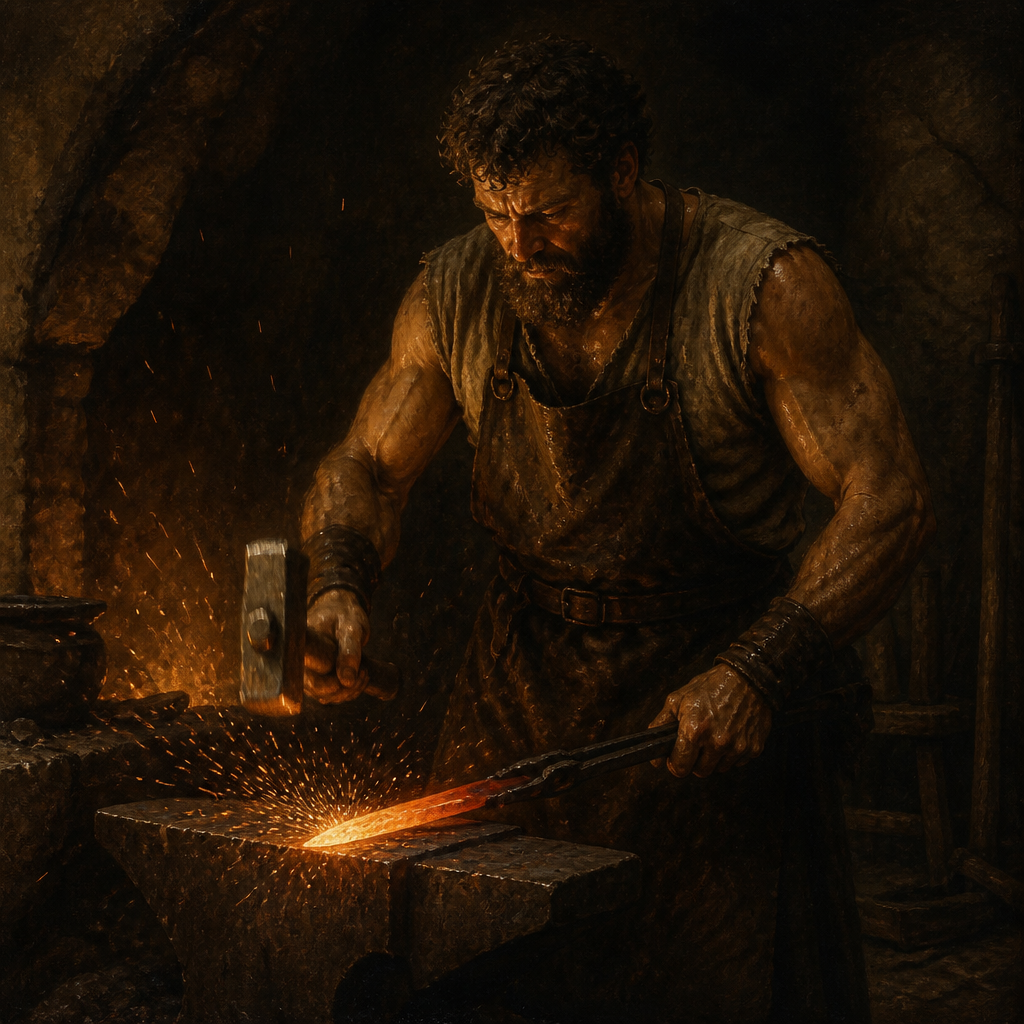
Jabal’s identity is inseparable from his siblings. The author of Genesis presents a literary triad of brothers who define the 'Cainite contribution' to the world. While Jabal mastered the earth and animals (livestock), his brother Jubal mastered the air and spirit (music), and his half-brother Tubal-cain mastered fire and minerals (metallurgy). Together, they represent the total development of human culture independent of the line of Seth.
His relationship with his father, Lamech, is also noteworthy. Lamech’s 'Song of the Sword' (Genesis 4:23-24) follows the description of his sons' achievements. It suggests a family environment characterized by great talent but also by increasing moral complexity. While Jabal provided the means for sustenance and mobility, his father utilized the tools made by his other brother to boast of violence. This creates a tension between the 'good' of Jabal’s civilizational gifts and the 'evil' context of the Cainite line.
Spiritual Significance
In biblical scholarship, Jabal represents the 'common grace' given to all humanity. Despite being part of a lineage that moved 'away from the presence of the Lord,' Jabal was bestowed with the wisdom and creativity to innovate for the benefit of the human race. This highlights a recurring biblical theme: that technical skill and cultural advancement are gifts from God, even if they are discovered or championed by those who are not in a covenant relationship with Him.
Theologically, Jabal’s life also illustrates the ambiguity of progress. The 'tent and livestock' lifestyle he pioneered provided freedom and wealth, yet it occurred within a lineage that was increasingly alienated from the divine. For the original readers of Genesis, Jabal would have been understood as the explanation for the diverse ways of life they observed in the surrounding nations. He serves as a reminder that the structures of human society—from the tents of the desert to the herds on the hills—have their origins in the deep, primeval history of mankind's survival and adaptation after the Fall.
Spiritual Significance
Jabal is theologically significant as the biblical archetype of the nomadic herdsman. His classification as 'the father' of those who live in tents and raise livestock establishes a scriptural category for human vocation and cultural development. In the narrative of Genesis, he proves that despite the curse of the ground, human ingenuity—under the umbrella of common grace—allows for the mastery of the environment. His existence provides a historical and cultural framework for the later nomadic lives of figures like Abraham, showing that the tools of the patriarchal faith (tents and herds) were themselves part of the broader human story of innovation.
Frequently Asked Questions
What does the name Jabal mean?
The name Jabal is derived from a Hebrew root meaning 'to lead,' 'to bring forth,' or 'stream,' likely reflecting his role in leading herds or the productivity of his innovations.
What is Jabal credited with inventing?
Jabal is credited with the invention of nomadic pastoralism, specifically the use of tents for mobile living and the systematic raising of livestock.
Who were Jabal's parents?
His father was Lamech, a descendant of Cain, and his mother was Adah.
Was Jabal related to the line of Noah?
No, Jabal belonged to the line of Cain, which is distinct from the line of Seth that produced Noah. Most scholars conclude his lineage perished in the Great Flood.
Why is Jabal called the 'father' of those in tents?
In biblical language, 'father' often refers to an ancestor or the founder/originator of a specific guild, profession, or way of life.