Noah's Wife
The matriarch of the post-Flood human race and one of the eight survivors aboard the Ark during the Genesis deluge.
The wife of Noah is a foundational figure in the Primeval History of the Book of Genesis. Although she is never named in the Masoretic Text or the Septuagint, her presence is essential to the biblical narrative of human survival and the renewal of creation. As one of the eight inhabitants of the Ark, she represents the continuation of the female line of humanity through the greatest cataclysm described in the Hebrew Bible.
Her role is defined primarily through her relationship with her husband, Noah, and her three sons: Shem, Ham, and Japheth. Despite her silence in the text, her inclusion in the divine covenant and her physical presence on the Ark position her as a 'second Eve,' a mother of all living people born after the Flood. She stands as a symbol of domestic faithfulness and shared destiny within the righteous remnant of the antediluvian world.
Background and Family
The biblical record introduces Noah's wife within the context of the genealogy and corruption of the antediluvian world. While Genesis 5 and 6 provide extensive details regarding Noah’s lineage—tracing him back to Seth and Adam—his wife appears without a patronymic or a formal introduction. She is first mentioned implicitly in Genesis 6:18 when God establishes a covenant with Noah, stating, "But I will establish my covenant with you, and you shall come into the ark, you, your sons, your wife, and your sons' wives with you."
In the cultural and literary context of the ancient Near East, the omission of her name is not unusual, yet her structural importance is undeniable. She was the mother of Shem, Ham, and Japheth, the three sons from whom all the nations of the earth were said to have branched out after the Flood (Genesis 10). This makes her the biological ancestor of every post-diluvian human being according to the biblical worldview. Unlike the 'daughters of men' mentioned in Genesis 6:1-4, who were associated with the corruption that led to the Flood, Noah’s wife is positioned within the one family found ‘blameless’ in their generation.
Major Life Events
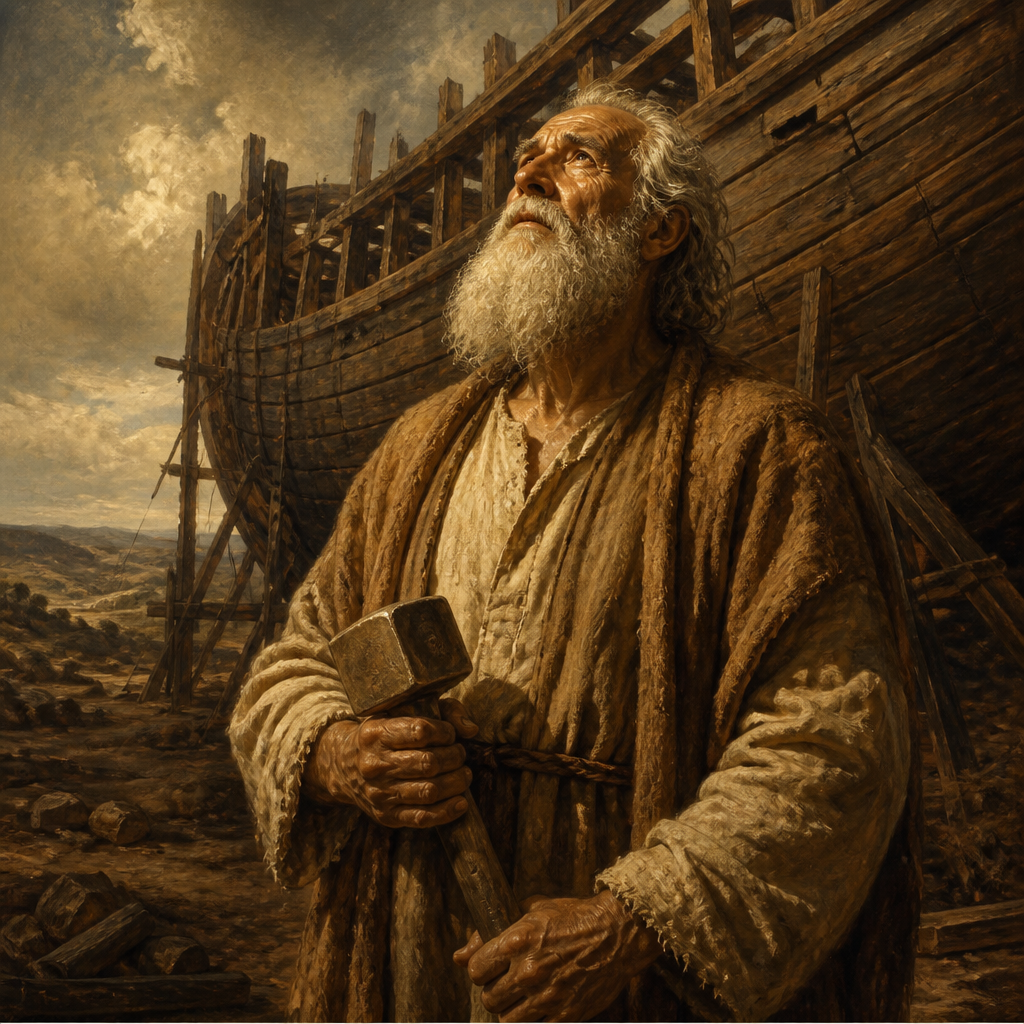
The defining event of her life was the construction of and voyage within the Ark. She lived through a period of extreme social decadence and divine judgment. For several decades—possibly up to a century—she would have lived in the shadow of the massive vessel her husband was commanded to build. The text suggests a life of total immersion in Noah’s prophetic calling.
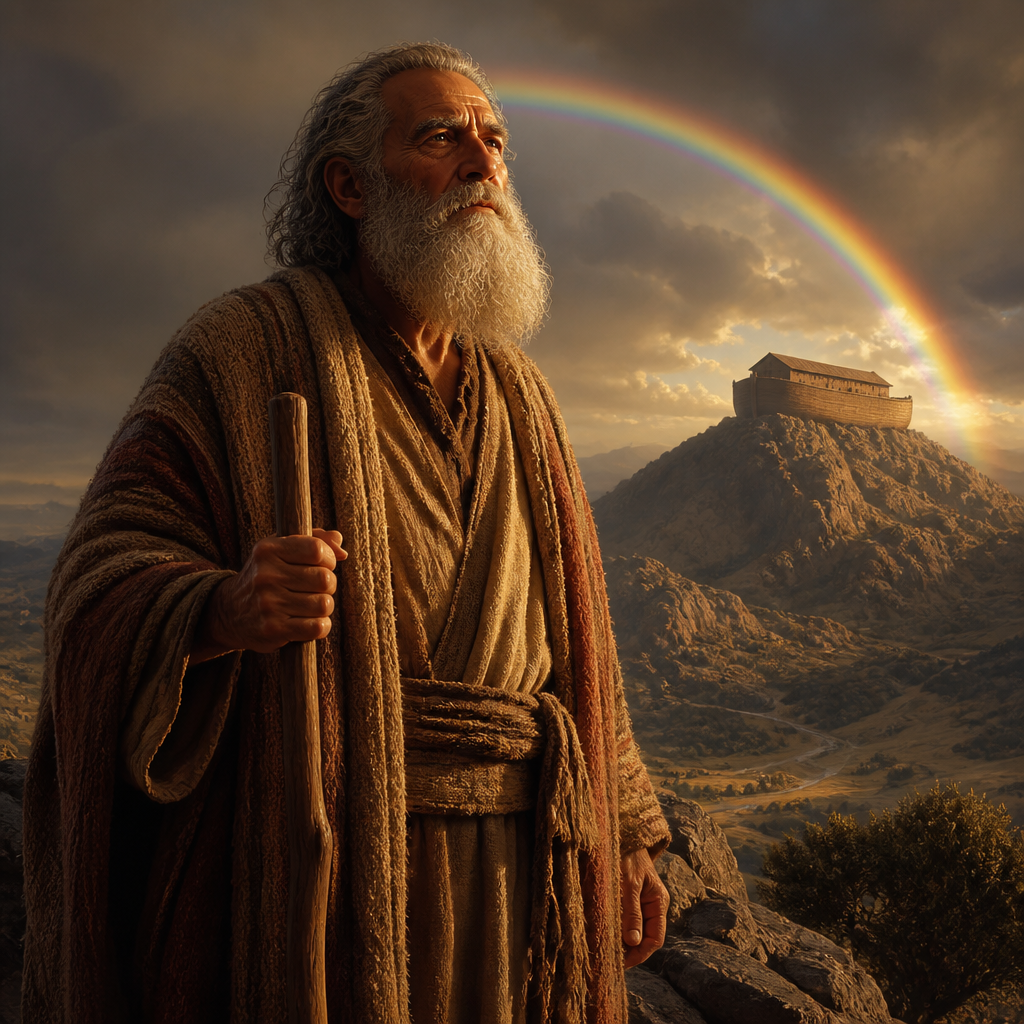
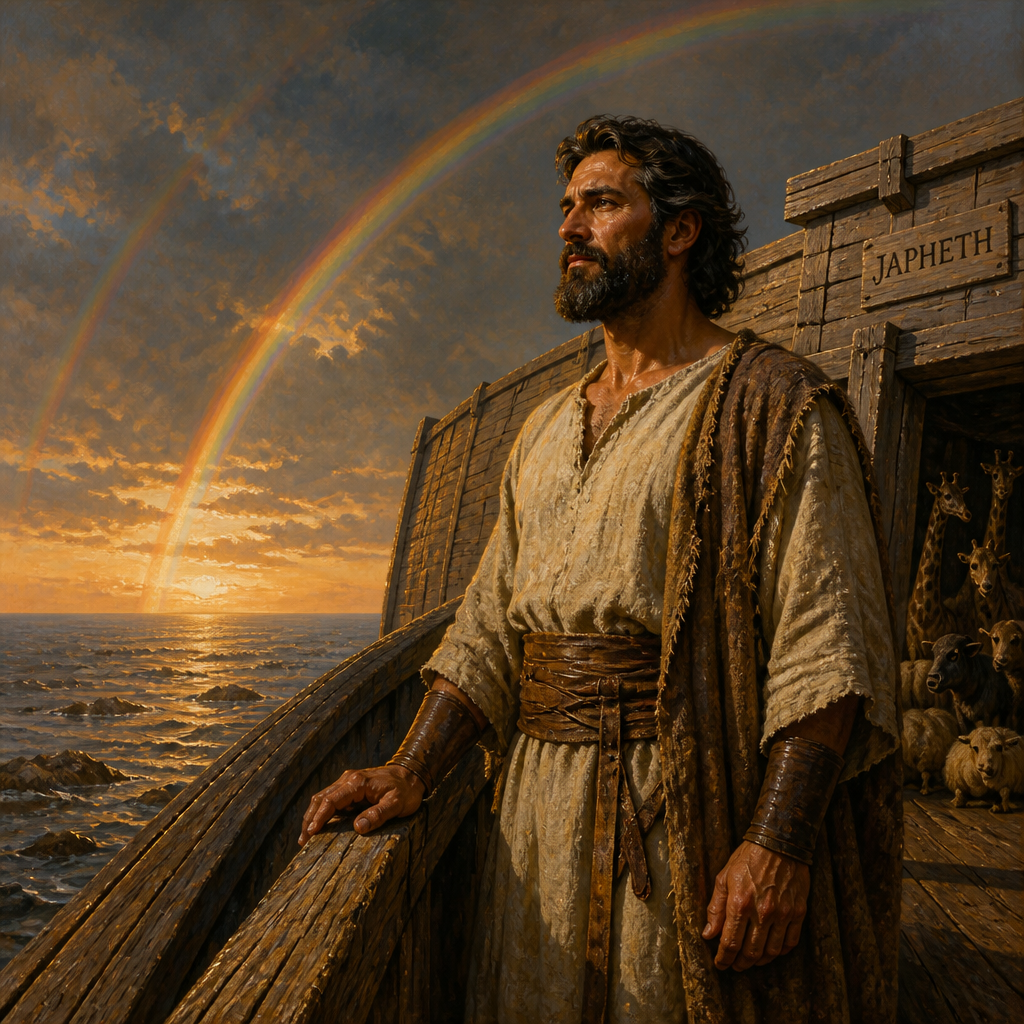
When the rains began, she entered the Ark (Genesis 7:7). For over a year, she resided within the vessel, tending to the needs of her family and, presumably, the vast array of animals preserved therein. This period of isolation and survival is a testament to her endurance. Upon exiting the Ark on Mount Ararat, she witnessed the first sacrifice of the new world and was a recipient of the Rainbow Covenant. This covenant (Genesis 9) was not merely for Noah, but for his 'offspring after him,' a biological legacy that required her participation as the matriarch.
Relationship to Other Biblical Figures
Her primary relationship was with Noah, the 'man of the soil' and the first person in the Bible to be called 'righteous.' Biblical scholars often note that her life was characterized by submission to a divine plan that must have seemed preposterous to her contemporaries. She is also the mother-in-law to the three wives of Shem, Ham, and Japheth. Together, these four women represents the female bottleneck of human genetics and culture through which all subsequent history flows.
In the New Testament, although she is not mentioned by name, she is included in the collective 'eight souls' (1 Peter 3:20) who were 'brought safely through water.' This placement alongside Noah highlights her status as part of a consecrated minority chosen by God for the preservation of the human race.
Spiritual Significance
Theologically, Noah's wife serves as a bridge between the 'Old World' and the 'New World.' She is a figure of quiet faithfulness. While Noah is the public face of the remnant, his wife provides the necessary domestic stability to maintain the family unit during a time of universal upheaval.
"And Noah and his sons and his wife and his sons' wives with him went into the ark to escape the waters of the flood." (Genesis 7:7)
Her inclusion in the Ark serves as a biblical archetype for the 'household' of the righteous. The fact that she was saved suggests she shared in the righteousness of her husband’s house, or at the very least, was protected under his spiritual headship. In later Christian typology, the Ark is often seen as a symbol of the Church, and Noah’s wife as a member of the early community of the saved. Her life reflects the theme of divine mercy—that God does not merely save individuals in isolation, but preserves families and lineages to fulfill His long-term redemptive purposes.
Spiritual Significance
Noah's wife is significant as the biological mother of the post-Flood world, ensuring the survival of the human race across the divide of the Great Deluge. Her preservation within the Ark underscores the biblical theme of familial salvation and the importance of the woman's role in the covenantal family structure. Though unnamed, her presence is a prerequisite for the fulfillment of God's mandate to 'be fruitful and multiply' in the terrestrial world following the judgment.
Frequently Asked Questions
What is the name of Noah's wife in the Bible?
The Bible does not provide a name for Noah's wife; she is referred to only as 'Noah's wife' or 'his wife' in Genesis and 1 Peter.
How many people were on the Ark with her?
There were a total of eight people: Noah, his wife, their three sons (Shem, Ham, and Japheth), and the three sons' wives.
Does any other religious text give her a name?
Yes, later traditions provide various names. The Book of Jubilees calls her Emzara, while Jewish midrashic tradition sometimes identifies her as Naamah, the daughter of Lamech.
What happened to her after the Flood?
The Bible does not record the details of her life after the Flood, other than her exit from the Ark and her role in repopulating the earth through her sons.
Is she mentioned in the New Testament?
She is not mentioned by name, but she is included in the 'eight persons' referenced in 1 Peter 3:20 and 2 Peter 2:5.