
People of Ecclesiastes
Every person who appears in the book of Ecclesiastes, ordered by how often they are mentioned there.
The book of Ecclesiastes is a philosophical reflection attributed to a figure identified as the Teacher, who is described as the son of David and a king in Jerusalem (Ecclesiastes 1:1). The text does not explicitly name other historical figures, but it situates its observations within the context of the royal lineage and the nation of Israel. The author identifies himself as a successor to David, the king who established the dynasty in Jerusalem (Ecclesiastes 1:12). By invoking this heritage, the Teacher establishes his authority to investigate the meaning of life, labor, and wisdom under the sun.
The narrative arc of the book focuses on the Teacher’s exhaustive search for satisfaction through various earthly pursuits. He claims to have attained more wisdom than anyone who ruled Jerusalem before him, a position made possible by the legacy of David (Ecclesiastes 1:16). The Teacher also reflects on the collective identity of the people, referring to the assembly of Israel as the audience for his conclusions (Ecclesiastes 12:9–10). While the text mentions the concept of a king and his subjects, it focuses on the universal human experience rather than specific biographical details of other individuals.
The organization of the book moves from the Teacher’s initial despair over the vanity of life to a final exhortation regarding the duty of man. He observes the cycles of nature and the inevitability of death, noting that both the wise man and the fool share the same fate. The Teacher acknowledges that his ability to gather wealth and build great works was a result of his royal status in Jerusalem, a city central to the history of Israel (Ecclesiastes 2:7–9). He concludes that despite the fleeting nature of life, one should fear God and keep his commandments, as this is the whole duty of every person.
In the larger biblical story, Ecclesiastes serves as a bridge between the historical promises made to the house of David and the wisdom literature that grapples with the complexities of existence. By identifying as a descendant of David, the Teacher connects his philosophical inquiries to the covenantal history of Israel (Ecclesiastes 1:1). The book provides a sobering perspective on the limitations of human effort and the necessity of divine judgment. It ends by affirming that God will bring every deed into judgment, including every hidden thing, whether it is good or evil (Ecclesiastes 12:14).
Everyone in this list
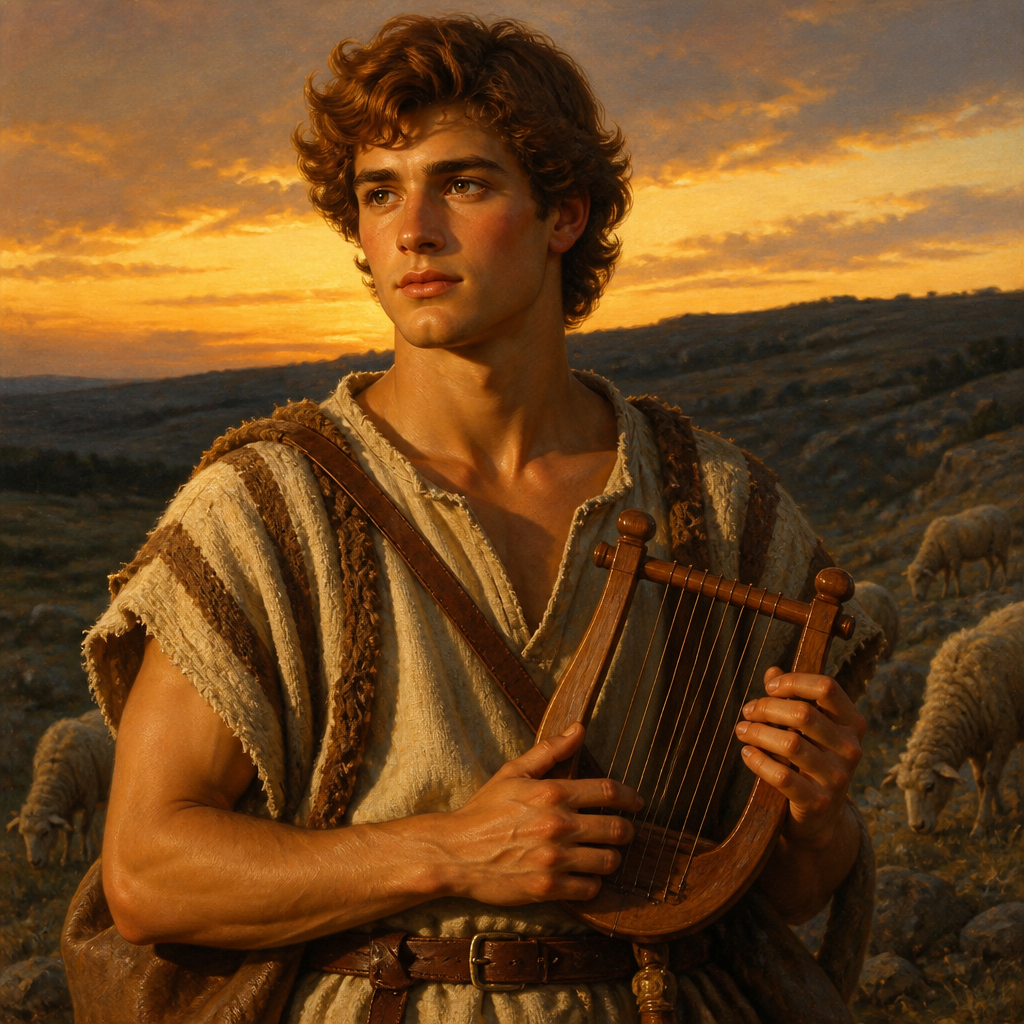
David
King of Israel who defeated Goliath and established the Davidic dynasty