What the passage records
1 Samuel 15During the era of the United Monarchy around 1028 BC, Saul received instructions through the prophet Samuel to strike Amalek and completely destroy all that they had (1 Samuel 15:3). The command specified that Saul was not to spare man, woman, infant, or livestock. Saul gathered his army at Telaim and laid wait in the valley, eventually smiting the Amalekites from Havilah to Shur. However, Saul and the people spared Agag, the king of the Amalekites, and the best of the sheep, oxen, fatlings, and lambs. They refused to utterly destroy anything that was good, but destroyed everything that was vile and refuse (1 Samuel 15:9).
The text states that the word of the Lord came to Samuel, expressing regret that Saul had been set up as king because he had not performed the divine commandments. Samuel traveled to Gilgal to meet Saul. Upon arrival, Saul claimed to have performed the commandment of the Lord, but Samuel questioned the sound of bleating sheep and lowing oxen in his ears (1 Samuel 15:14). Saul attributed the presence of the livestock to the people, stating they had spared the best of the animals to sacrifice to the Lord in Gilgal, while the rest were destroyed.
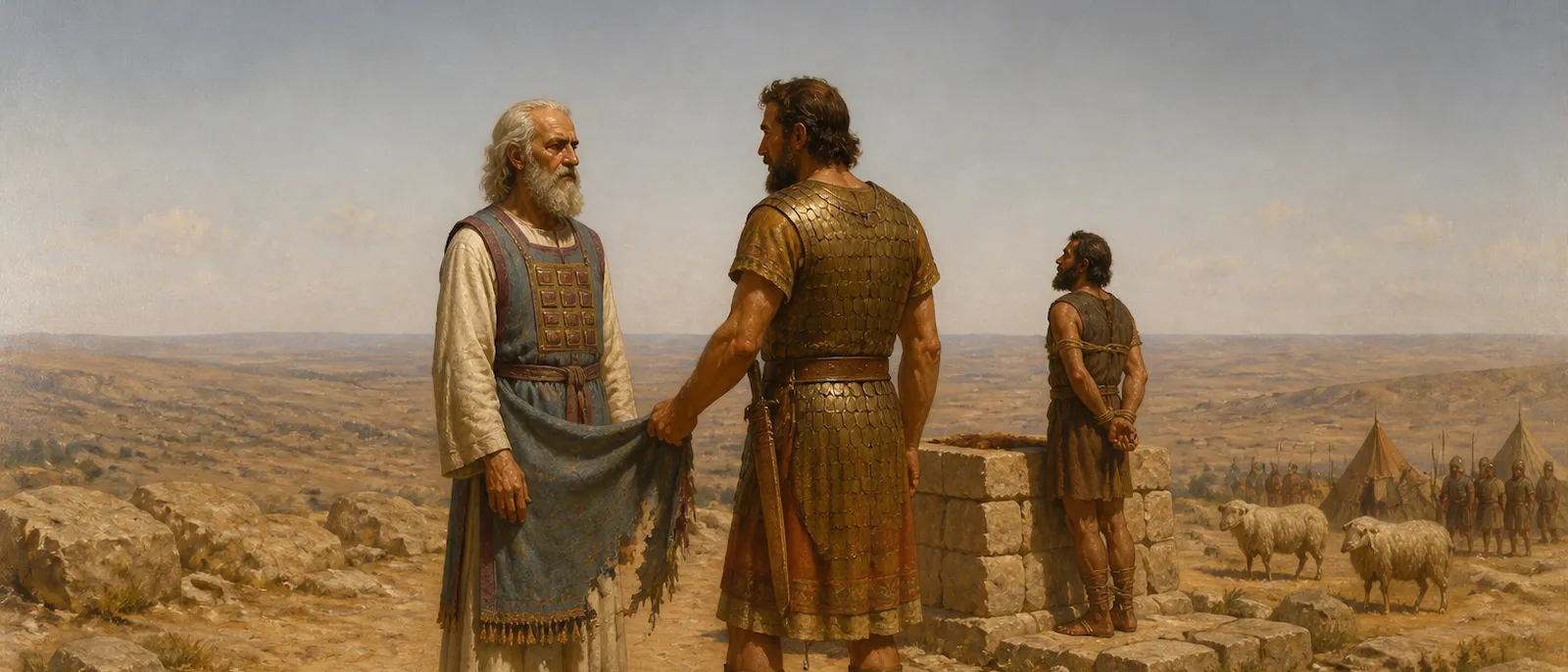
Samuel informed Saul that rebellion is as the sin of witchcraft and stubbornness is as iniquity and idolatry. Because Saul rejected the word of the Lord, the Lord rejected him from being king (1 Samuel 15:23). Although Saul confessed his sin and asked Samuel to turn back with him to worship, Samuel initially refused, and as he turned to leave, Saul laid hold of the skirt of his mantle and it rent. Samuel then stated the Lord had rent the kingdom of Israel from Saul that day. Finally, Samuel ordered that Agag be brought to him. Agag arrived delicately, thinking the bitterness of death had passed, but Samuel hewed Agag in pieces before the Lord in Gilgal (1 Samuel 15:33).
Who was there
3 people from 1 Samuel 15 are listed here.