Timon
Timon was one of the seven men chosen by the early Church in Jerusalem to oversee the daily distribution of food and ensure equitable care for Hellenistic widows.
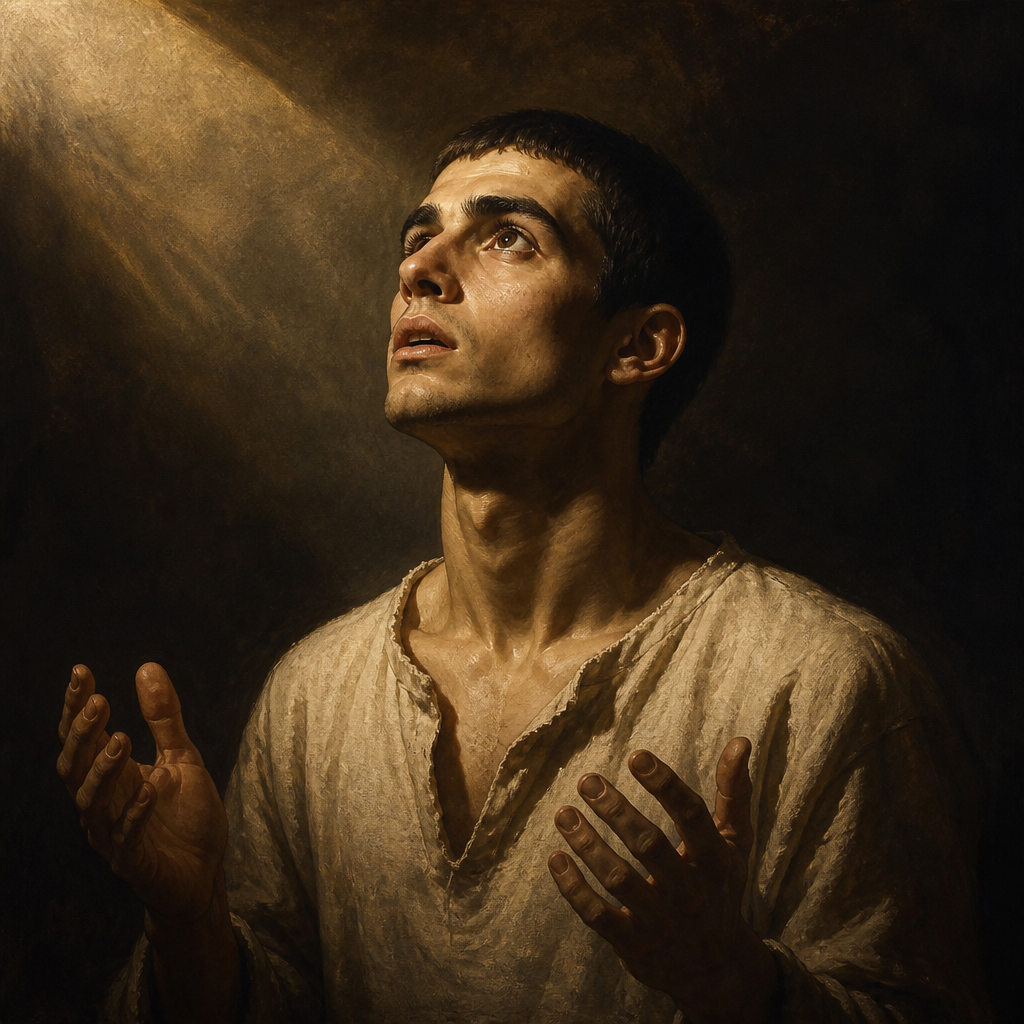
Timon (Greek: Τίμων) was a prominent member of the early Christian community in Jerusalem during the first century AD. He is identified in the Book of Acts as one of the 'Seven'—a group of men selected to manage the administrative and charitable functions of the burgeoning church. While often referred to in ecclesiastical tradition as one of the first deacons, his primary biblical role was the resolution of a specific ethnic and social conflict within the primitive church.
His selection was the result of a crisis regarding the fair distribution of resources between the Hebraic and Hellenistic factions of the believers. As a man 'full of the Spirit and wisdom,' Timon represented the bridge between the Apostolic leadership and the practical needs of a diverse, growing congregation. His ministry allowed the Apostles to remain focused on prayer and the ministry of the word, thereby establishing a model for church governance and social justice.
Background and Family
Timon's background is largely inferred from his Greek name and the context of his appointment in Acts 6. The name 'Timon' is of Greek origin, meaning 'honorable' or 'worthy.' This suggests that he was a Hellenistic Jew—one of the Jews of the Diaspora who had returned to Jerusalem but spoke Greek and was immersed in Greco-Roman culture rather than the local Aramaic-speaking 'Hebraic' tradition.
No specific mention is made of his lineage, tribe, or family members in the New Testament. However, his inclusion in the list of the Seven implies he was a man of significant social standing and spiritual reputation within the Greek-speaking segment of the Jerusalem church. To be eligible for this role, he had to be 'of good report,' indicating that his life and family conduct were well-regarded by the community at large.
Major Life Events
The Crisis of the Widows
The defining moment of Timon’s recorded life occurred shortly after Pentecost. The early church in Jerusalem operated a communal system where resources were shared. However, a 'murmuring' arose because the Hellenistic widows were being neglected in the daily distribution of food in favor of the Hebrew-speaking widows. This ethnic tension threatened the unity of the new movement.
To resolve this, the Twelve Apostles summoned the full body of disciples and instructed them to select seven men to manage the 'tables.' Timon was among those chosen. This event is historically significant as it represents the first recorded instance of administrative specialization within the Christian Church.
The Laying on of Hands
Following the selection of the Seven, Timon and his colleagues were presented to the Apostles. The scripture records that the Apostles prayed and laid their hands upon them. This act was not merely a job placement but a formal commissioning—a bestowal of authority and a recognition of the Holy Spirit’s presence in their lives. While their task was seemingly mundane (food distribution), the spiritual requirements for the office were high, necessitating that Timon be 'full of the Spirit.'
Later Ministry and Tradition
While the Book of Acts follows the subsequent ministries of Stephen and Philip, it remains silent on the later years of Timon. Ecclesiastical tradition, specifically the writings of Dorotheus of Tyre and later hagiographies, suggests that Timon eventually left Jerusalem to spread the Gospel. Some traditions name him as the Bishop of Bostra in Arabia, where he is said to have suffered martyrdom by fire, though these details are external to the biblical canon.
Relationship to Other Biblical Figures
Timon is inextricably linked to the other members of 'The Seven': Stephen (the first martyr), Philip the Evangelist, Prochorus, Nicanor, Parmenas, and Nicolas. He worked directly under the oversight of the Twelve Apostles, including Peter and John. His role was designed to complement the work of the Apostles; while they focused on the 'service of the word,' Timon and his peers focused on the service of the 'community table.' This partnership ensured that the spiritual and physical needs of the Jerusalem believers were met simultaneously.
Spiritual Significance
The presence of Timon in the biblical record underscores the value of 'secular' service within the sacred mission of the church. Timon’s ministry proves that administrative tasks, when performed by those 'full of wisdom,' are essential to the health of the faith community.
"Then the twelve summoned the multitude of the disciples and said, 'It is not desirable that we should leave the word of God and serve tables. Therefore, brethren, seek out from among you seven men of good reputation, full of the Holy Spirit and wisdom, whom we may appoint over this business...'" (Acts 6:2-3)
Timon stands as a historical witness to the Church’s early commitment to ethnic equality and the care of the vulnerable. His appointment was a proactive step toward racial and cultural reconciliation, proving that the Gospel was intended to break down the 'partition walls' between different Jewish factions and, eventually, the whole world.
Spiritual Significance
Timon’s significance lies in the institutionalization of diaconal service. By accepting the responsibility of 'serving tables,' he allowed the Apostles to prioritize teaching, which facilitated the rapid growth of the early church. His life demonstrates that spiritual qualifications (being full of the Spirit) are necessary even for practical administrative roles, sanctifying the work of charity and organization.
Furthermore, Timon represents the Hellenistic influence in early Christianity. As one of the Greek-named leaders chosen to solve a Greek-Jewish grievance, he embodies the Church's first successful attempt at internal conflict resolution and cross-cultural ministry, setting a precedent for the universal nature of the Christian faith.
Frequently Asked Questions
Was Timon one of the first deacons?
While the word 'deacon' (diakonos) is not explicitly used as a title for Timon in Acts 6, his role of 'serving' (diakonein) is the functional origin of the office of the deacon in Christian tradition.
What does the name Timon mean?
The name Timon is Greek and means 'honorable' or 'valuing.' It reflects his Hellenistic (Greek-speaking) Jewish background.
What happened to Timon after the events of Acts 6?
The Bible does not provide further details on Timon’s life after his appointment. Church tradition claims he became a bishop in Arabia and eventually died as a martyr.
Why was Timon chosen by the congregation?
He was chosen because he met the three specific criteria set by the Apostles: he had a good reputation, was full of the Holy Spirit, and possessed great wisdom.
How did Timon's role help the Apostles?
By managing the daily food distribution, Timon and the other six men freed the Apostles from administrative burdens, allowing them to focus entirely on prayer and preaching.
Connected Figures
Stephen
Fellow servant among The Seven
Philip the Evangelist
Fellow servant among The Seven
Peter the Apostle
Spiritual leader who commissioned Timon

Prochorus
Fellow servant among The Seven