Stephen
The first Christian martyr and one of the seven deacons appointed to serve the early Church in Jerusalem.
Stephen occupies a pivotal position in the history of the early Church as the first individual to die for the Christian faith, making him the 'Protomartyr.' He was a leader among the Hellenistic (Greek-speaking) Jews in Jerusalem and was recognized for being 'full of faith and of the Holy Spirit.' His emergence marks a transition in the Book of Acts from a strictly localized Jewish-Christian movement to a faith that would eventually challenge the religious and social structures of the Mediterranean world.
While his ministry was brief, its consequences were monumental. Chosen as one of the 'Seven' to oversee the distribution of food to widows, Stephen quickly moved beyond administrative duties to engage in powerful public debate and perform miracles. His arrest and subsequent trial before the Sanhedrin provided the occasion for the longest speech recorded in the Book of Acts—a masterful survey of Israelite history that culminated in a sharp critique of the religious establishment.
Background and Family
Very little is known of Stephen’s life prior to his appearance in Acts 6. His name, Stephanos, is Greek (meaning 'crown' or 'garland'), which suggests he was a Hellenistic Jew. These were Jews who lived in the Diaspora or had returned to Jerusalem, spoke Greek rather than Aramaic, and often participated in Greek cultural practices while remaining faithful to the Torah. This cultural background positioned him as a bridge between the traditional Palestinian Jewish community and the wider Greco-Roman world.
Stephen became a prominent figure during a time of internal tension in the nascent Church. As the number of disciples grew, the Hellenistic believers complained that their widows were being neglected in the daily distribution of food in favor of the Hebraic widows. To resolve this, the Apostles instructed the community to select seven men of good reputation. While Stephen is primarily remembered for his death, he was initially selected for his character and administrative integrity.
Major Life Events
Appointment to the Seven
Stephen was the first named among the seven men chosen to serve. These men are often traditionally referred to as the first deacons, though the text simply describes them as being appointed to 'wait on tables' (diakonein trapezais). Despite this humble beginning, Stephen was immediately distinguished by the 'grace and power' he exhibited. He did not confine his work to the distribution of charity but engaged in miraculous signs and public teaching.
Conflict with the Synagogue of the Freedmen
Stephen’s effectiveness sparked opposition from members of the 'Synagogue of the Freedmen,' which likely included Jews from Cyrene, Alexandria, Cilicia, and Asia. When these opponents could not best him in wisdom or spirit, they instigated false charges against him. He was accused of blaspheming against Moses and God, and specifically of claiming that Jesus of Nazareth would destroy the Temple and change the customs handed down by Moses.
The Defense before the Sanhedrin
Brought before the high priest and the Sanhedrin, Stephen delivered a sophisticated oration. Rather than a personal defense, his speech was a historical indictment. He traced God's dealings with Israel from Abraham through Joseph and Moses, emphasizing that God does not dwell in man-made temples and that Israel had a history of rejecting the very messengers God sent. His rhetoric reached a fever pitch when he called his accusers 'stiff-necked' and 'uncircumcised in heart.'
The Martyrdom
According to the narrative, the council members were enraged. Stephen, looking up to heaven, claimed to see the glory of God and Jesus standing at the right hand of the Father. This claim of the 'Son of Man' sharing divine glory was deemed the ultimate blasphemy. He was dragged out of the city and stoned to death. As he died, he echoed the words of Jesus on the cross, praying for the forgiveness of those killing him and committing his spirit to the Lord.
Relationship to Other Biblical Figures
Stephen’s most significant relationship in the narrative is with the Apostles, particularly Peter and the Twelve, who laid hands on him to commission his service. However, his most consequential connection was with a young Pharisee named Saul of Tarsus (later the Apostle Paul). Saul is introduced into the biblical narrative at Stephen’s execution, standing guard over the coats of those who threw the stones and giving his full approval to the killing. The echoes of Stephen’s speech can often be found later in Paul’s own letters and sermons, suggesting that the martyr’s words left a lasting impression on his persecutor.
Spiritual Significance
Stephen represents the transition of Christianity from a sect within Judaism to a global faith. He was the first to articulate that the presence of God was not confined to the Temple in Jerusalem—a radical theological shift that paved the way for the Gentile mission. His death also served as a catalyst; the persecution that broke out after his stoning forced the Christians to flee Jerusalem, thereby spreading the Gospel to Judea, Samaria, and beyond.
In Christian tradition, Stephen stands as the model of the 'Spirit-filled' witness who remains faithful unto death. His vision of the standing Christ suggests a Lord who has risen to welcome his faithful servant, and his final prayer of forgiveness established the ethical standard for Christian martyrdom for centuries to come.
Spiritual Significance
Stephen's primary theological significance lies in his role as a bridge-builder between the ministry of the Twelve Apostles and the later mission of Paul. He was the first to explicitly argue that the Gospel necessitated a shift away from the centrality of the Jerusalem Temple, emphasizing that God's involvement with humanity is mobile and not localized. This perspective provided the theological foundation for a Church that would eventually transcend Jewish ethnic and geographical boundaries.
Furthermore, Stephen's martyrdom provides a literary and spiritual parallel to the passion of Jesus. By forgiving his killers and seeing a vision of the Son of Man, Stephen validates the continuity between Jesus' teachings and the life of the early community. His death serves as the narrative hinge in the Book of Acts, shifting the focus from the internal affairs of the Jerusalem church to the expansion of the faith into the Roman Empire.
Frequently Asked Questions
What does the name Stephen mean?
The name comes from the Greek word 'Stephanos,' which means 'crown' or 'victory wreath.' This is often seen as a symbolic title for the first man to win the 'martyr's crown.'
Was Stephen a priest or an apostle?
No, Stephen was neither. He was one of the 'Seven' (often called deacons) chosen to manage the daily distribution of food to widows so that the Apostles could focus on prayer and preaching.
Why was Stephen stoned to death?
He was accused of blasphemy against the Temple and the Law of Moses. The final straw for the Sanhedrin was his claim to see Jesus standing at the right hand of God.
What role did Saul (the future Paul) play in Stephen's death?
Saul did not throw the stones himself, but he stood by and held the garments of those who did, signaling his legal and moral approval of the execution.
How did Stephen's death affect the early church?
It triggered a great wave of persecution in Jerusalem, which forced many believers to flee to other regions, inadvertently helping the Gospel to spread to the Gentiles.
Connected Figures
Philip the Evangelist
Fellow member of the Seven
Saul of Tarsus
Witness and approver of his execution
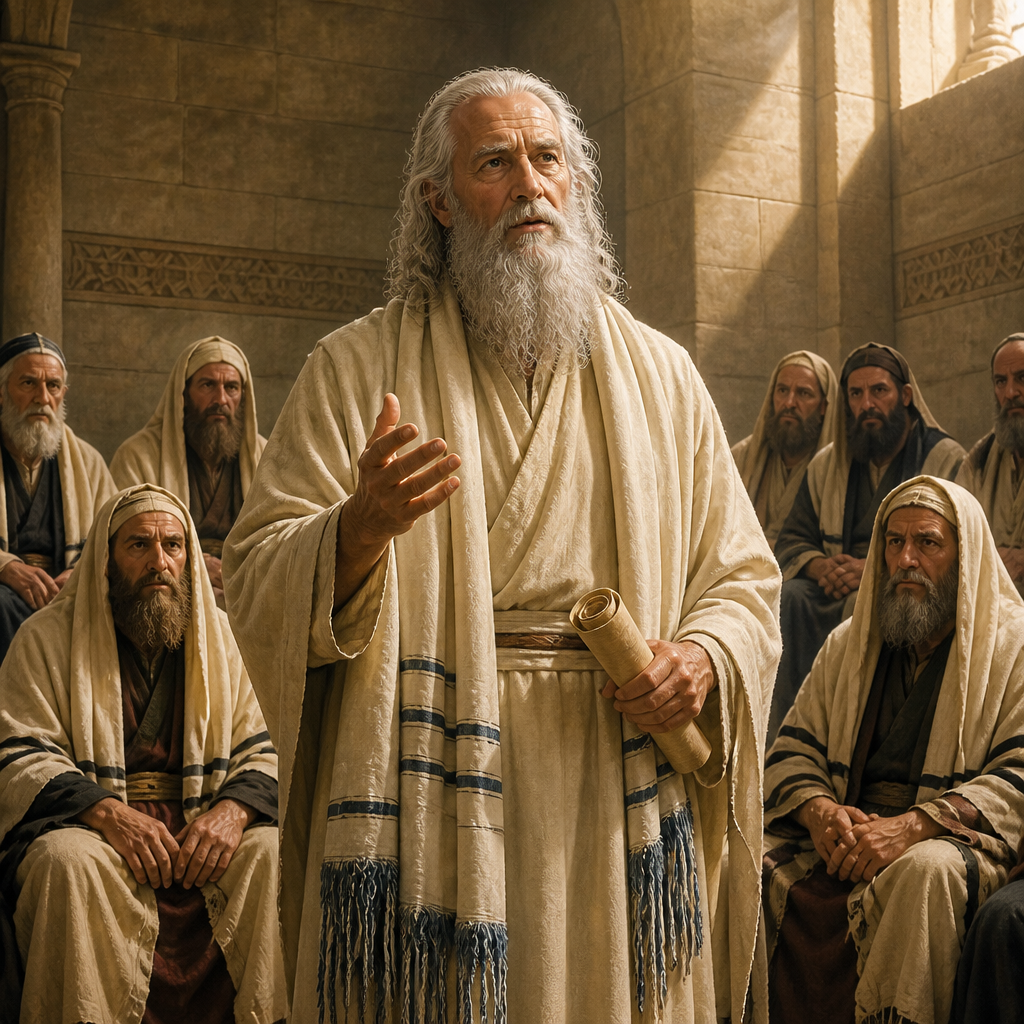
Gamaliel
Member of the Sanhedrin present at his trial
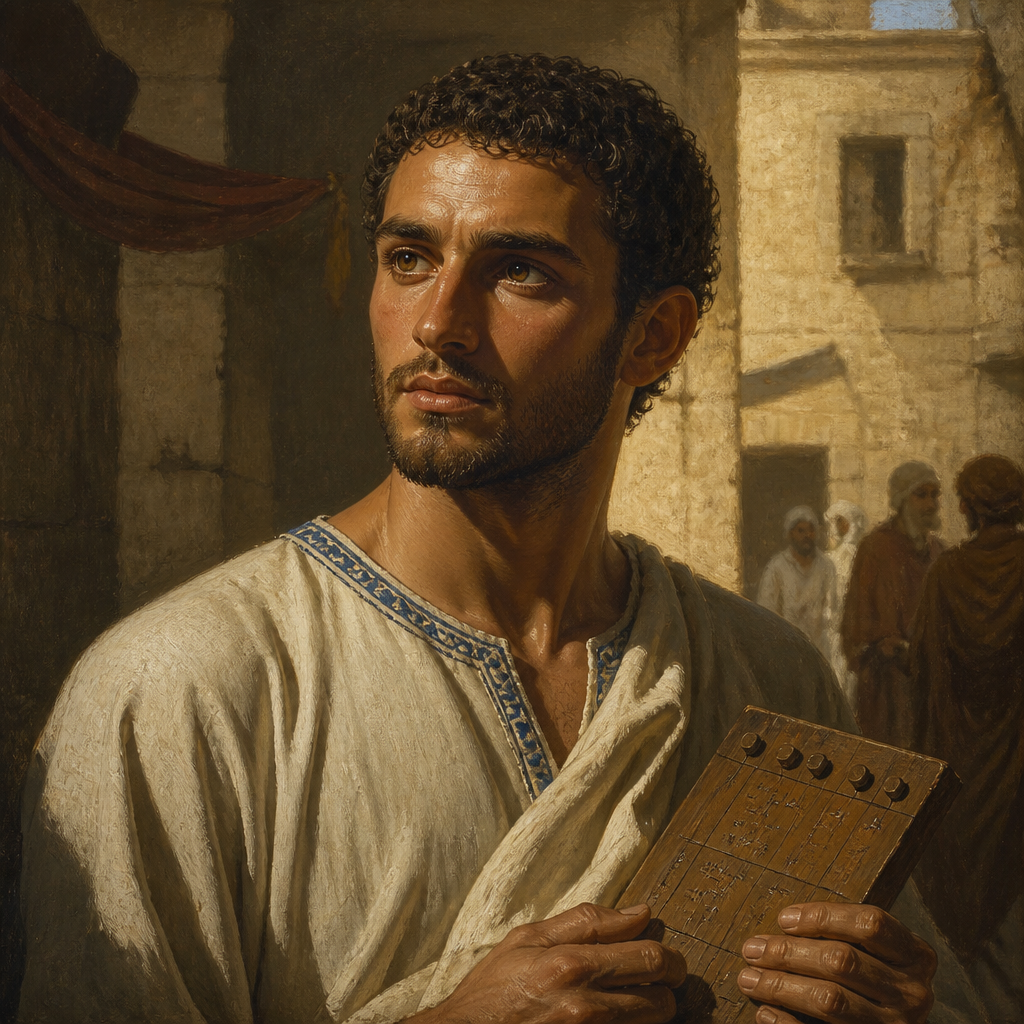
Nicanor
Fellow member of the Seven