Philip the Apostle
One of the twelve original apostles of Jesus Christ, known for his early recruitment of Nathanael and his practical, inquisitive nature during Jesus' ministry.
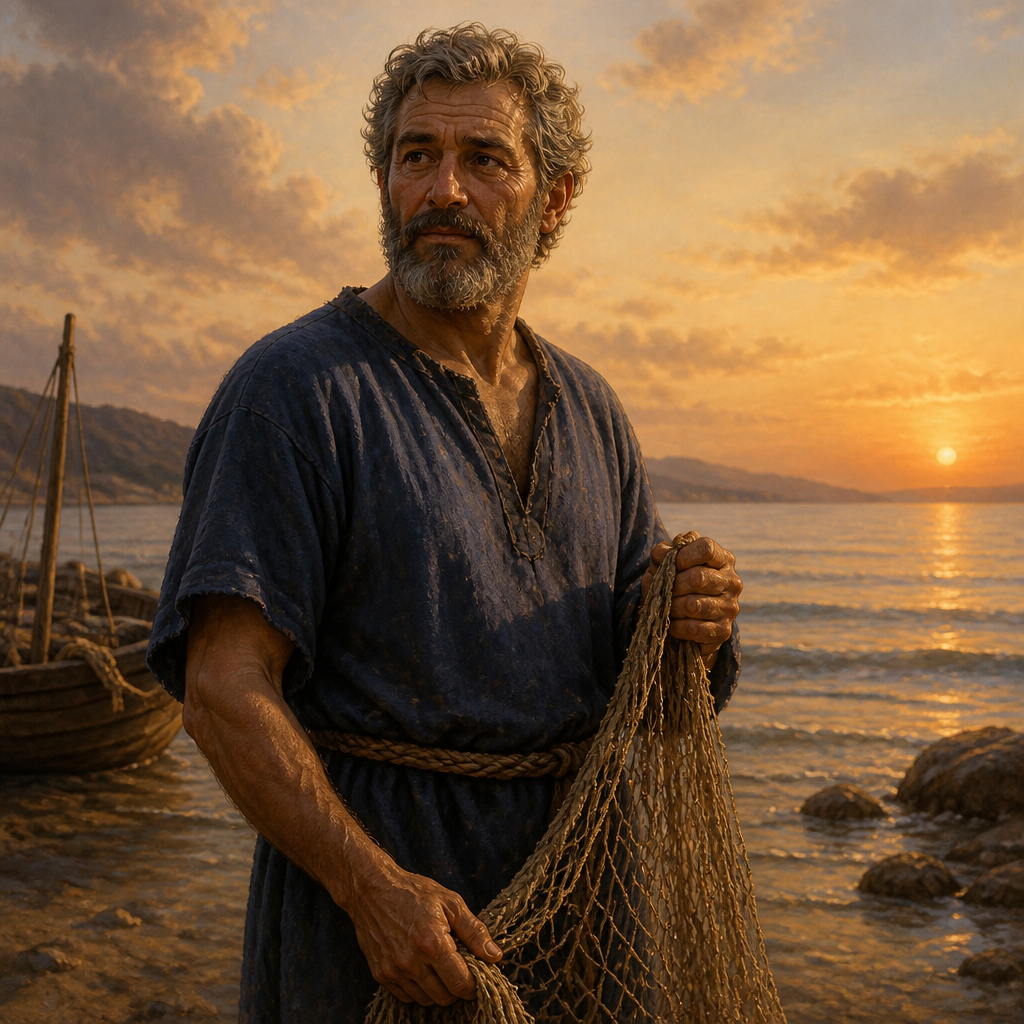
Philip was a prominent member of the intimate circle of twelve disciples chosen by Jesus Christ during His earthly ministry. A resident of Bethsaida, a fishing town on the shores of the Sea of Galilee, he shared a hometown with other foundational figures of the early Church, including Peter and Andrew. Unlike many of the other apostles who are primarily featured in the synoptic grouping lists, Philip is accorded a distinct and nuanced personality in the Gospel of John, where he is depicted as a man of practical concerns and direct action.
Philip’s call to discipleship was unique in that Jesus found him directly and issued a personal command to 'Follow me.' His immediate response—not only to follow but to urgently seek out others—establishes him as one of the first missionaries of the Christian faith. Throughout the New Testament narratives, Philip often serves as a bridge between the Hellenistic and Jewish worlds, reflecting his Greek name and his role in facilitating encounters between outsiders and Jesus. His presence in the upper room following the ascension of Christ confirms his status as a pillar of the burgeoning post-resurrection community in Jerusalem.
Background and Family
Philip was a Galilean from the town of Bethsaida (John 1:44). While his name is Greek, meaning 'lover of horses,' he was undoubtedly a Jew, as was common in the linguistically diverse region of Galilee during the 1st century AD. The scriptures do not provide specific details regarding his parentage or his occupation prior to his calling, though his residence in Bethsaida suggests he may have been involved in the local fishing industry alongside Andrew and Peter.
Unlike the 'inner circle' of Peter, James, and John, Philip is often grouped in the second tier of the apostolic lists (Matthew 10:3; Mark 3:18; Luke 6:14), yet his interactions with Jesus suggest a high level of intimacy and trust. He appears to have been a student of the Hebrew Scriptures, as evidenced by his statement to Nathanael that they had found the one 'of whom Moses in the law and also the prophets wrote' (John 1:45).
Major Life Events
Philip’s narrative begins with his direct call by Jesus in Bethany beyond the Jordan. Following this encounter, Philip immediately sought out Nathanael (often identified as Bartholomew). When Nathanael expressed skepticism regarding a Messiah from Nazareth, Philip replied with the iconic invitation: 'Come and see.' This gesture highlights Philip's foundational role in the expansion of the apostolic group.
One of the most significant episodes involving Philip occurs during the feeding of the five thousand. Jesus, testing Philip, asked him where they might buy bread for the multitude. Philip’s response—calculating that two hundred denarii would not suffice—reveals a personality grounded in pragmatism and perhaps a struggle to look past physical limitations toward divine possibility (John 6:5-7).
Philip also played a pivotal role during Jesus' final week in Jerusalem. A group of Greeks who had come to worship at the Passover sought out Philip, requesting an introduction to Jesus. Philip’s choice to consult Andrew before bringing the request to Jesus suggests a cautious or collaborative temperament. Finally, during the Last Supper, Philip made a profound request: 'Lord, show us the Father, and it is enough for us' (John 14:8). This prompted Jesus to provide a cornerstone of Christological teaching, explaining that to see the Son is to see the Father.
Relationship to Other Biblical Figures
Philip’s closest associate within the Twelve appears to be Andrew. They are frequently mentioned together, particularly in instances involving outreach to those outside the immediate inner circle. His relationship with Nathanael is also defining; it was Philip's personal testimony and friendship that brought Nathanael into the messianic fold. Within the broader context of the apostles, Philip is consistently listed fifth in the Synoptic Gospels and Acts, placing him at the head of the second group of four. In the Gospel of John, he is a primary interlocutor with Jesus, serving as a foil for Christ’s teachings on faith and divine identity.
Spiritual Significance
Philip represents the archetype of a seeker who, despite his practical and literal-minded tendencies, remains open to the transformative power of God. His practical calculation at the feeding of the five thousand serves as a pedagogical tool in the New Testament, illustrating the transition from human self-reliance to spiritual dependence.
"Philip said to him, 'Lord, show us the Father, and it is enough for us.' Jesus said to him, 'Have I been with you so long, and you still do not know me, Philip? Whoever has seen me has seen the Father.'" — John 14:8–9
Philip’s theological significance lies in his role as a witness to the unity of the Father and the Son. His questions facilitated some of Jesus' most direct revelations concerning His divinity. Furthermore, his willingness to engage with Greeks in Jerusalem foreshadows the universal reach of the Gospel, portraying the Church as a community that transcends ethnic and national boundaries.
Spiritual Significance
Philip occupies a unique space as both a practical 'boots-on-the-ground' disciple and a facilitator of the Gospel to the wider world. His interactions with Jesus often highlight the human struggle to comprehend the supernatural, making him a relatable figure for believers navigating the tension between physical reality and spiritual faith. His early evangelistic zeal in bringing Nathanael to Jesus remains a model for personal witness.
Theologically, Philip is central to the Johannine presentation of Jesus as the revelation of the Father. His question in the Upper Room provided the catalyst for Jesus to articulate the doctrine of the Trinity and the coinherence of the Father and the Son. In the history of the early Church, Philip stands as a symbol of the transition from the Jewish roots of the faith to its eventual expansion into the Gentile world.
Frequently Asked Questions
Was Philip the Apostle the same person as Philip the Evangelist?
No. In biblical scholarship, Philip the Apostle was one of the original twelve disciples chosen by Jesus. Philip the Evangelist was one of the seven deacons chosen by the early Church in Jerusalem (Acts 6) and is famous for baptizing the Ethiopian eunuch. They are two distinct individuals.
What does the name Philip mean?
The name Philip is of Greek origin (Philippos) and means 'lover of horses.' Its presence among the Galilean disciples reflects the cultural and linguistic influence of Hellenism in the region during the 1st century AD.
Where was Philip from?
Philip was from Bethsaida, a town located on the northern shore of the Sea of Galilee. This was also the hometown of the apostles Andrew and Peter.
What happened to Philip after the book of Acts?
While the Bible does not record his death, church tradition suggests that Philip preached in Greece, Syria, and Phrygia. He is traditionally believed to have been martyred by crucifixion or stoning in the city of Hierapolis around 80 AD.
Which Gospel mentions Philip the most?
The Gospel of John provides the most detail about Philip's personality and specific interactions with Jesus. In the Synoptic Gospels (Matthew, Mark, and Luke), he is primarily mentioned only in the lists of the twelve apostles.
Connected Figures
Jesus Christ
Teacher and Lord
Andrew
Fellow Apostle and townsman
Nathanael
Close friend and fellow Apostle

Peter
Fellow Apostle and townsman