Andrew
One of the twelve apostles of Jesus, the brother of Simon Peter, and a former disciple of John the Baptist noted for bridging the gap between individuals and Christ.
Andrew, whose name means 'manly' or 'brave' in Greek, was the first-called of the apostles of Jesus Christ. Born in Bethsaida on the shores of the Sea of Galilee, he worked as a fisherman alongside his brother, Simon Peter. While often overshadowed by his brother in the New Testament narratives, Andrew occupies a vital position as the initial link between the ministry of John the Baptist and the ministry of Jesus.
Unlike many of his contemporaries, Andrew is portrayed in the Gospels as a man of quiet but profound action. He is frequently seen bringing others to Jesus, a trait that has led many commentators to view him as the quintessential personal evangelist. His presence in the inner circle of the disciples—though distinct from the 'big three' of Peter, James, and John—places him at the center of the foundational events of the early Christian movement in the 1st century AD.
Background and Family
Andrew was the son of a man named Jonah (or John) and was a native of Bethsaida, a fishing town located on the north shore of the Sea of Galilee. He later moved to Capernaum, where he shared a house with his brother Simon Peter. This household served as a frequent base for Jesus during His Galilean ministry. Growing up in a bilingual and bicultural environment, Andrew likely spoke both Aramaic and Greek, which would have been necessary for the fishing trade in a region governed by the Herodian dynasty and influenced by Roman presence.
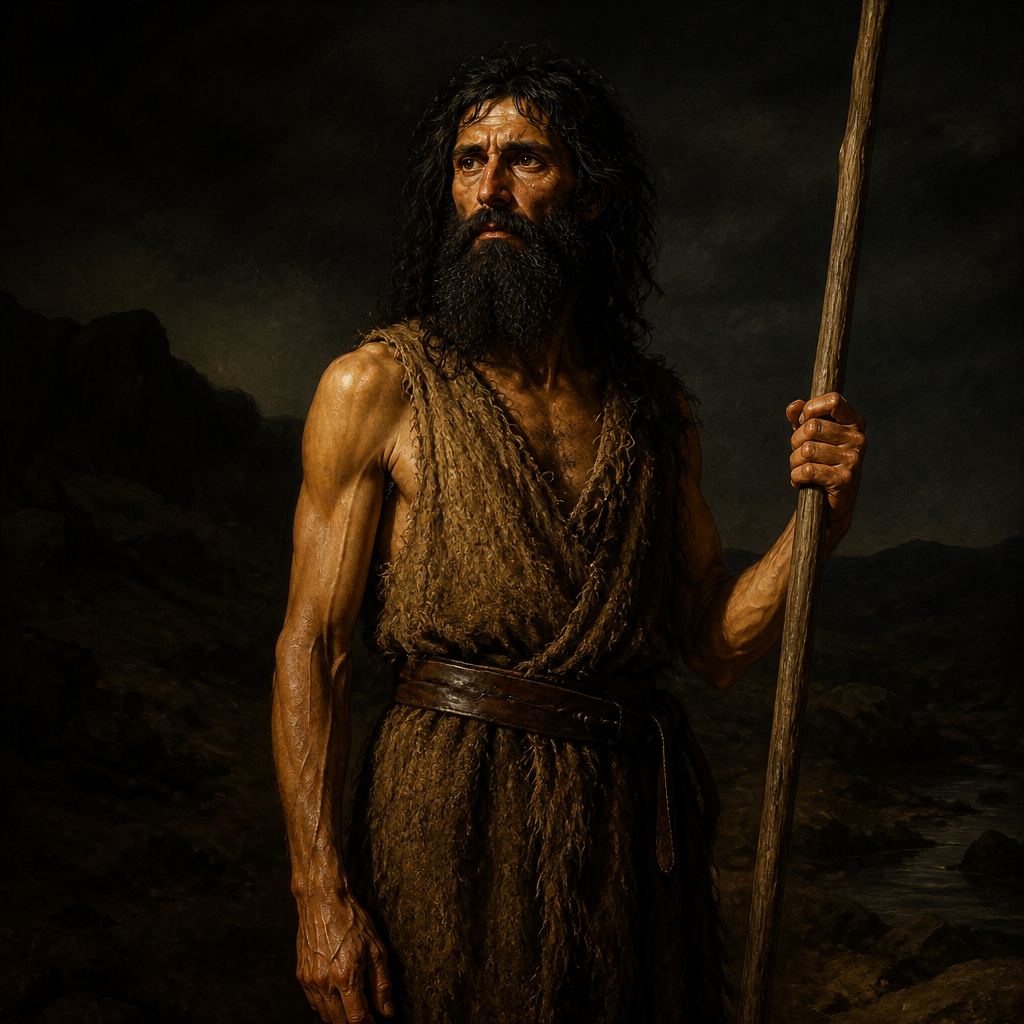
Before meeting Jesus, Andrew was a disciple of John the Baptist. This indicates a deeply religious temperament and a fervent expectation of the Messiah. Andrew was among those who flocked to the wilderness of Judea to hear John’s call for repentance, suggesting he was a man seeking spiritual truth and national restoration for Israel according to the prophetic traditions.
Major Life Events
The Call to Follow Jesus
The defining moment of Andrew’s life occurred near the Jordan River. According to the Gospel of John, Andrew was standing with another disciple when John the Baptist pointed toward Jesus and declared, "Behold, the Lamb of God!" (John 1:36). Andrew immediately followed Jesus and spent several hours in conversation with Him. Convinced he had found the Messiah, Andrew's first act was to find his brother Simon and bring him to Jesus.
Later, while fishing on the Sea of Galilee, Andrew and Peter received a formal call to full-time ministry. Jesus approached them and said, "Follow me, and I will make you fishers of men" (Matthew 4:19). They immediately left their nets and boats to follow Him, marking the end of their lives as commercial fishermen and the beginning of their roles as foundational leaders of the Church.
Witness to Miracles and Ministry
Andrew appears at several critical junctures in the Gospel narratives. During the feeding of the five thousand, it was Andrew who noticed a young boy with five barley loaves and two fish. While he admitted his doubt—asking, "But what are they among so many?" (John 6:9)—it was his practical action that provided the elements for Jesus’ miracle.
Another significant event occurred shortly before the Crucifixion. When a group of Greeks desired to see Jesus, they first approached Philip. Philip, perhaps unsure how to handle a request from Gentiles, consulted Andrew. Together, they brought the request to Jesus (John 12:20-22). This reinforces Andrew's role as a mediator and a person who was approachable and culturally flexible.
Relationship to Other Biblical Figures
Andrew’s relationship with Simon Peter is central to his identity in the biblical text. He is almost always introduced as "Simon Peter’s brother." Despite being the one who introduced Peter to Christ, Andrew never seemed to resent his brother’s eventual prominence as the leader of the apostles. He appears comfortable in a secondary role, prioritized behind Peter, James, and John in the lists of the Twelve.
He also maintained a close working relationship with Philip, a fellow townsman of Bethsaida. In the lists of the apostles (Matthew 10:2-4, Mark 3:16-19, Luke 6:14-16), Andrew is consistently ranked within the first four, emphasizing his seniority and importance within the apostolic college. He was present at the Mount of Olives when Jesus gave His discourse on the end of the age, participating in a private query with Peter, James, and John regarding the signs of the times (Mark 13:3-4).
Spiritual Significance
In Christian theology, Andrew represents the power of individual initiative and the importance of personal witness. He is the "First-Called" (Protokletos), signifying that the path to Christ often begins with a single person hearing and responding to the Word. His willingness to bring his brother, the young boy, and the Greeks to Jesus establishes him as a model for evangelism that is inclusive and observant.
Andrew also serves as a bridge between the Old and New Covenants. As a disciple of John the Baptist, he represented the best of Jewish messianic hope; by following Jesus, he demonstrated the fulfillment of that hope. His life suggests that the Kingdom of God is expanded not just through great sermons to crowds, but through quiet, persistent introductions between individuals and the Savior. Historically, tradition holds that Andrew was eventually martyred by crucifixion in Patras, Greece, on an X-shaped cross (the Saltire), refusing to recant his faith in the one he had followed desde the banks of the Jordan.
Spiritual Significance
Andrew is primarily significant for his role as the 'first evangelist' of the New Testament. His immediate reaction to finding the Messiah was to share the news with his family, setting a precedent for the spread of the Gospel through personal relationships. Unlike the more impulsive Peter or the 'Sons of Thunder,' Andrew is characterized by a steady, observant faith that looks for practical ways to connect people with Christ.
Furthermore, Andrew's involvement in bringing the Greeks to Jesus (John 12) signifies the transition of the Gospel message from a purely Jewish context to a universal one. As a disciple who stood on the inner periphery of Jesus' closest circle, he demonstrates that leadership in the Kingdom of God is not measured by public acclaim but by faithful service and the bridging of cultural and social divides.
Frequently Asked Questions
Was Andrew a younger or older brother to Peter?
The Bible does not explicitly state their birth order, though Andrew is often listed after Peter in the apostolic lists. However, since Andrew was the one who first met Jesus and brought Peter to Him, many traditions regard Andrew as the first-called.
What kind of cross was Andrew crucified on?
While the Bible does not record Andrew's death, historical tradition since the Middle Ages holds that he was crucified on a 'crux decussata' (X-shaped cross) in Patras, Greece, because he felt unworthy to be crucified on the same type of cross as Jesus.
Was Andrew present at the Transfiguration?
No. Only Peter, James, and John were present with Jesus during the Transfiguration. Andrew was part of the group of nine apostles who remained below.
What was Andrew's job before becoming an apostle?
Andrew was a commercial fisherman on the Sea of Galilee. He worked in a family business with his brother Simon Peter and likely in partnership with Zebedee and his sons, James and John.
Did Andrew write any books of the Bible?
No, there are no canonical books in the New Testament written by Andrew. While an apocryphal 'Acts of Andrew' exists, it was written much later and is not accepted as scripture.
Connected Figures
Simon Peter
Brother and fellow Apostle
John the Baptist
Former Teacher/Mentor
Philip
Fellow Apostle and townmate
Jesus
Lord and Teacher