Peter
The leader of the twelve apostles, known for his confession of Christ, his denial and restoration, and his foundational role in the early Christian church.
Peter, also known as Simon or Cephas, was a Galilean fisherman who became the most prominent of Jesus Christ's disciples and a cornerstone of the early Church. Originally from Bethsaida and later residing in Capernaum, he was called from his fishing nets alongside his brother Andrew. His name, given by Jesus, means 'Rock,' symbolizing the foundational role he would play in the transition from a Jewish sect to a global movement after the Resurrection.
Throughout the Gospels, Peter is depicted as a man of impulsive passion and deep devotion, often acting as the spokesman for the apostolic group. While his journey is marked by significant failures, including his public denial of Jesus during the Passion, his post-resurrection restoration and leadership on the Day of Pentecost established him as the primary apostolic authority in Jerusalem. His life ended in martyrdom in Rome, traditionally during the reign of Emperor Nero.
His writings, preserved as two epistles in the New Testament, reflect a mature theology focused on suffering, hope, and the growth of the Church. As a central figure in both the Gospels and the Book of Acts, Peter remains a primary source of study for understanding the synthesis of Jewish tradition and Christian revelation in the first century AD.
Background and Family
Born as Simon (or Shimon), Peter was the son of Jonas (or John) and lived in the region of Galilee. He was raised in Bethsaida, a fishing village on the northern shore of the Sea of Galilee, but later relocated to the larger town of Capernaum. Peter was a professional fisherman, a trade he shared with his brother Andrew and their partners, the sons of Zebedee (James and John). This background suggests a man of physical strength, accustomed to the rigors of manual labor and the unpredictability of the sea.
Peter was married; the Synoptic Gospels record Jesus healing his mother-in-law at their home in Capernaum (Mark 1:29–31). This domestic detail suggests that Peter's house likely served as a base of operations for Jesus during His Galilean ministry. Unlike some other disciples, Peter appears to have traveled with his wife during his later missionary journeys, as noted by the apostle Paul (1 Corinthians 9:5).
Major Life Events
Peter’s life was transformed when his brother Andrew introduced him to Jesus, who immediately renamed him Cephas (Aramaic) or Peter (Greek). His formal call occurred during a miraculous catch of fish, where Jesus told him he would henceforth be a "fisher of men" (Luke 5:1–11). Within the inner circle of three—Peter, James, and John—Peter was granted witness to events hidden from others, such as the Transfiguration and the raising of Jairus’s daughter.
In a pivotal moment at Caesarea Philippi, Peter confessed Jesus as "the Christ, the Son of the living God." In response, Jesus declared that upon this rock He would build His church (Matthew 16:16–19). However, Peter’s journey was not without conflict; he famously attempted to walk on water but sank due to doubt, and he was sharply rebuked by Jesus for rejecting the necessity of the Cross. His most significant low point occurred during Jesus' trial when, fearful for his life, he denied knowing Christ three times.
Following the Resurrection, Peter was restored by Jesus by the Sea of Galilee (John 21). Ten days after the Ascension, at Pentecost, Peter delivered a powerful sermon that resulted in three thousand conversions, effectively launching the Church. His subsequent ministry was marked by the healing of a lame man at the Temple, the confrontation with Ananias and Sapphira, and the visionary encounter at Joppa that led to the baptism of the Roman centurion Cornelius, signaling the inclusion of Gentiles into the faith.
Relationship to Other Biblical Figures
Peter functioned as the primus inter pares (first among equals) within the Twelve. His relationship with Jesus was characterized by a push-and-pull dynamic of fervent love and human misunderstanding. Among the apostles, he was closest to John, often appearing alongside him in the early chapters of Acts as they faced the Sanhedrin.
His relationship with the apostle Paul was more complex. While they shared the same mission, they clashed in the "Incident at Antioch" over Peter's temporary withdrawal from table fellowship with Gentiles to appease the circumcision party (Galatians 2:11–14). Despite this tension, Peter speaks of Paul's writings with respect in his final epistle, referring to him as "our beloved brother Paul" (2 Peter 3:15).
Spiritual Significance
Peter is the quintessence of the "redeemed failure." His life demonstrates that spiritual leadership is not predicated on perfection but on the transformative power of grace. Theologically, Peter bridges the gap between the Old Covenant and the New. As a devout Jew, he initially struggled with the abolition of dietary laws and the admission of Gentiles, but he eventually became the primary advocate for the universality of the Gospel at the Jerusalem Council (Acts 15).
His two epistles contribute significant insights into the nature of the "Royal Priesthood" and the expectation of the Parousia (Second Coming). Peter emphasizes the role of suffering as a refining fire for the believer, reflecting his own transition from a man who fled the Cross to a man who, according to tradition, was crucified upside down because he felt unworthy to die in the same manner as his Lord.
Spiritual Significance
Peter’s theological significance lies in his role as the 'Rock' and the 'Key-holder' of the Kingdom, serving as the bridge between the life of Jesus and the establishment of the early Church. He was the first to recognize the divinity of Christ and the first to officially open the Gospel to the Gentile world. His transition from a fisherman to a sophisticated theologian and martyr underscores the New Testament theme of the Holy Spirit's empowerment of ordinary individuals.
Furthermore, his writings provide the biblical basis for the concept of 'Living Stones' comprising the Church and offer an authoritative perspective on the reliability of apostolic testimony. His life pattern of sin, repentance, and restoration serves as a foundational archetype for Christian discipleship, prioritizing the heart's devotion over legalistic adherence.
Frequently Asked Questions
Why did Jesus change Simon's name to Peter?
Jesus changed his name to Petros (Greek) or Cephas (Aramaic), meaning 'Rock,' to signify his future role as a stable, foundational leader of the Church.
Was Peter the first Pope?
Catholic tradition regards Peter as the first Pope based on Jesus' statement in Matthew 16, while Protestant traditions view 'the rock' as referring to Peter’s confession of faith or to Christ Himself.
Did Peter really walk on water?
Yes, according to Matthew 14:28–31, Peter briefly walked on the water at Jesus' command, though he began to sink when he took his eyes off Jesus and became afraid of the wind.
How did Peter die?
While the Bible does not record his death, early church tradition (such as Eusebius) states he was martyred in Rome by crucifixion upside down during the persecution of Nero, c. 64-67 AD.
What business was Peter in before following Jesus?
Peter was a commercial fisherman on the Sea of Galilee, likely part of a cooperative with his brother Andrew and the sons of Zebedee.
Connected Figures
Jesus Christ
Teacher and Lord
Andrew
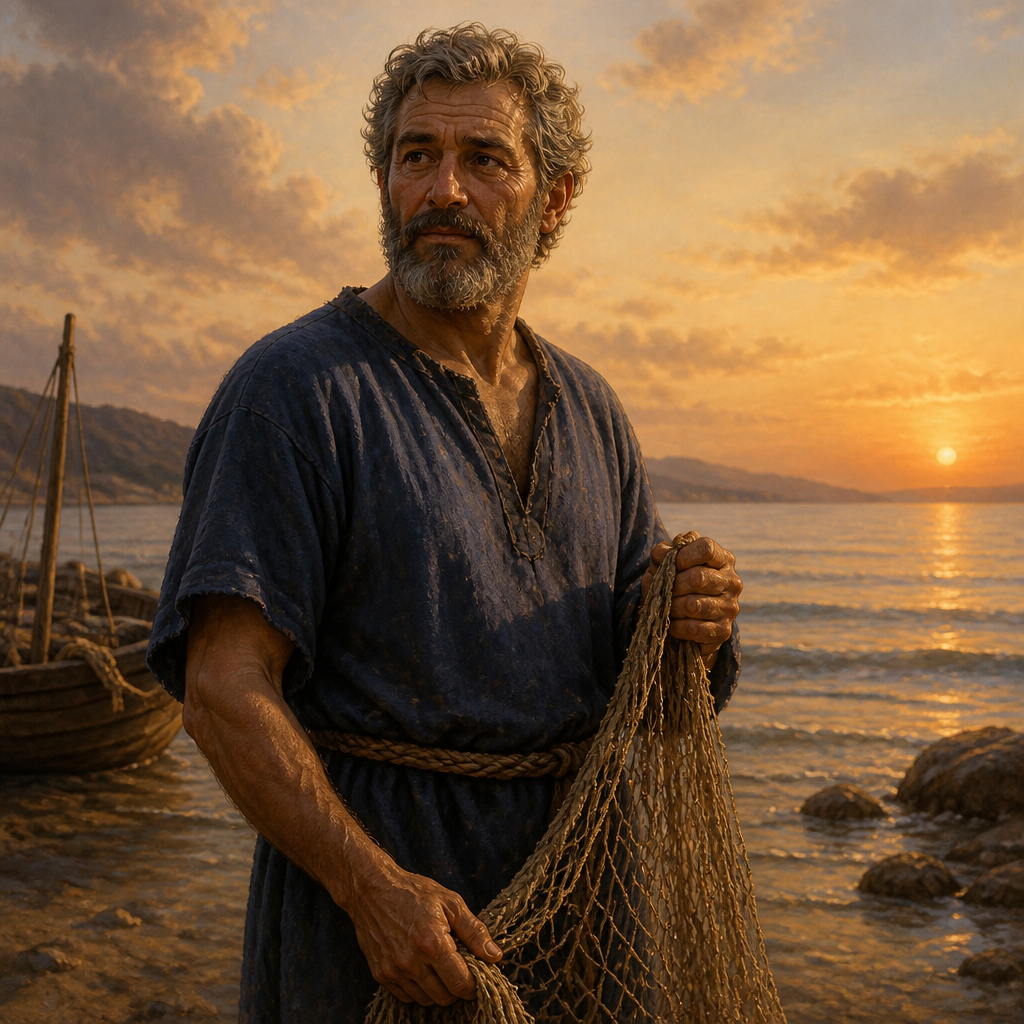
Brother and fellow Apostle
John the Apostle
Close companion and fellow 'Inner Circle' member
Paul the Apostle
Colleague and occasional corrector
Cornelius
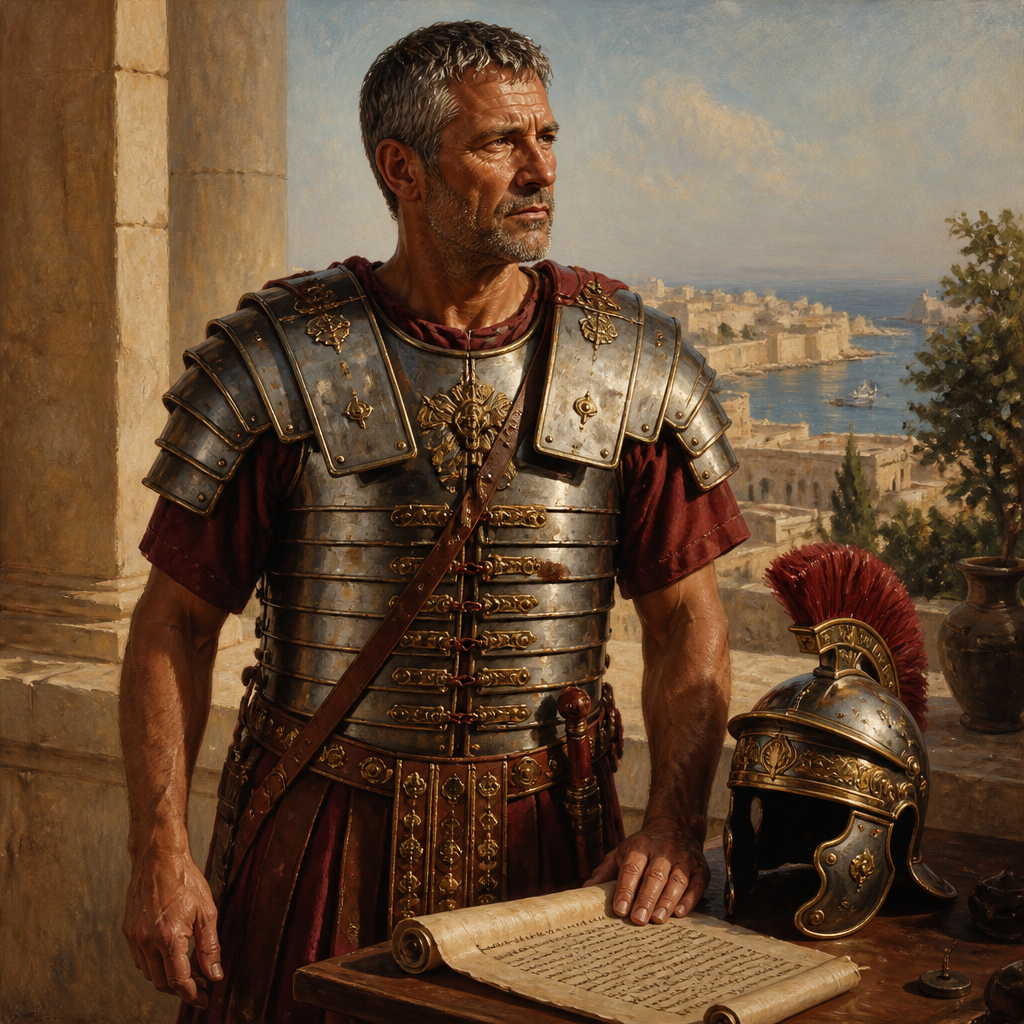
First Gentile convert baptized by Peter