Caiaphas
The influential Jewish High Priest during the reign of Tiberius Caesar who presided over the trial of Jesus of Nazareth.
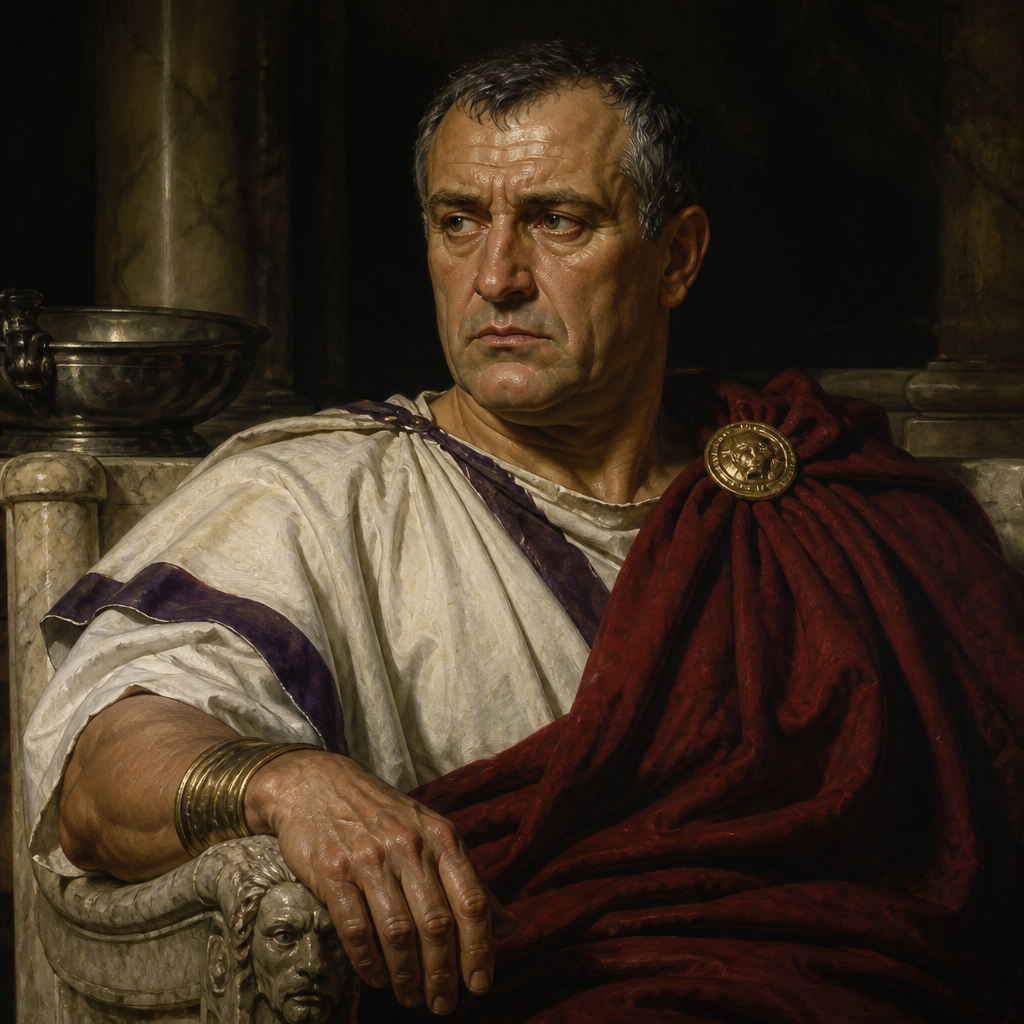
Caiaphas, whose full name according to the historian Flavius Josephus was Joseph Caiaphas, served as the Jewish High Priest from approximately 18 to 36 AD. This nearly two-decade tenure was remarkably long for the period, indicating his significant political skill and close relationship with the Roman authorities, specifically the prefect Pontius Pilate and the Syrian governor Quirinius. As the head of the Sanhedrin, the supreme Jewish judicial and religious body, Caiaphas played a central role in the administration of Judea under Roman suzerainty.
Historically and biblically, Caiaphas is primarily remembered for his leadership in the arrest and condemnation of Jesus. His position as the son-in-law of the former High Priest Annas solidified his power within the Sadducean aristocracy, which controlled the Temple in Jerusalem. His administration coincided with a time of intense messianic expectation and political volatility, factors that heavily influenced his decisions during the New Testament era.
Background and Family
Caiaphas was a member of the Sadducean party, the priestly elite of Jerusalem often characterized by their cooperation with Roman rule and their rejection of the Pharisaic oral law and belief in the resurrection. He was the son-in-law of Annas (Ananus), who had served as High Priest from 6 to 15 AD. Despite being deposed by the Romans, Annas remained the patriarch of one of the most powerful families in Judea; five of his sons also held the high priesthood. Caiaphas’s long tenure suggests he was a pragmatist who successfully navigated the tensions between Jewish religious law and Roman imperial requirements.
In 1990, an ornate limestone ossuary (bone box) was discovered in a family tomb in Jerusalem, bearing the inscription 'Joseph daughter of Caiaphas' and 'Joseph son of Caiaphas.' Archaeological consensus generally accepts this as the physical remains of the High Priest mentioned in the Gospels, providing specific historical confirmation for his existence and family status.
Major Life Events
The ministry of Jesus and the growing popularity of his message presented a unique challenge to Caiaphas’s administration. Following the resuscitation of Lazarus in Bethany, the Gospel of John records that the Sanhedrin convened to discuss the 'Jesus problem.' Fearing that Jesus’s popularity would provoke a Roman crackdown on the religious status quo and the Temple itself, Caiaphas uttered his most famous political maxim: 'It is better for you that one man should die for the people, than that the whole nation should perish' (John 11:50).
During the final week of Jesus’s life, Caiaphas directed the plot to arrest him by stealth. After Jesus was apprehended in Gethsemane, he was first brought to Annas and then to the palace of Caiaphas. This nighttime trial involved the gathering of the Sanhedrin and the presentation of witnesses against Jesus. When Jesus finally remained silent, Caiaphas placed him under oath, demanding to know if he was 'the Christ, the Son of God.' Upon Jesus's affirmative response, Caiaphas tore his robes—a gesture signifying blasphemy—and led the council in sentencing Jesus to death.
Following the crucifixion and the subsequent events of Pentecost, Caiaphas continued to lead the Sanhedrin in its efforts to suppress the early Christian movement. He presided over the interrogation of the apostles Peter and John (Acts 4) and was present during the trial and subsequent martyrdom of Stephen (Acts 7).
Relationship to Other Biblical Figures
Caiaphas’s primary relationship was with his father-in-law, Annas. Even after Caiaphas held the title, Annas retained the honorary title of 'High Priest' and exerted immense influence behind the scenes. Luke 3:2 describes the word of God coming to John the Baptist 'during the high priesthood of Annas and Caiaphas,' implying a sort of co-regency or shared authority.
His relationship with Pontius Pilate was one of political necessity. As the High Priest, Caiaphas was responsible for maintaining order in Jerusalem. If he failed to suppress potential revolutionaries, the Romans would remove him or seize control of the Temple's sacred garments. This partnership is evident in the trial narrative, where Caiaphas and his colleagues pressured a reluctant Pilate to carry out the execution of Jesus.
Spiritual Significance
In Christian theology, Caiaphas represents the height of religious institutional opposition to the person of Christ. However, the Gospel of John offers a unique ironical perspective on his role. The author notes that as High Priest that year, Caiaphas did not speak of his own accord when he suggested Jesus should die for the nation. Instead, John interprets Caiaphas's words as an unconscious prophecy: that Jesus would indeed die to gather the scattered children of God into one (John 11:51-52). This highlights a recurring biblical theme where even the actions of those opposing God’s will are used to fulfill His divine purposes.
Caiaphas also serves as a warning regarding the dangers of institutional preservation coming at the cost of truth. His focus was on the survival of the Temple and the nation (and his own power), leading him to reject the very Messiah the Temple was built to honor.
Spiritual Significance
Theologically, Caiaphas is the quintessential figure of the 'Old Order' confronting the 'New.' His rejection of Jesus's messianic claims and his reliance on political expediency highlight the tension between legalistic religious structures and the spiritual kingdom inaugurated by Christ. His role is pivotally prophetic; though he intended only a political murder to appease Rome, he unwittingly proclaimed the necessity of Christ's substitutionary atonement.
Furthermore, Caiaphas's interactions with the early apostles in the Book of Acts demonstrate the transition of authority from the Temple hierarchy to the Church. By opposing Peter and John, Caiaphas inadvertently served as a catalyst for the boldness of the early disciples, showing that the power of the Gospel could not be contained by the Sanhedrin's judicial decrees.
Frequently Asked Questions
How long was Caiaphas the High Priest?
Caiaphas served as High Priest for 18 years, from 18 AD to 36 AD, which was an exceptionally long tenure during the Roman occupation.
Was Caiaphas a Sadducee or a Pharisee?
Caiaphas belonged to the Sadducean party, which was the wealthy, priestly class that operated the Temple and often cooperated with Roman authorities.
Did Caiaphas really exist outside of the Bible?
Yes. The historian Josephus mentions him, and in 1990, archaeologists discovered a highly decorated ossuary in Jerusalem bearing his name, 'Joseph bar Caiaphas.'
What is the meaning of Caiaphas tearing his clothes?
Tearing one's clothes was a high priest's ritual response to hearing blasphemy. By doing this, Caiaphas was legally and dramatically declaring that Jesus had insulted God.
Who deposed Caiaphas from his position?
Caiaphas was removed from office in 36 AD by Lucius Vitellius, the Roman governor of Syria, following the removal of Pontius Pilate.
Connected Figures

Annas
Father-in-law and predecessor
Pontius Pilate
Political collaborator and Roman Prefect
Jesus of Nazareth
Target of his prosecution and trial
Stephen
Martyr tried before his council