Aretas IV
Aretas IV Philopatris was the King of the Nabataeans (c. 9 BC – AD 40) whose ethnarch attempted to arrest the Apostle Paul in Damascus.
Aretas IV, known in Nabataean inscriptions as 'Philopatris' (the friend of his country), was the most powerful and significant ruler of the Nabataean Kingdom, a sophisticated Arab state centered in the rock-cut city of Petra. He reigned from approximately 9 BC to AD 40, overseeing a golden age of Nabataean architecture and commerce. While a major figure in Aegean and Levantine geopolitics, he is identified in the New Testament primarily for his administrative control over Damascus during a pivotal moment in the life of the Apostle Paul.
His role in biblical narrative acts as a crucial chronological marker and a testament to the political complexities of the first-century Near East. Aretas’s authority extended from the Hijaz in the south to the Hauran in the north, and his interactions with the Herodian dynasty and the Roman Empire provide the essential backdrop for interpreting the early spread of the Gospel and the threats faced by the earliest Christian missionaries.
Background and Family
Aretas IV ascended to the Nabataean throne following the death of Obodas III in 9 BC. His rise to power was initially contested by the powerful Roman minister Syllaeus, who sought to leverage influence in the court of Augustus to seize the throne. However, Aretas eventually gained the emperor's recognition. He reigned for nearly fifty years, during which time he consolidated Nabataean control over vital trade routes that transported incense, spices, and perfumes from southern Arabia to the Mediterranean coast.
His family life was deeply intertwined with the biblical Herodian dynasty, often resulting in violent friction. Aretas had several children, most notably a daughter named Phasaelis. In a move to stabilize regional relations, Phasaelis was married to Herod Antipas, the tetrarch of Galilee and Perea. This union lasted for many years until Antipas, while visiting Rome, became infatuated with his brother’s wife, Herodias. The subsequent divorce of Phasaelis and Antipas’s marriage to Herodias became the catalyst for a major military conflict and was the moral outrage that led John the Baptist to publicly rebuke the tetrarch.
Major Life Events
The most significant event of Aretas’s reign concerning biblical history was the war he waged against Herod Antipas in AD 36. After Aretas’s daughter fled back to her father in Petra following the news of Antipas’s betrayal, Aretas used a boundary dispute as a pretext to launch a full-scale invasion. His forces completely destroyed Antipas’s army, a defeat that many Jews of the time — according to the historian Josephus — interpreted as divine punishment upon Antipas for the execution of John the Baptist.
Antipas appealed to the Roman Emperor Tiberius for aid. The emperor ordered Vitellius, the governor of Syria, to march against Aretas and bring him to Rome in chains or send his head. However, the death of Tiberius in AD 37 halted the Roman campaign, allowing Aretas to maintain his sovereignty and even expand his influence. It is during this subsequent period (c. AD 37–40) that Aretas likely gained administrative oversight or a concessional governorship of Damascus, either through a gift from the new Emperor Caligula or through strategic occupation.
Relationship to Other Biblical Figures
In the New Testament, Aretas is directly mentioned by the Apostle Paul in his second letter to the Corinthians. Paul recounts his narrow escape from Damascus, noting that the city was being guarded by an 'ethnarch' (a local governor or tribal leader) under the authority of King Aretas:
"In Damascus the governor under Aretas the king was guarding the city of the Damascenes in order to seize me, but I was let down in a basket through a window in the wall and escaped his hands." (2 Corinthians 11:32-33)
This passage indicates that Aretas was not merely a distant king but a present political threat to the burgeoning Christian movement. The ethnarch’s cooperation with the Jewish authorities in Damascus to capture Paul highlights the volatile political environment in which the early apostles operated, where local rulers, Roman interests, and religious leaders often converged in their opposition to the Gospel.
Spiritual Significance
Theologically and historically, Aretas IV serves as a bridge between the world of the Old Testament (the 'Arabians' and descendants of Ishmael) and the New Testament expansion. His presence in the text reinforces the historicity of the Book of Acts and the Pauline epistles, as his reign provides a firm date for Paul's conversion and early ministry.
Furthermore, the conflict between Aretas and Herod Antipas illustrates the moral consequences of sin in high places. The marriage scandal involving Herodias, which led to the martyrdom of John the Baptist, eventually brought about the ruin of Antipas’s military and political standing at the hands of Aretas. In the broader biblical narrative, Aretas represents the 'powers and principalities' of the Gentile world—rulers whose grand political maneuvers and military campaigns were, perhaps unknowingly, serving as the setting for the unfolding drama of redemption and the preservation of the Apostle to the Gentiles.
Spiritual Significance
Aretas IV is primarily significant to biblical studies as a chronological cornerstone; his documented reign (ending in AD 40) provides one of the few absolute dates for the early career of the Apostle Paul. His presence in the biblical text demonstrates that the early church did not exist in a vacuum but was constantly navigating the jurisdictional complexities of the Roman Empire and his client kingdoms.
Additionally, Aretas's military victory over Herod Antipas is historically linked to the execution of John the Baptist. While Aretas himself was a pagan ruler, his actions resulted in the political weakening of the man who killed the Forerunner of Christ, illustrating how secular history and sacred narrative intersect in the first century.
Frequently Asked Questions
How did Aretas IV come to control Damascus?
While Damascus was usually under direct Roman control, it is believed that either Emperor Caligula granted Aretas oversight of the city as a diplomatic gesture around AD 37, or Aretas took advantage of the transition between emperors to occupy the city briefly.
Why did Aretas want to arrest the Apostle Paul?
The New Testament does not specify Aretas's personal motive, but it is likely that his ethnarch in Damascus was cooperating with the local Jewish leadership who viewed Paul as a subverter of their traditions and a public nuisance.
What was the capital of Aretas IV's kingdom?
The capital was Petra, the famous 'rose-red city' in modern-day Jordan. Under Aretas IV, Petra saw the construction of many of its most famous monuments, including the Great Temple and likely the Al-Khazneh (The Treasury).
What is an 'ethnarch'?
An ethnarch is a ruler of a specific ethnic group or province. In the context of 2 Corinthians 11, it refers to the official appointed by King Aretas to govern the city or the Nabataean population within Damascus.
Was Aretas a friend or enemy of Rome?
Aretas was a client-king, meaning he was technically subordinate to Rome. However, he often acted independently, leading to tensions with emperors like Augustus and Tiberius, though he ultimately maintained his throne until his natural death.
Connected Figures
Paul the Apostle
Political adversary who escaped Aretas's ethnarch
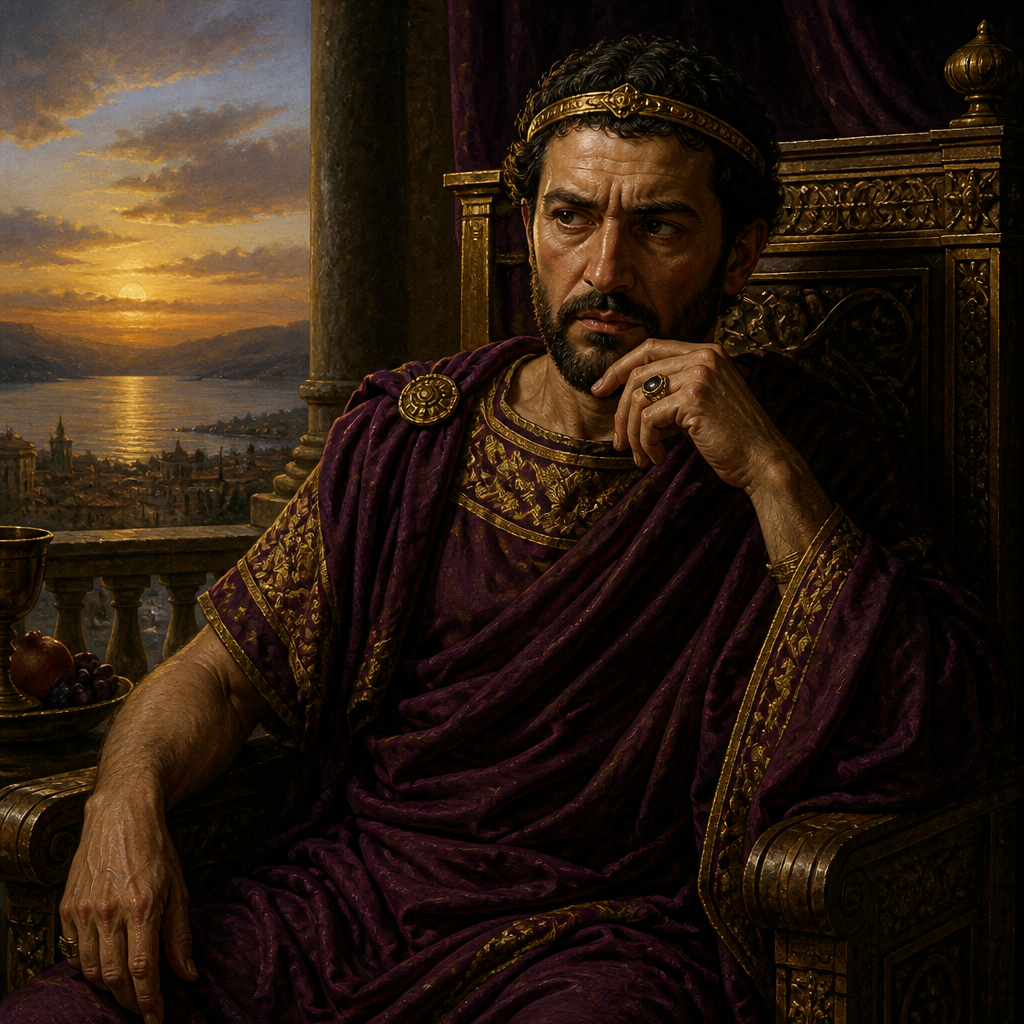
Herod Antipas
Son-in-law and military rival
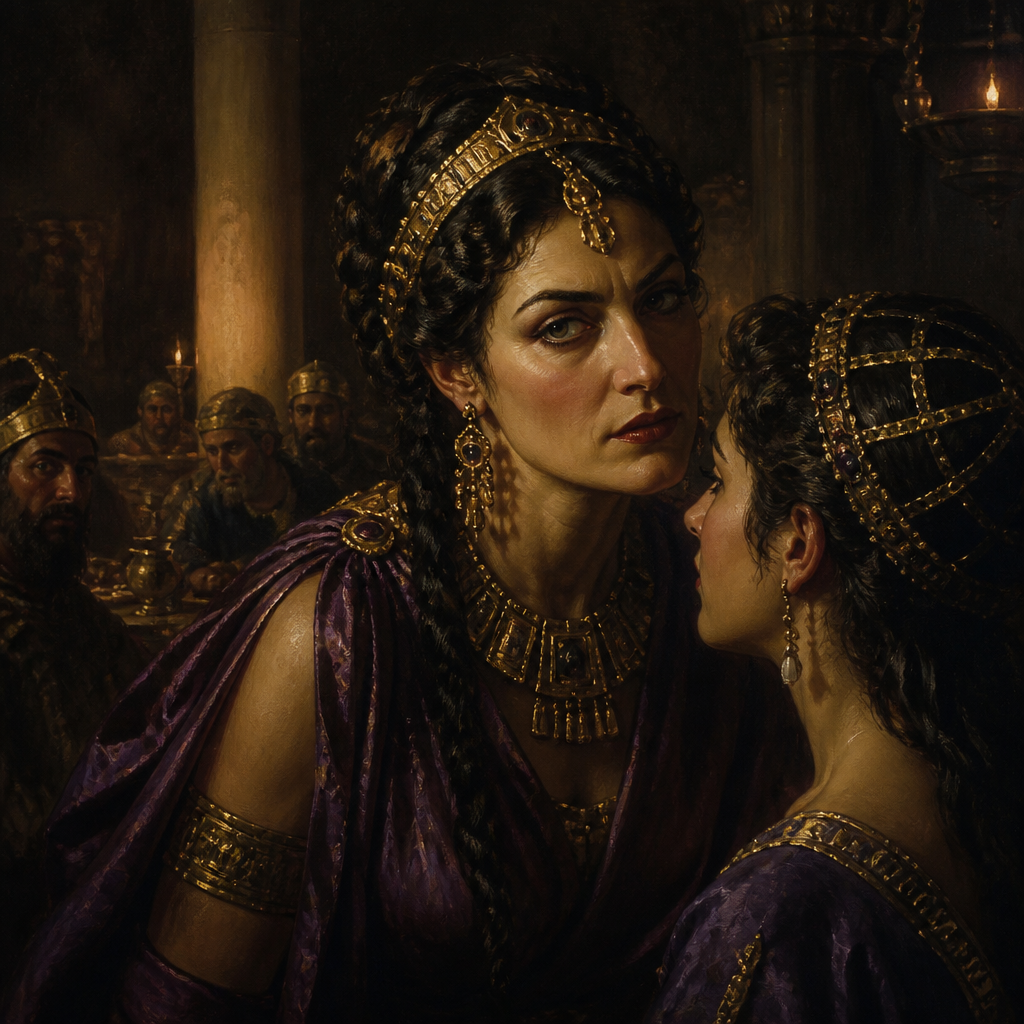
Herodias
Woman whose marriage to Antipas caused the war with Aretas

John the Baptist
Prophet whose death was linked to the Aretas-Antipas conflict