Pontius Pilate's Wife
The anonymous Roman noblewoman who, during the trial of Jesus, sent a message to her husband warning him to have nothing to do with that 'innocent man' due to a disturbing dream.
Pontius Pilate's wife remains one of the most intriguing figures in the New Testament narrative of the Passion of Christ. Though she appears in only a single verse in the Gospel of Matthew, her intervention occurs at a climactic moment during the Roman trial of Jesus. As her husband, the fifth prefect of Judaea, sat upon the judgment seat (bema), she sent an urgent message to him, testifying to Jesus' innocence and recounting her personal suffering in a dream because of him.
While the biblical text does not provide her name, she has been a subject of great interest in Christian tradition, art, and literature for two millennia. In the Eastern Orthodox and Ethiopian Orthodox traditions, she is revered as a saint and identified by the name Claudia Procula. Her brief mention serves as a sharp narrative contrast to the religious leaders and the mob seeking execution, highlighting a providential witness to the righteousness of Christ coming from within the very household of his judge.
Background and Family
Historically, the wife of Pontius Pilate was a woman of high social standing. Under Roman law, according to the Lex Oppia and subsequent adjustments, it was generally unusual and initially prohibited for governors of provinces to bring their wives with them. However, by the time of Pilate's tenure (c. 26–36 AD), these restrictions had relaxed. The fact that she was present in Jerusalem during the Passover festival suggests she accompanied Pilate from their primary residence in Caesarea Maritima to the Judaean capital to maintain order during the sensitive religious holiday.
Outside of the biblical text, later traditions attempt to fill in her lineage. The Acts of Pilate (a 4th-century apocryphal work) and other pseudepigraphal writings suggest she may have been a distant relative of the imperial family, sometimes cited as a granddaughter of Augustus Caesar, though this remains historically unverified. Her identity as "Claudia Procula" emerged in the medieval period and has remained the standard name for her in ecclesiastical tradition.
Major Life Events
The defining moment of her life, as recorded in Scripture, occurs in Matthew 27:19. While Pilate was presiding over the trial of Jesus, his wife sent a messenger with a specific warning: "Have nothing to do with that innocent man, for I have suffered a great deal today in a dream because of him." This interruption is highly significant; it is the only instance in the Passion narrative where a character attempts to directly prevent the legal proceedings against Jesus through a visionary warning.
The content of the dream is not detailed in the text, but the Greek word pascho (translated as "suffered") implies intense emotional or spiritual distress. The timing of the dream—occurring "today," likely in the early morning hours before the day's trial began—parallels the prophetic dreams found earlier in Matthew's gospel (such as those of Joseph and the Magi). Her recognition of Jesus as a "righteous man" (dikaios) serves as a legal and moral indictment of the proceedings taking place.
Relationship to Other Biblical Figures
Her primary relationship is with her husband, Pontius Pilate. Her message suggests a degree of influence or at least a level of communication that was respected enough to be delivered to the judgment seat during an official state proceeding. Her intervention creates a unique dynamic between the Roman state and the ministry of Jesus; while the Jewish authorities and the Roman governor are complicit in the execution, the Governor's wife acts as an advocate for his innocence.
In the broader context of the Gospel of Matthew, she is often contrasted with the Jewish leaders. While those who should have recognized their Messiah were calling for his blood, a Gentile woman was being warned by God in a dream concerning his divine nature. This echoes the theme of the "Gospel to the Gentiles," where outsiders often display greater spiritual sensitivity than the religious establishment of the time.
Spiritual Significance
Theologically, the intervention of Pilate's wife serves as a testimony to the universal innocence of Jesus. In the legal framework of the Passion, Jesus is declared innocent by his judge (Pilate), his betrayer (Judas), his fellow-victim (the thief on the cross), and the Roman centurion. The wife of Pilate adds a supernatural dimension to this chorus of witnesses. Her dream is often interpreted as a divine revelation, ensuring that even in the midst of a mock trial, the truth of Jesus' character was publicly proclaimed.
In various Christian traditions, she is seen as a convert or a "God-fearer." Origen, an early church father, suggested that she became a believer after the Resurrection. Her inclusion in the narrative underscores the biblical theme that God can use anyone—even the wife of a pagan oppressor—to further His sovereign purposes and bear witness to the Light. She stands as a symbol of the individual conscience resisting the tide of institutional injustice, even when that resistance is ultimately ignored.
Spiritual Significance
The inclusion of Pilate's wife in the Gospel of Matthew emphasizes the theme of Jesus' innocence during his trial. Her message provides a divine, visionary confirmation of what Pilate himself acknowledges but fails to act upon: that Jesus was a 'righteous man' (Matthew 27:19). This brief episode serves to convict the Roman authorities and the Jewish leaders by showing that even a pagan woman was moved by God to recognize Christ's character, while the men in power remained blind.
Furthermore, she represents the recurring motif in the New Testament where Gentiles show receptivity to the message or person of Jesus. Historically and theologically, she is viewed as a proto-witness to the Gospel within the heart of the Roman power structure. Her dream places her in a lineage of biblical figures who received God's guidance through visions, marking the Passion as an event of cosmic and spiritual significance rather than merely a political execution.
Frequently Asked Questions
What was the name of Pontius Pilate's wife?
The Bible does not name her. However, church tradition and apocryphal literature, such as the Gospel of Nicodemus, refer to her as Claudia Procula.
Was Pontius Pilate's wife a Christian?
The biblical text does not state if she became a Christian. However, she is venerated as a saint in the Eastern Orthodox, Ethiopian, and Coptic churches, as they believe she converted to Christianity after the Resurrection.
What did she say to Pilate about Jesus?
She sent a message to him saying, 'Have nothing to do with that innocent man, for I have suffered a great deal today in a dream because of him' (Matthew 27:19).
Why is she considered a 'Crucifixion Helper'?
She is categorized as such because she was one of the few voices advocating for Jesus' innocence and attempting to prevent his execution during his trial.
Did Pilate listen to his wife's warning?
Pilate acknowledged the message but ultimately yielded to the pressure of the crowd and the Jewish leaders, washing his hands and sentencing Jesus to be crucified.
Connected Figures
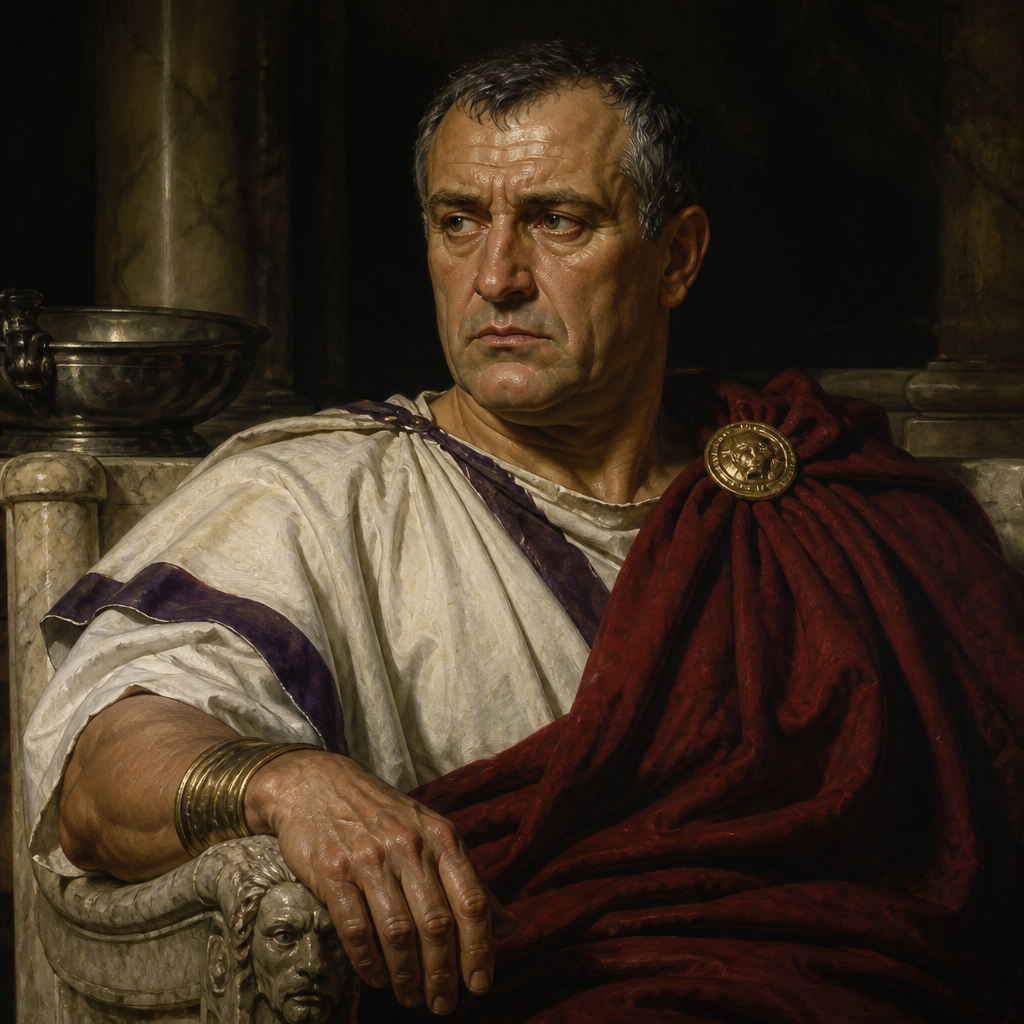
Pontius Pilate
Husband
Jesus Christ
Subject of her dream and testimony

Barabbas
Prisoner released instead of the man she defended