Trophimus
A Gentile Christian from Ephesus and loyal companion of the Apostle Paul, whose presence in Jerusalem inadvertently sparked the riot leading to Paul's multi-year imprisonment.
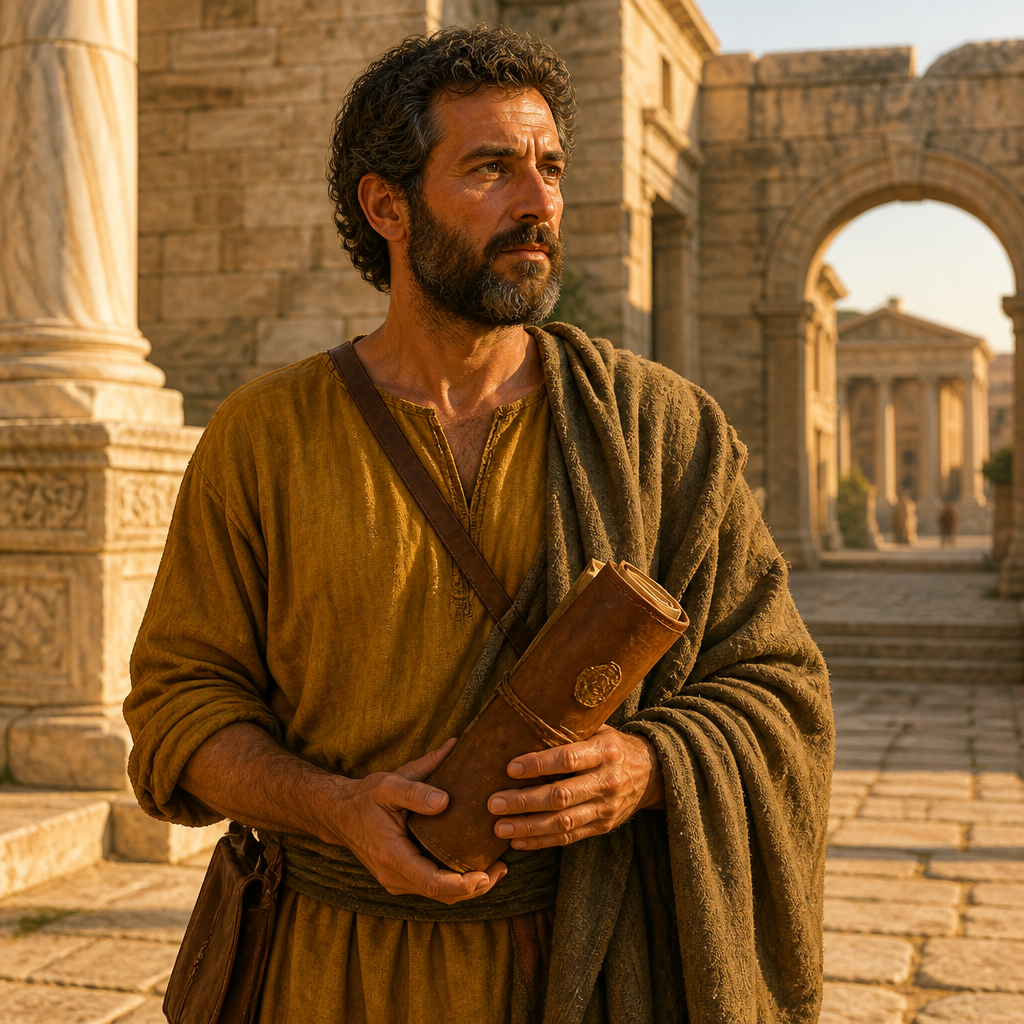
Trophimus was a prominent Gentile convert to Christianity hailing from Ephesus, the capital of the Roman province of Asia. His name, derived from a Greek root meaning 'foster-child' or 'nutritious,' reflects his Hellenistic heritage. He is best identified in the New Testament as a devoted traveling companion of the Apostle Paul, representing the growing Ephesian church during Paul's third missionary journey. Most significantly, Trophimus served as one of the delegates chosen to accompany Paul to Jerusalem to deliver a charitable collection for the impoverished believers there.
Historically, Trophimus holds a place of distinction as a symbol of the inclusion of the Gentiles into the early church. However, he is perhaps most famous for his unintentional role in the climactic events recorded in the Book of Acts. His public appearance with Paul in the streets of Jerusalem led to a profound misunderstanding by local religious authorities, who mistakenly believed Paul had brought him into the restricted inner courts of the Jewish Temple. This accusation incited a violent mob, leading to Paul's arrest and subsequent legal odyssey through the Roman judicial system.
Background and Family
Trophimus was a native of Ephesus, a city that stood as a melting pot of Greek culture and Roman administration in Asia Minor. The biblical record explicitly identifies him as both an "Ephesian" and "an Asian" (Acts 20:4, 21:29). While the New Testament does not provide his lineage or family history, his name is distinctly Greek, suggesting a Hellenistic upbringing.
It is likely that Trophimus was a fruit of Paul’s extended three-year ministry in Ephesus during his third missionary journey. As the gospel spread throughout the province of Asia, Trophimus emerged as a trusted leader within the local Ephesian congregation. His selection as a representative to accompany the Apostle Paul indicates that he was a man of high standing and integrity within his community.
Major Life Events
The Collection for Jerusalem
In approximately 57 AD, Paul concluded his third missionary journey. A primary objective of this period was the gathering of a financial gift from the Gentile churches (in Macedonia, Achaia, and Asia) for the suffering "saints" in Jerusalem. Trophimus was chosen as the official delegate for the church at Ephesus to ensure the safe delivery and accountability of these funds. Alongside his fellow Ephesian, Tychicus, Trophimus joined a diverse group of representatives including Sopater of Berea, Aristarchus and Secundus of Thessalonica, and Gaius of Derbe.
The Temple Incident
Upon reaching Jerusalem, Paul and his companions met with the elders of the church. However, tension was high between the new Gentile converts and Jews who remained zealous for the Law. While Trophimus was walking the streets of Jerusalem with Paul, he was recognized by Jews from Asia who knew him from Ephesus.
"...for they had previously seen Trophimus the Ephesian in the city with him, and they supposed that Paul had brought him into the temple." (Acts 21:29)
The Temple in Jerusalem contained a barrier known as the soreg, which demarcated the Court of the Gentiles from the inner courts. Signs in Greek and Latin warned that any non-Jew crossing this line faced the death penalty. The Asian Jews falsely accused Paul of violating this sanctity by bringing Trophimus into the prohibited area. The resulting riot nearly cost Paul his life and led to his arrest by the Roman commander Lysias, an event that would keep Paul in chains for years to come.
The Miletus Illness
The final biblical mention of Trophimus occurs in Paul’s final letter, 2 Timothy. Written during Paul’s second Roman imprisonment (c. 66–67 AD), the Apostle provides a brief but personal update regarding his former companions. Paul writes:
"Erastus remained at Corinth, and I left Trophimus, who was ill, at Miletus." (2 Timothy 4:20)
Miletus was a port city near Ephesus. This short passage indicates that Trophimus remained an active member of Paul's missionary team until the end of the Apostle's life. The fact that Paul left him there suggests that Trophimus was too sick to travel to Rome during Paul's hour of greatest need. This detail has also been a point of theological discussion, as it shows that even the great miracle-working Apostle Paul did not always heal his close friends and co-workers through supernatural means, but rather submitted to the providential circumstances of physical ailment.
Relationship to Other Biblical Figures
Trophimus is inextricably linked to the Apostle Paul. He was not merely a convert but a co-laborer and perhaps a bodyguard of sorts during the dangerous journey to Judea. He is frequently paired with Tychicus, another Ephesian; scholars often view them as the two primary messengers between Paul and the churches of Asia Minor. Within the Book of Acts, he is part of the "we" group (the traveling party including Luke the historian), indicating he was an eyewitness to the transformative events of early church expansion.
Spiritual Significance
Theologically, Trophimus serves as a living testament to the "breaking down of the middle wall of partition" described in Ephesians 2:14. As a Gentile from one of the most pagan cities in the empire (the home of the Temple of Artemis), his presence in Jerusalem as a brother in Christ represented the radical unity the Gospel brought to the ancient world.
His life also illustrates the cost of ministry. Though he did nothing wrong in Jerusalem, his mere existence and association with Paul became the catalyst for a great persecution. Finally, the mention of his illness in Miletus provides a humanizing look at the early church, reminding modern readers that the apostles and their companions were men of flesh and blood who faced common physical trials while remaining faithful to their calling.
Spiritual Significance
Trophimus is significant as a primary representative of the Gentile mission, illustrating the practical transition of the Church from a Jewish-centric group to a multi-ethnic body. His presence in Jerusalem catalyzed the legal proceedings that eventually brought Christianity before the highest Roman officials, including the Emperor. His story underscores the volatility of the early Christian movement and the deep-seated cultural divisions that the Gospel sought to reconcile.
Furthermore, the record of Trophimus being left ill at Miletus provides a crucial scriptural precedent for the persistence of physical suffering among the faithful. It serves as a pedagogical counter-point to the idea that faith always results in immediate physical healing, highlighting instead the apostolic virtues of endurance and mutual support during times of weakness.
Frequently Asked Questions
Was Trophimus a Jew or a Gentile?
Trophimus was a Gentile. The Bible specifically identifies him as an Ephesian and an 'Asian' (from the Roman province of Asia), and the Jews in Jerusalem accused Paul of defiling the Temple by bringing a Gentile (Trophimus) into the inner courts.
What happened to Trophimus in Jerusalem?
Trophimus was seen in the city with Paul. This led Asian Jews to falsely assume Paul had taken him into the forbidden inner courts of the Temple. This false accusation started a riot that resulted in Paul's arrest by the Romans.
Did Paul heal Trophimus when he was sick?
According to 2 Timothy 4:20, Paul left Trophimus in Miletus because he was ill. The text does not record Paul healing him, which suggests that Trophimus stayed behind to recover while Paul continued his journey.
Where is Miletus, and why was Trophimus there?
Miletus was a major port city situated about 30 miles south of Ephesus. Trophimus was likely there as part of Paul's traveling ministry team before falling too ill to travel on toward Rome.
Is Trophimus mentioned in the Book of Acts?
Yes, Trophimus is mentioned in Acts 20:4 as part of the group traveling with Paul to Jerusalem, and in Acts 21:29 regarding the incident at the Temple.
Connected Figures
Paul the Apostle
Mentor and ministry leader
Tychicus
Fellow Ephesian and ministry companion
Luke the Evangelist
Travel companion and chronicler
James the Just
Elder in Jerusalem who met with Paul's party