Fortunatus
A member of the church at Corinth who accompanied Stephanas and Achaicus to visit the Apostle Paul in Ephesus, carrying news and support.
Fortunatus was a first-century Christian and a member of the early church in Corinth. He is mentioned by the Apostle Paul in his first epistle to the Corinthians as one of a three-man delegation—alongside Stephanas and Achaicus—who visited Paul during his lengthy stay in Ephesus. This visit likely took place around 55 AD, a period when the Corinthian church was grappling with internal divisions, moral confusion, and theological disputes.
His presence in the biblical narrative, though brief, provides a crucial window into the logistics of the early church. Fortunatus represents the devoted laypeople who facilitated communication and practical ministry between the apostles and the local congregations. His journey from Corinth to Ephesus was not merely a social visit but a formal mission intended to bring clarity to the troubled church and physical and emotional relief to the Apostle Paul.
Background and Family
The name Fortunatus is of Latin origin, meaning "fortunate" or "blessed." During the first century AD, Latin names were common among both Roman citizens and the freedman class in Corinth, which had been refounded as a Roman colony by Julius Caesar in 44 BC. While the Bible does not explicitly state Fortunatus’s social status, his ability to travel across the Aegean Sea alongside Stephanas suggests he may have been a man of some means or a trusted member of a wealthy household. Some scholars speculate he may have been a member of the household of Stephanas, who was the first convert in the province of Achaia, or perhaps a freedman associated with the commercial life of the city.
Major Life Events
The primary event associated with Fortunatus is his travel from Corinth to Ephesus to meet with the Apostle Paul. During this time, the Corinthian church was in a state of significant turmoil. Paul had received reports of factions (1 Corinthians 1:11) and had likely received a letter from the Corinthians asking specific questions about marriage, food sacrificed to idols, and spiritual gifts.
Fortunatus, along with Stephanas and Achaicus, arrived at a critical juncture. Paul notes in 1 Corinthians 16:17, "I was glad when Stephanas, Fortunatus and Achaicus arrived, because they have supplied what was lacking from you." This suggests that their arrival provided Paul with information that a mere letter could not convey. They likely served as the couriers who brought the Corinthians' questions to Paul and perhaps carried Paul’s reply (1 Corinthians) back to the city. Their journey involved a Mediterranean sea crossing that, while common, remained hazardous and physically demanding, highlighting their commitment to the unity of the church.
Relationship to Other Biblical Figures
Fortunatus is inextricably linked with Stephanas and Achaicus. The three men acted as a unified delegation representing the interests of the Achaian believers. His relationship with the Apostle Paul was one of mutual refreshment and respect. Paul speaks of the trio not as subordinates, but as fellow workers whose presence "refreshed my spirit and yours also" (1 Corinthians 16:18). This indicates a deep pastoral bond and a shared burden for the health of the Corinthian congregation.
While he is not mentioned in the same context as Chloe’s people (who also brought reports to Paul), Fortunatus likely moved in the same circles as other prominent Corinthian believers such as Crispus, Gaius, and Erastus. His role was that of a bridge-builder, linking the pioneering apostle with the maturing, albeit struggling, church in the Roman colony.
Spiritual Significance
The spiritual significance of Fortunatus lies in the concept of "refreshing the saints." Paul specifically commands the Corinthian church to "recognize such men" (1 Corinthians 16:18). This serves as a biblical mandate for the congregation to honor those who labor in practical service, travel, and communication. Fortunatus’s legacy is one of presence; he was there when the apostle needed support and when the church needed a messenger.
In the broader context of the New Testament, Fortunatus exemplifies the healthy functioning of the Body of Christ. While he was not an apostle or a prolific writer, his willingness to undertake a dangerous journey for the sake of ecclesiastical clarity and apostolic encouragement made him indispensable to the mission. He represents the silent majority of the early church—the faithful messengers who ensured that the gospel and apostolic instruction could traverse the Roman world.
Spiritual Significance
Fortunatus serves as an example of a dedicated lay leader who facilitated the vital flow of communication and resources in the early church. His inclusion in Paul's letter highlights the importance of individuals who provide 'refreshment' to those in ministry, illustrating that the gospel's spread relied not just on preaching, but on the loyal logistics of trusted companions. Furthermore, Paul's instruction to 'recognize such people' establishes a precedent for honoring those who serve the church through acts of service and representation rather than just through public teaching.
Frequently Asked Questions
Who was Fortunatus in the Bible?
Fortunatus was a Christian from Corinth who, along with Stephanas and Achaicus, visited the Apostle Paul in Ephesus to provide support and information about the state of the Corinthian church.
What does the name Fortunatus mean?
The name is Latin for 'blessed,' 'prosperous,' or 'fortunate.'
What did Fortunatus do for the Apostle Paul?
He supplied 'what was lacking' from the Corinthians, meaning he provided personal encouragement, physical presence, and detailed information that helped Paul address the issues within the Corinthian congregation.
Where is Fortunatus mentioned in the Bible?
He is mentioned specifically in 1 Corinthians 16:17-18.
Was Fortunatus a leader in the church?
While not explicitly given a title like 'elder' or 'bishop,' Paul's instruction to 'recognize such men' suggests he held a position of respect and informal leadership within the Corinthian community.
Connected Figures
Paul the Apostle
Mentor and fellow laborer
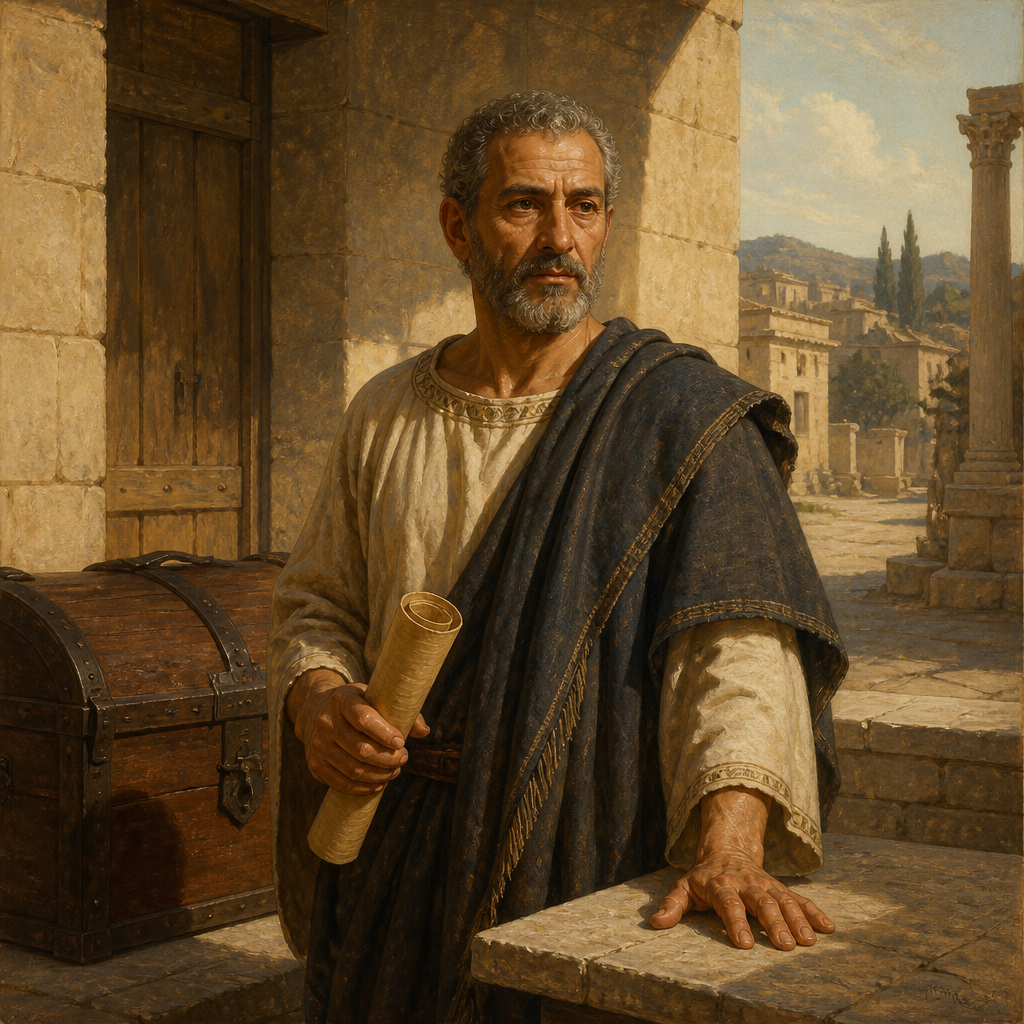
Stephanas
Traveling companion and fellow Corinthian
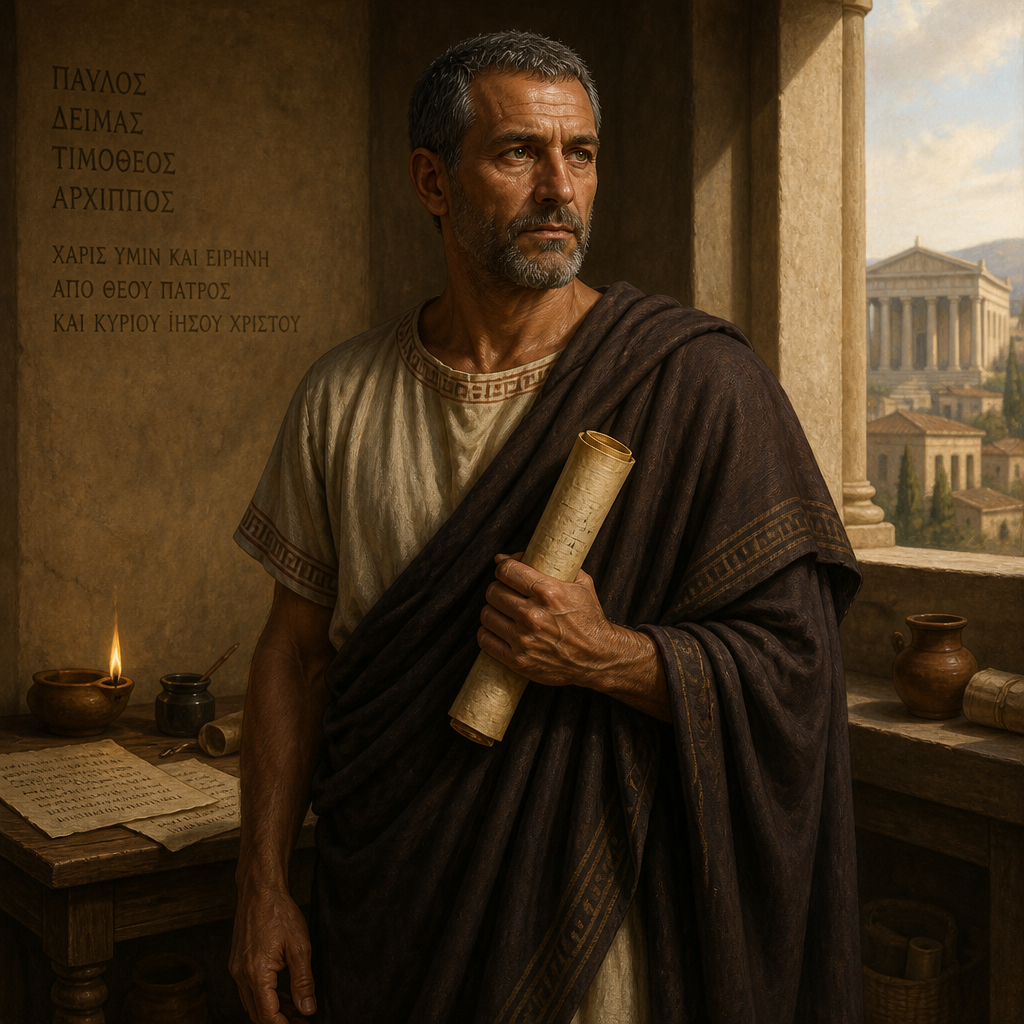
Achaicus
Traveling companion and fellow Corinthian