The Noble Jews of Berea
A group of Jewish residents in the Macedonian city of Berea known for their diligent examination of the Scriptures to verify the teachings of the Apostle Paul.
The Noble Jews of Berea, often referred to simply as the 'Bereans,' were members of the Jewish synagogue in the city of Berea (modern-day Veria, Greece) during the mid-1st century AD. They are immortalized in the New Testament book of Acts for their distinctive approach to the Christian message. Unlike many of their contemporaries who met the Gospel with either immediate hostility or blind acceptance, the Bereans were characterized by a combination of openness and rigorous intellectual scrutiny.
Historically, Berea was a significant city in the Roman province of Macedonia. When Paul and Silas fled the persecution in Thessalonica, they sought refuge in this relatively quiet city. The response of the local Jewish community became a gold standard for biblical literalism and theological integrity. The author of Acts, Luke, highlights their 'nobility,' a term that in this context refers less to social status and more to their character and fair-mindedness in processing divine revelation.
Background and Family
The individuals known as the Noble Jews of Berea lived in the city of Berea, situated on the eastern slope of Mount Bermion in Macedonia. During the 1st century AD, Berea was a populous and prosperous city, although it lacked the political prominence of Thessalonica or the cultural weight of Athens. The Jewish community there was established enough to possess a synagogue, which served as the center of their religious and social life.
While the Bible does not provide the names of specific families among the Bereans, it notes that the community consisted of both men and women of high standing. The text specifically mentions 'honorable women which were Greeks, and of men, not a few' (Acts 17:12). This suggests the Berean synagogue had successfully attracted 'God-fearers'—Gentiles who were drawn to Jewish monotheism and ethics—who joined the ethnic Jews in their study of the Torah. This diverse yet unified group formed the nucleus of what would become the Berean church.
Major Life Events
The defining moment for the Noble Jews of Berea occurred around 51 AD during the Apostle Paul's second missionary journey. After being forced out of Thessalonica by a riotous mob, Paul and Silas arrived in Berea and immediately entered the synagogue. Unlike the Thessalonians, many of whom had rejected the message with violence, the Bereans welcomed the apostles.
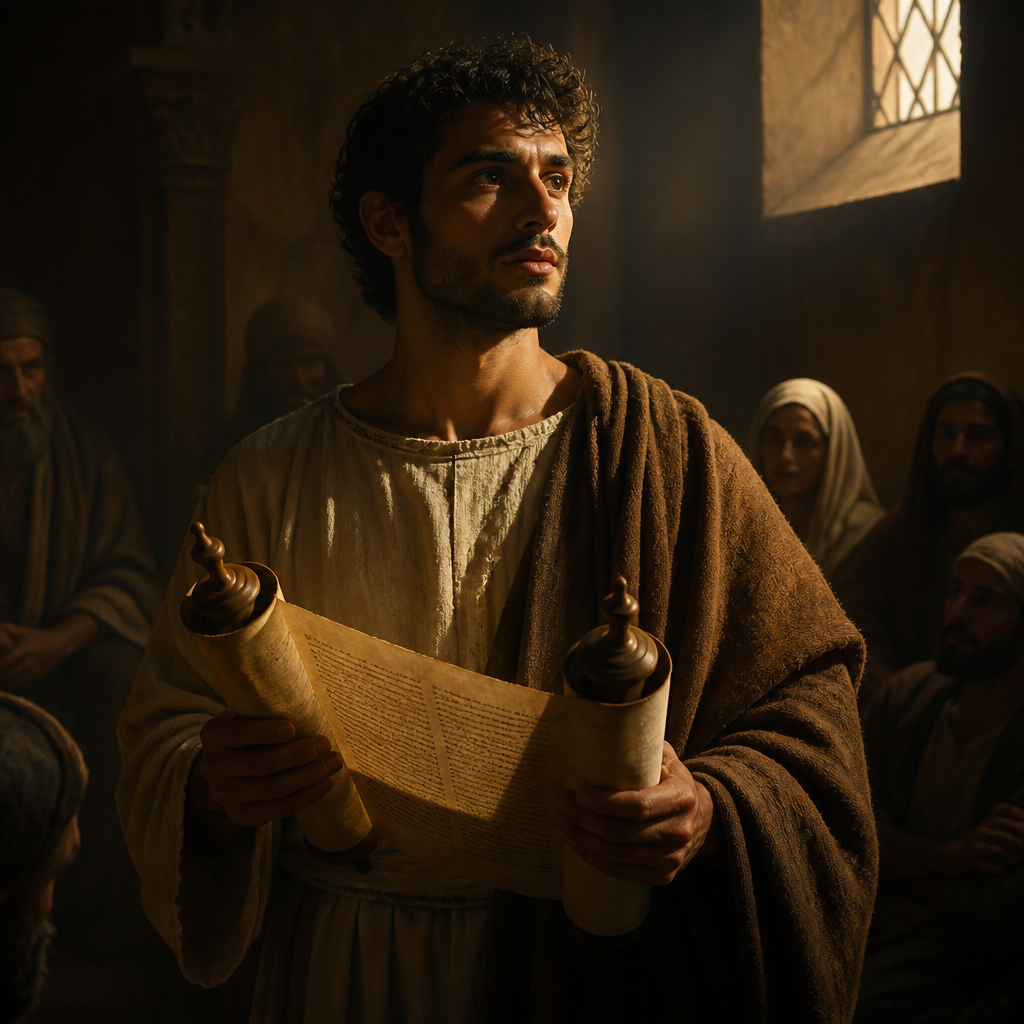
Their 'nobility' was demonstrated through a two-fold process. First, they received the word with 'all readiness of mind,' suggesting an absence of prejudice and a genuine desire to hear what the apostles had to claim about Jesus of Nazareth. Second, they did not take the apostles' words at face value. They 'searched the scriptures daily, whether those things were so' (Acts 17:11). This involved a systematic comparison of Paul’s claims regarding the Messiah’s suffering and resurrection with the prophecies found in the Old Testament, likely focusing on the Pentateuch, the Psalms, and the Prophets (such as Isaiah 53).
As a result of this diligent study, many of them believed. However, their peaceful period of study was interrupted when Jews from Thessalonica heard of Paul's success in Berea and traveled there to stir up the crowds. To protect Paul, the newly converted Berean believers sent him away toward the coast, while Silas and Timothy remained behind to further instruct the community.
Relationship to Other Biblical Figures
The Bereans are primarily defined by their interaction with the Apostle Paul. Paul viewed them as a model of healthy spiritual reception. The presence of Silas and Timothy in Berea after Paul’s departure indicates that the Bereans were eager for deeper discipleship.
One specific individual from this community is named later in the book of Acts: Sopater (or Sosipater) of Berea, the son of Pyrrhus. He is listed as one of the companions who accompanied Paul on his return trip through Macedonia (Acts 20:4). Sopater stands as a representative PIR (Person in Record) for the fruit of the Berean ministry, showing that the community’s commitment to the Word led to active missionary participation in the early church.
Spiritual Significance
In Christian theology and homiletics, the Noble Jews of Berea serve as the primary archetype for the 'discerning believer.' Their legacy is built on the balance between faith and reason. They are celebrated for not being cynical skeptics, yet also for not being gullible. By placing the written Word of God (the Scriptures) as the ultimate authority over even an Apostle’s spoken word, they established a precedent for the doctrine of Sola Scriptura—the idea that Scripture is the final authority in matters of faith and practice.
The Berean approach emphasizes that true faith is not a 'leap in the dark' but is grounded in the historical and prophetic witness of the Bible. Consequently, the term 'Berean' has been adopted by countless Christian schools, magazines, and study groups throughout history to signify a commitment to deep, daily, and objective biblical study.
Spiritual Significance
The Noble Jews of Berea are significant for establishing the biblical mandate of personal discernment. Their example demonstrates that even the teachings of a recognized authority like the Apostle Paul must be measured against the written Word of God. This narrative serves as a scriptural defense for the individual's responsibility to study and interpret the Bible, rather than relying solely on ecclesiastical tradition.
Furthermore, the Berean account illustrates the power of the 'Search' (Greek: 'anakrinontes'). By investigating the Scriptures daily, the Bereans proved that the Old Testament logically and prophetically pointed toward Jesus Christ. Their story provides a bridge between the Jewish tradition of Torah scholarship and the Christian mission of evangelism, showing that the two are not contradictory but complementary when approached with an honest heart.
Frequently Asked Questions
Why were the Jews of Berea called 'more noble' than those in Thessalonica?
The Greek word 'eugenesteroi' implies they were better bred or more open-minded. Unlike the Thessalonian Jews who reacted with jealousy and violence, the Bereans were willing to listen to new ideas and evaluate them fairly using the Scriptures.
What scriptures did the Bereans use to check Paul's message?
They used the Old Testament, specifically the Hebrew Bible (or the Septuagint Greek translation). They would have looked for Messianic prophecies concerning the birth, suffering, death, and resurrection of the Christ to see if Jesus of Nazareth fit the description.
Did any prominent people from Berea join the church?
Yes. Acts 17:12 mentions that many believed, including 'honorable women which were Greeks.' Also, Sopater of Berea became a traveling companion of the Apostle Paul.
What happened to the Berean believers after Paul left?
Silas and Timothy stayed in Berea to continue teaching the group. Eventually, Paul sent for them, but the foundation of daily scripture study likely allowed the church to persist despite local opposition.
How did the Bereans receive the word 'with all readiness of mind'?
This phrase indicates they had an eager and positive attitude toward Paul's message. They didn't start with a 'no'; they started with a 'let's see if this is true,' which combined openness with intellectual caution.
Connected Figures
Paul the Apostle
Missionary who preached to them

Silas
Companion of Paul who helped instruct them
Timothy
Disciple of Paul who remained in Berea to teach

Sopater
A Berean believer who became Paul's traveling companion