A Ruler of the Pharisees
A prominent Jewish leader and Pharisee who invited Jesus to his home for a meal on the Sabbath, serving as a catalyst for profound teachings on humility and hospitality.
The figure known as 'a ruler of the Pharisees' appears in the Gospel of Luke, specifically in chapter 14. As a member of the social and religious elite in first-century Judea, this individual held significant authority within the Pharisaic party, a group dedicated to the strict observance of the Mosaic Law and oral traditions. His invitation to Jesus to dine at his house on the Sabbath indicates a level of curiosity or engagement with Jesus' ministry that distinguished him from the more overtly hostile factions of the Sanhedrin at that time.
While his specific name is not recorded in the biblical text, his status as a 'ruler' (archōn) suggests he may have been a person of considerable wealth and high standing, potentially a member of a local council or even the Jerusalem Sanhedrin. The encounter at his home is one of the more civil interactions recorded between Jesus and the Pharisaic leadership, providing a rare glimpse into the domestic and social spheres where Jesus challenged the religious status quo of the mid-1st century AD.
Background and Family
The identity of the 'ruler of the Pharisees' is rooted in the socio-political landscape of Roman-occupied Judea. To be a 'ruler' (Greek: archōn) among the Pharisees implied not just adherence to the sect, but a position of leadership and judicial authority. The Pharisees were primarily a lay movement, yet their influence over the religious life of the common people was immense. This specific ruler likely resided in or near a significant town in the region where Jesus was traveling—possibly in Perea or Galilee during Jesus' final journey toward Jerusalem.
His household would have been one of relative affluence, capable of hosting a formal Sabbath meal (a symposium style gathering) for numerous guests, including other lawyers and Pharisees. Although his family lineage is not specified, his position suggests he was a man of mature age and established reputation, tasked with upholding the traditions of the elders while navigating the complex theological questions raised by the emergence of Jesus of Nazareth.
Major Life Events
The primary event defining this ruler's biblical presence is the Sabbath feast described in Luke 14. This event was not a casual dinner but a formal social occasion where, as the text notes, the guests 'were watching [Jesus] closely' (Luke 14:1). This indicates a high-stakes environment of theological scrutiny.
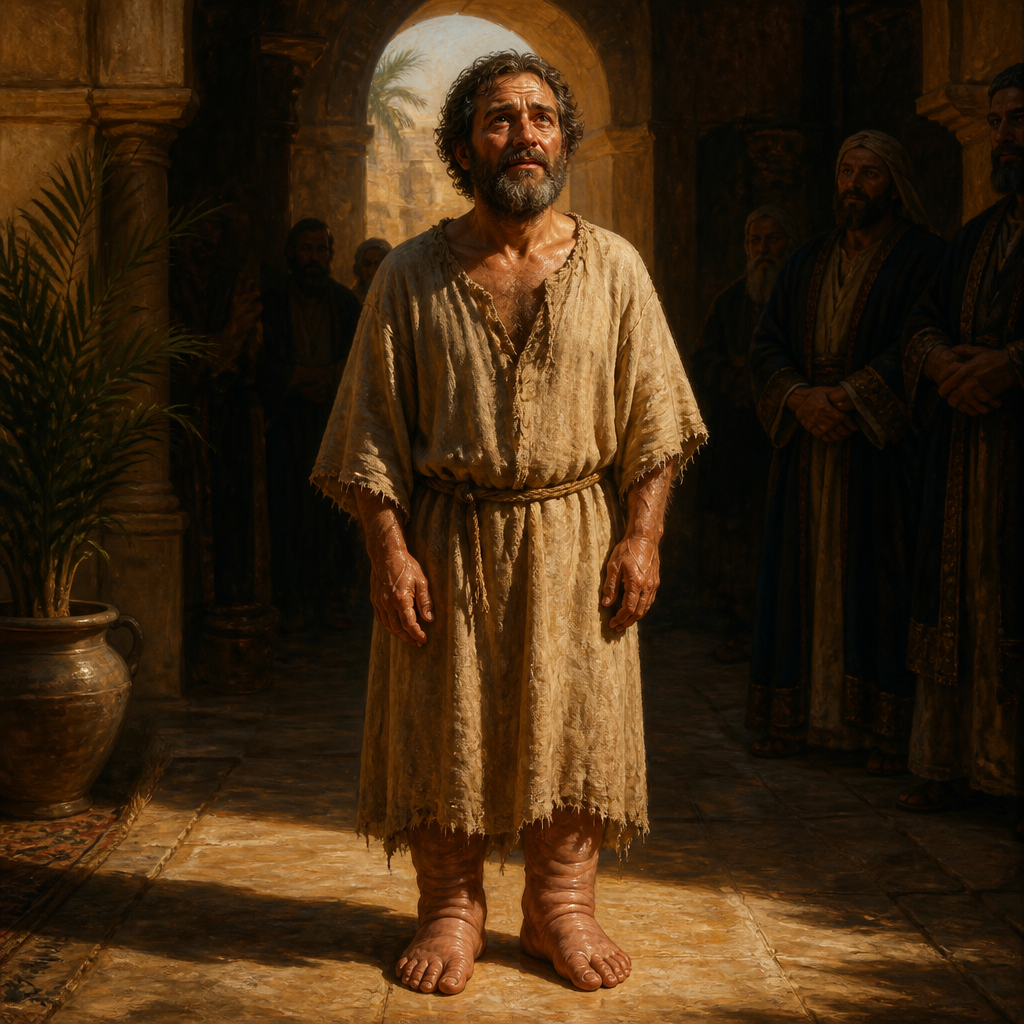
During this meal, a man with dropsy (edema) was present. Jesus posed a legal question to the ruler and his colleagues: 'Is it lawful to heal on the Sabbath, or not?' When the ruler and his guests remained silent, Jesus healed the man and dismissed him. Jesus then challenged their internal logic by asking if any of them would not rescue an ox or a son who fell into a well on the Sabbath. The ruler’s silence in the face of this miracle and logic suggests a degree of reflection or a lack of the immediate vitriol found in other Pharisaic encounters.
As the meal continued, Jesus observed how the guests scrambled for the 'places of honor.' He addressed a parable directly to the setting, advising that one should take the lowest seat to avoid humiliation. Furthermore, Jesus challenged the ruler’s own hospitality practices, suggesting that instead of inviting friends and rich neighbors, he should invite the poor, the crippled, the lame, and the blind. This interaction placed the ruler at the center of a revolutionary teaching on the 'resurrection of the just.'
Relationship to Other Biblical Figures
The ruler’s primary relationship in the text is with Jesus. Unlike the Pharisees who sought to stone Jesus or those who openly plotted his death, this ruler engaged in the traditional Middle Eastern practice of hospitality. While the atmosphere was tense ('watching him closely'), the act of breaking bread together implied a level of social recognition.
He is also seen in relationship with 'lawyers and Pharisees' (Luke 14:3), acting as a peer or leader among them. These men looked to the ruler’s house as a venue for religious discourse. The presence of the man with dropsy—whether he was an invited guest or a passerby who entered the open courtyard—served as the foil for the ruler’s understanding of the Law versus Jesus’ manifestation of grace.
Spiritual Significance
The ruler of the Pharisees serves as a representative of the 'sympathetic' or at least 'dialogue-seeking' elite who were forced to grapple with the person of Christ. His house becomes the classroom for several of Jesus’ most famous teachings: the lesson on humility, the instruction on true hospitality, and the Parable of the Great Banquet.
Theologically, the ruler represents the transition from a merit-based, status-oriented religious system to the Kingdom of God, which prioritizes the marginalized. His silence after Jesus' questions is often interpreted by scholars not as stubbornness, but as the dawning realization of a new authority. By hosting Jesus, he provided the occasion for the revelation that the Sabbath was made for healing and that true greatness in the coming Kingdom would be found in those who humble themselves. For the early Church, this narrative served as a reminder that even among the highest ranks of the opposition, there were those who opened their doors to the Word of God, providing a space where truth could be spoken to power.
Spiritual Significance
The ruler of the Pharisees is significant for hosting one of the most doctrinally rich 'table fellowship' scenes in the New Testament. His presence allows for the articulation of the 'upside-down' nature of the Kingdom of God, where the humble are exalted and the social outcasts are the preferred guests of the Messiah. His story emphasizes that the message of Jesus reached into the upper echelons of Jewish society, challenging the leaders to reconsider their interpretation of the Law in favor of mercy and genuine humility.
Frequently Asked Questions
Was the ruler of the Pharisees an enemy of Jesus?
While the text says the guests were 'watching him closely,' the ruler's decision to host Jesus at his table suggests a degree of respect or sincere inquiry rather than the overt hostility seen in other interactions where Jesus was being actively trapped for arrest.
What does it mean to be a 'ruler' among the Pharisees?
A 'ruler' (archōn) typically refers to a person of high social or political rank, such as a member of the Sanhedrin or a leader of a local synagogue, who also belonged to the Pharisaic sect.
Why did Jesus criticize the guests at the ruler's house?
Jesus observed the guests competing for the 'chief rooms' or most honorable seats at the table. He used this as an opportunity to teach that those who exalt themselves will be humbled, and those who humble themselves will be exalted.
What happened to the man with dropsy at the house?
Jesus healed the man in the presence of the ruler and the lawyers, then asked if it was lawful to heal on the Sabbath. The ruler and his guests could not find an argument against Jesus' healing or his logic regarding the Sabbath.
Is this ruler the same person as Nicodemus?
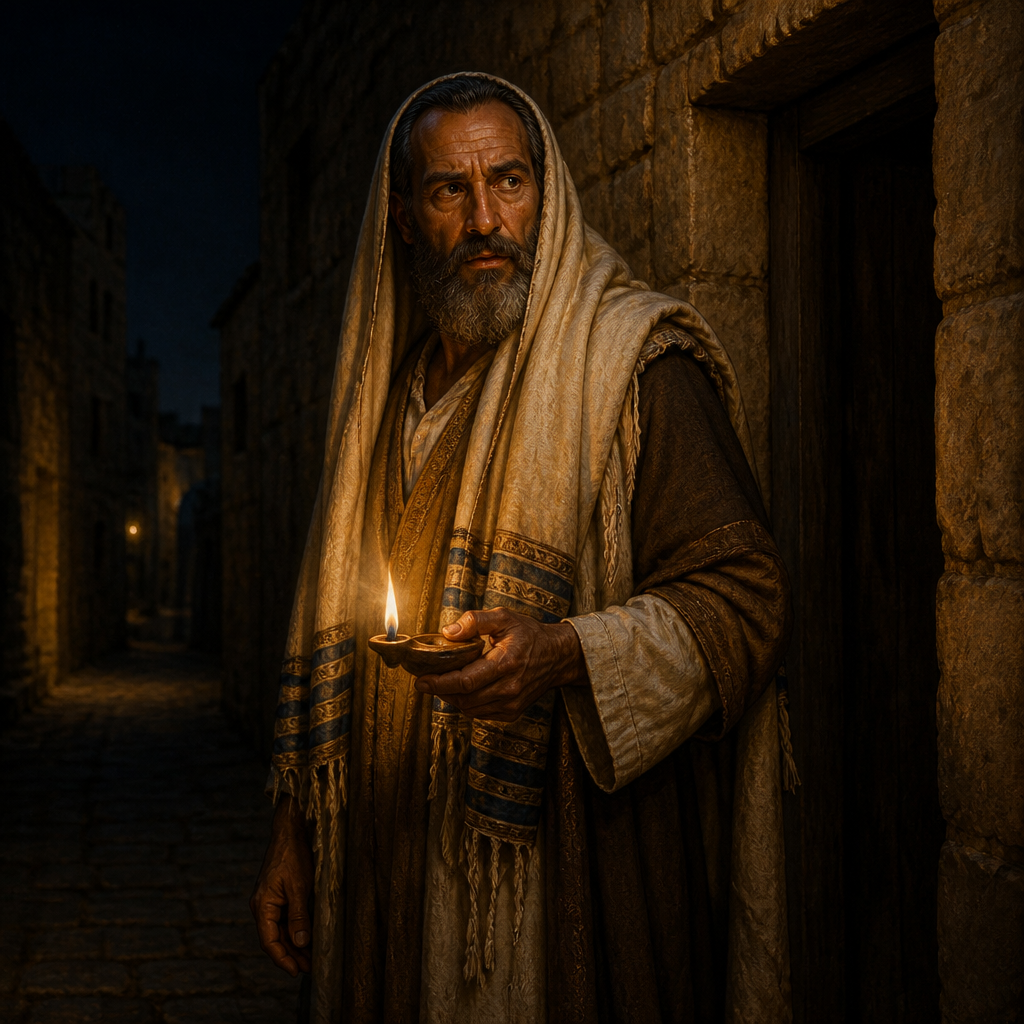
While Nicodemus is also described as a 'ruler of the Jews' and a Pharisee, the Bible does not explicitly identify the host in Luke 14 as Nicodemus; they are generally treated as distinct figures by scholars.
Connected Figures
Jesus
Guest and Teacher
The Man with Dropsy
Individual healed in his home
Nicodemus
Peer / Fellow Ruler and Pharisee