The Centurion at the Cross
A Roman officer who, after witnessing the death of Jesus and the accompanying cosmic events, declared Jesus to be the Son of God.
The Centurion at the Cross was a career officer in the Roman military, specifically assigned to oversee the executions in Jerusalem during the governorship of Pontius Pilate. Although his name is not provided in the biblical text, he plays a pivotal role in the Synoptic Gospels (Matthew, Mark, and Luke) as the first Gentile witness to testify to the divinity or righteousness of Jesus at the moment of his death. His presence at the crucifixion marks the intersection between the Roman imperial authority and the execution of the Messiah.
His declaration serves as a literary and theological climax in the Gospel accounts. Positioned at the foot of the cross, this officer represented the very power that condemned Jesus. Yet, moved by the unique manner in which Jesus died and the supernatural phenomena occurred, he experienced a profound shift in perspective. His words provide a Gentile counterpoint to the Jewish rejection of Jesus, signaling the universal scope of the Gospel messages that would soon spread throughout the Roman Empire.
Background and Family
As a centurion (centurio in Latin or hekatontarchos in Greek), this unnamed figure was a professional soldier who commanded a unit of approximately 80 to 100 men. Centurions were the backbone of the Roman legions, typically promoted from the ranks for their bravery, discipline, and leadership. While the Bible does not record his lineage or family, his rank implies he was a man of significant status and experience, likely a veteran of many years in the Roman service. In the context of 1st-century Roman Judea, he would have been under the command of the Roman Prefect, Pontius Pilate, and likely stationed in the Antonia Fortress.
Major Life Events
The primary historical and biblical mention of this centurion occurs during the crucifixion of Jesus of Nazareth, around 30–33 AD. On the day of the execution, the centurion was tasked with the duty of the exactor mortis, the officer in charge of ensuring the sentence of death was carried out and officially verified. He marched Jesus and two others to Golgotha, supervised the nailing of the prisoners to their crosses, and managed the crowd and the soldiers who divided Jesus' garments.
According to the Synoptic Gospels, as Jesus hung on the cross, the centurion witnessed three hours of darkness that fell over the land. Finally, at the moment of Jesus’ death, the centurion observed the internal strength with which Jesus cried out and the external cataclysms, including a powerful earthquake (Matthew 27:54). While Matthew and Mark record his confession as "Truly this was the Son of God," Luke records his words as "Certainly this man was innocent" or "Truly this was a righteous man" (Luke 23:47). In either case, the centurion’s reaction was one of awe and "glorifying God."
Later in the narrative, Mark’s Gospel records that Pontius Pilate summoned the centurion to confirm that Jesus was indeed dead before releasing the body to Joseph of Arimathea. The centurion’s professional confirmation of death served as the official Roman record of the event, inadvertently refuting later theories that Jesus had merely swooned or survived the ordeal.
Relationship to Other Biblical Figures
The centurion stands in direct contrast to the religious leaders of the Sanhedrin and the mocking soldiers under his command. While the soldiers cast lots for Jesus' clothing and the leaders jeered at his helplessness, the centurion remained an observant watcher (Matthew 27:54). His interaction with Pontius Pilate (Mark 15:44-45) establishes him as a trusted subordinate whose testimony carried legal weight. While tradition (specifically Church tradition outside the Bible) identifies him as a man named Longinus who became a believer, the biblical text leaves him as an anonymous symbol of the Gentile world.
Spiritual Significance
Theologically, the centurion represents the first realization by the Gentile world of whom Jesus truly was. His confession is often viewed by scholars as the fulfillment of Jesus' own prophecy that when he was "lifted up from the earth," he would "draw all people" to himself (John 12:32).
"When the centurion and those with him who were guarding Jesus saw the earthquake and all that had happened, they were terrified, and exclaimed, 'Surely he was the Son of God!'" — Matthew 27:54
His declaration acts as the "Amen" to the crucifixion. In Mark’s Gospel, which begins with the thesis statement that Jesus is the Son of God (Mark 1:1), the centurion is the first human being to correctly identify Jesus with that specific title after he dies. This underscores a central theme of the New Testament: that the salvation offered through the Messiah is not limited to the Jewish people but is extended to the Roman, the Gentile, and the occupier.
Spiritual Significance
The Centurion at the Cross is significant for providing a transition in the Gospel narrative from the Jewish context to the global Roman context. His acknowledgment of Jesus' status follows immediately after the veil of the Temple was torn in two, symbolizing that the barrier between God and all humanity had been removed. His role as the official witness to Jesus' death also provides historical verification within the text for the reality of the crucifixion.
In Christian tradition, the centurion is often seen as a model of the 'God-fearer' or the outsider who sees what the 'insiders' missed. By attributing divinity or righteousness to a man executed as a state criminal, he effectively challenged the Roman imperial cult, which reserved the title 'Son of God' (Divi Filius) for the Emperor, thereby performing a radical act of faith.
Frequently Asked Questions
Was the centurion a Christian?
The Bible does not explicitly state that he became a follower of Jesus, but his confession and the fact that he 'glorified God' (Luke 23:47) suggest an immediate and profound spiritual awakening.
What is the centurion's name?
The Bible does not name him. However, later Christian tradition and apocryphal works like the Acts of Pilate name him Longinus.
Did the centurion see the earthquake?
Yes, according to Matthew 27:54, the centurion and his guards were terrified by the earthquake and the events surrounding the death of Jesus.
What did he mean by 'Son of God'?
Scholars debate this. To a Roman, it might have meant 'divine hero,' but in the context of the Gospels, it is presented as the first pagan recognition of Jesus' true identity as the Messiah.
How did he confirm Jesus was dead?
As the officer in charge, he would have observed signs of death. Mark 15:44-45 notes that he personally reported this confirmation to Pontius Pilate.
Connected Figures
Jesus
Subject of the execution overseen by the centurion
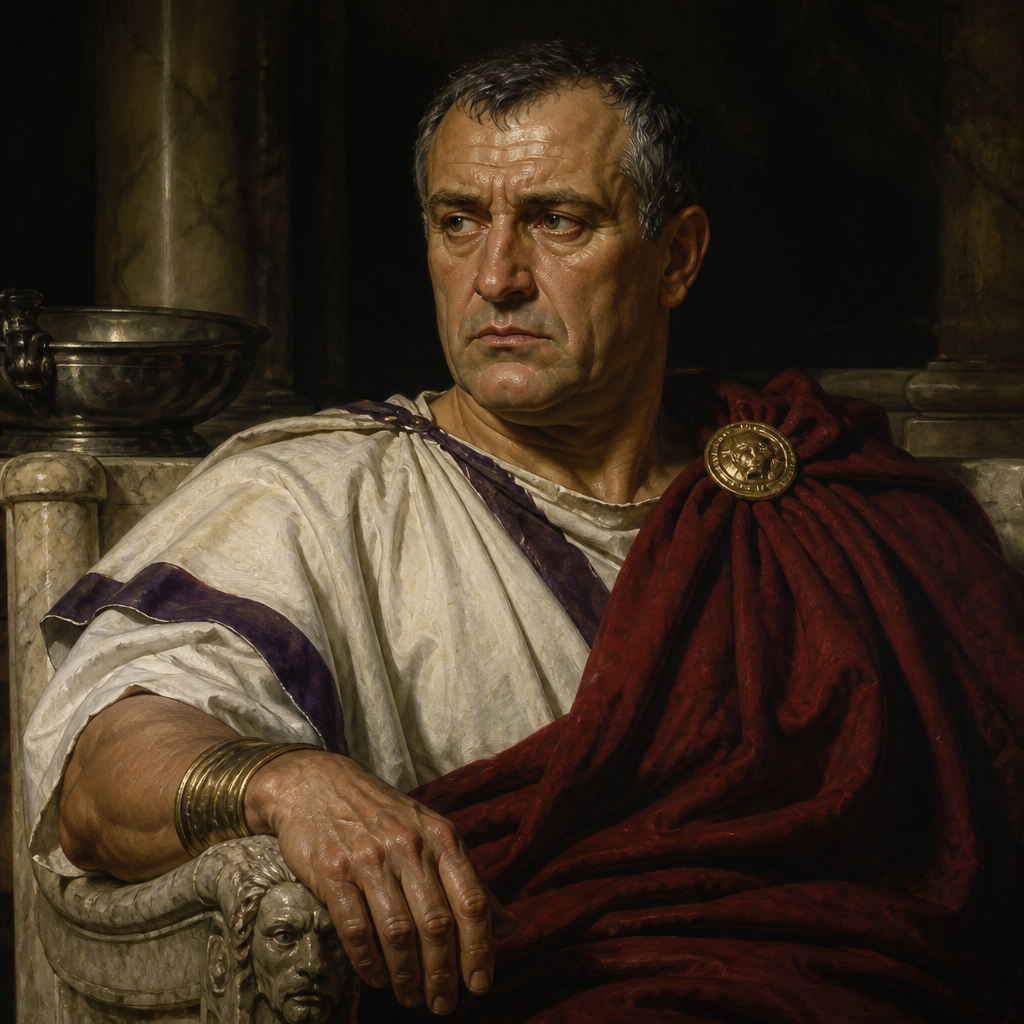
Pontius Pilate
Superior officer and Roman Governor
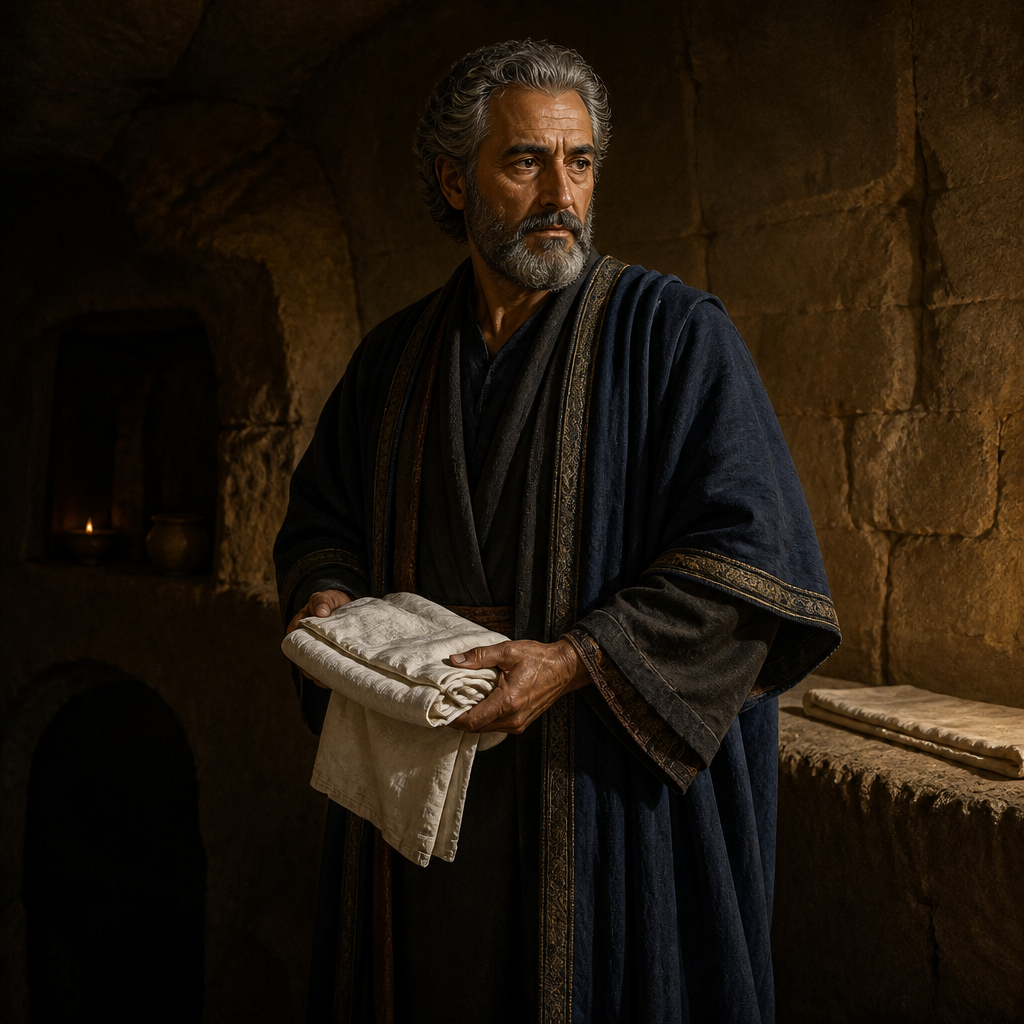
Joseph of Arimathea
Directed to receive Jesus' body after the centurion's report