The Daughters of Philip
Four unmarried sisters in Caesarea known for their prophetic ministry in the early Christian church during the first century AD.
The daughters of Philip are a unique group of women mentioned in the New Testament book of Acts. Known collectively for their spiritual gift of prophecy, they were the four virgin daughters of Philip the Evangelist, one of the seven men chosen to serve the early church in Jerusalem. Residing in the coastal city of Caesarea, they represented a significant intersection of family life and public ministry in the Apostolic Age.
While the biblical text provides few specific details regarding the content of their prophecies, their inclusion in the narrative of Paul’s final missionary journey highlights the active role of women in the charismatic life of the early church. Their status as 'virgins' likely suggests a life dedicated specifically to the service of God, setting a precedent for later traditions of female asceticism and ministry within Christianity.
Background and Family
The daughters of Philip belonged to a household deeply rooted in the expansion of the early Christian movement. Their father, Philip, is first introduced in Acts 6 as one of the seven deacons appointed to oversee the distribution of food to widows in Jerusalem. However, he is best known as 'Philip the Evangelist' (Acts 21:8), a title that distinguishes him from Philip the Apostle. After his successful mission in Samaria and his encounter with the Ethiopian eunuch, Philip eventually settled in Caesarea Maritima, a major Roman administrative center and seaport.
It is within this cosmopolitan and strategic location that his four daughters were raised. The scripture notes that all four were 'virgins' (Greek: parthenoi). In the cultural context of the 1st century AD, this designation often implied more than just their marital status; it suggested a vocational commitment to the work of the Gospel. By remaining unmarried, these women were able to devote their full attention to the ministry of the church and the exercise of their spiritual gifts without the domestic obligations typical of women in Hellenistic or Jewish society.
Major Life Events
The primary mention of these women occurs in Acts 21:8–9. As the Apostle Paul was returning to Jerusalem at the conclusion of his third missionary journey, he and his companions, including the author Luke, stopped in Caesarea. They stayed at the house of Philip the Evangelist for several days. It is during this stay that Luke records the presence of the four daughters, explicitly stating that they 'prophesied.'
This brief mention is historically significant because it occurs just before the arrival of Agabus, a well-known prophet from Judea who predicted Paul’s arrest. While the text does not record the specific words spoken by the daughters, their presence serves as a testament to the vibrancy of the Christian community in Caesarea. Their ministry was likely a regular feature of the local church's gatherings, providing guidance, exhortation, and revelation to the believers in that region.
Later ecclesiastical traditions, particularly those recorded by early church historians like Eusebius of Caesarea, suggest that the daughters lived to an old age and were highly respected as links to the apostolic era. Some traditions claim that two of the daughters eventually moved to Hierapolis in Asia Minor, where they continued to serve as sources of historical information regarding the early days of the faith.
Relationship to Other Biblical Figures
The daughters of Philip are directly linked to three major New Testament figures: their father Philip, the Apostle Paul, and the physician Luke. As the children of Philip, they inherited a legacy of bold evangelism and service. Their interaction with Paul demonstrates that their prophetic gift was recognized and accepted by the leadership of the Gentile mission.
Furthermore, because Luke was a travel companion of Paul during this visit to Caesarea, many scholars believe the daughters of Philip served as primary sources for the Gospel of Luke and the Book of Acts. Given their long-standing residence in the region and their active ministry, they would have possessed intimate knowledge of the early church’s history, including the events in Samaria and the coastal plains. Their role as 'living archives' underscores the communal and collaborative nature of New Testament authorship.
Spiritual Significance
The theological significance of the daughters of Philip lies in their fulfillment of the prophecy found in Joel 2:28 and quoted by Peter on the Day of Pentecost (Acts 2:17): 'Your sons and your daughters shall prophesy.' Their existence provides canonical evidence that the outpouring of the Holy Spirit was intended for both genders, breaking traditional barriers regarding who could speak on behalf of God.
In the early church, the office of a prophet was second only to that of an apostle (1 Corinthians 12:28). By functioning in this capacity, the daughters of Philip validated the internal call of the Spirit over societal norms. Their choice of celibacy also speaks to the 'kingdom-centered' lifestyle that Jesus and Paul occasionally commended (Matthew 19:12; 1 Corinthians 7), where the traditional family unit was expanded to include the entire family of God. They remain a primary biblical example of women exercising institutional and charismatic authority within the foundational years of Christianity.
Spiritual Significance
The daughters of Philip are a key biblical example of the egalitarian nature of the Holy Spirit's gifts in the New Testament. Their inclusion by Luke in the book of Acts serves to validate the prophecy of Joel, demonstrating that women were divinely empowered to speak prophetic truth within the Christian community. Their ministry highlights that the early church recognized and valued the voices of women in significant spiritual roles.
Their status as 'virgins who prophesy' also marks a transitional moment in church history, bridging the gap between the nomadic evangelism of the first disciples and the established, settled ministries in Hellenistic cities like Caesarea. They represent the stability of the second-generation Christian family, where the faith was not only inherited but actively practiced through specialized spiritual vocations.
Frequently Asked Questions
What were the names of Philip's four daughters?
The Bible does not record the individual names of Philip’s four daughters, referring to them only as a group defined by their father and their gift of prophecy.
Where did the daughters of Philip live?
They lived in Caesarea Maritima, a major Roman port city on the coast of Judea, where their father Philip the Evangelist had settled.
What is the difference between Philip the Apostle and Philip the Evangelist?
Philip the Apostle was one of the original twelve disciples of Jesus. Philip the Evangelist was one of the seven deacons appointed in Acts 6 to serve the church in Jerusalem; he is the father of the four daughters.
Did they ever marry?
The Book of Acts describes them as 'virgins,' suggesting they remained unmarried, likely to devote themselves more fully to their prophetic ministry.
What did they prophesy about?
The Bible does not record the specific content of their prophecies, but mentions them in the context of Paul's journey to Jerusalem, where other prophets were warning him of his impending arrest.
Connected Figures
Philip the Evangelist
Father
Paul the Apostle
Guest and Associate
Luke the Evangelist
Chronicler and Guest
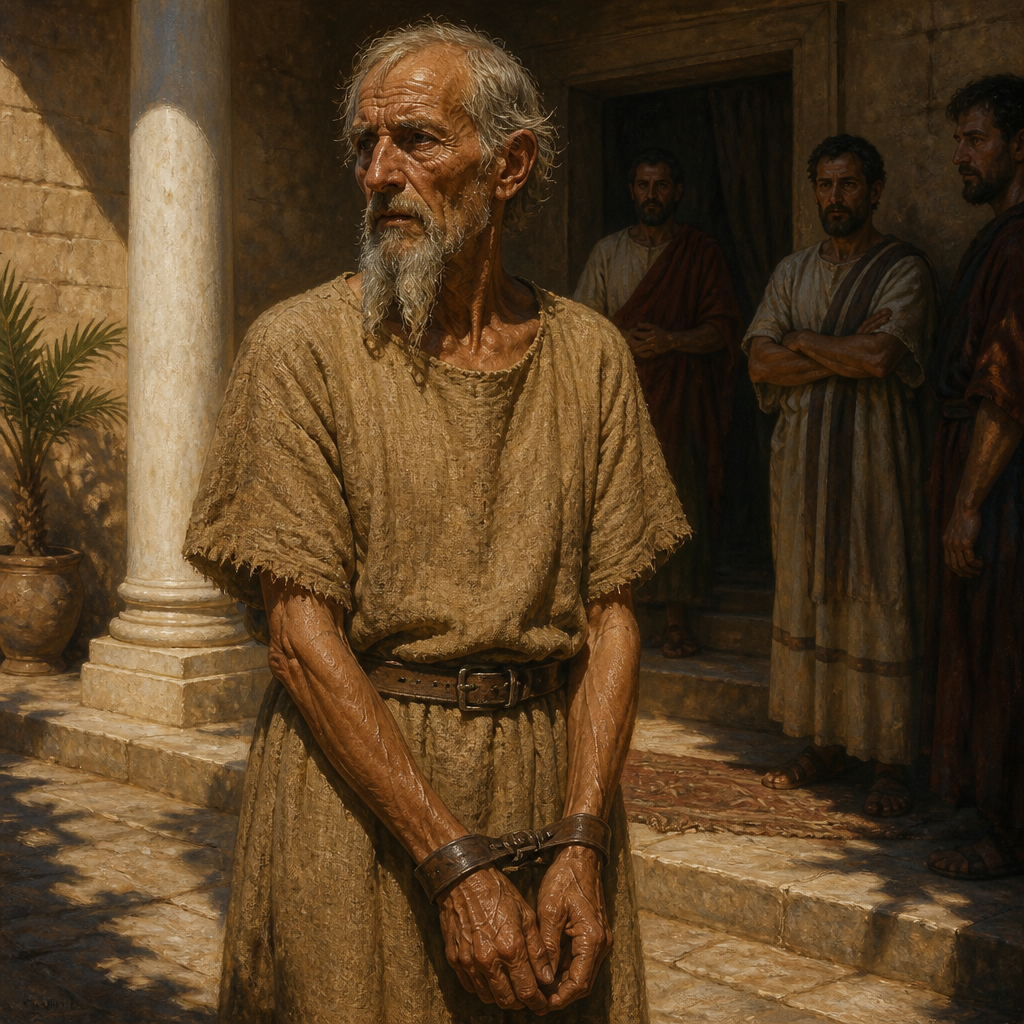
Agabus
Fellow Prophet