Judas Called Barsabbas
A prominent leader and prophet in the early Jerusalem church chosen to deliver the Apostolic Decree to the Gentiles in Antioch.
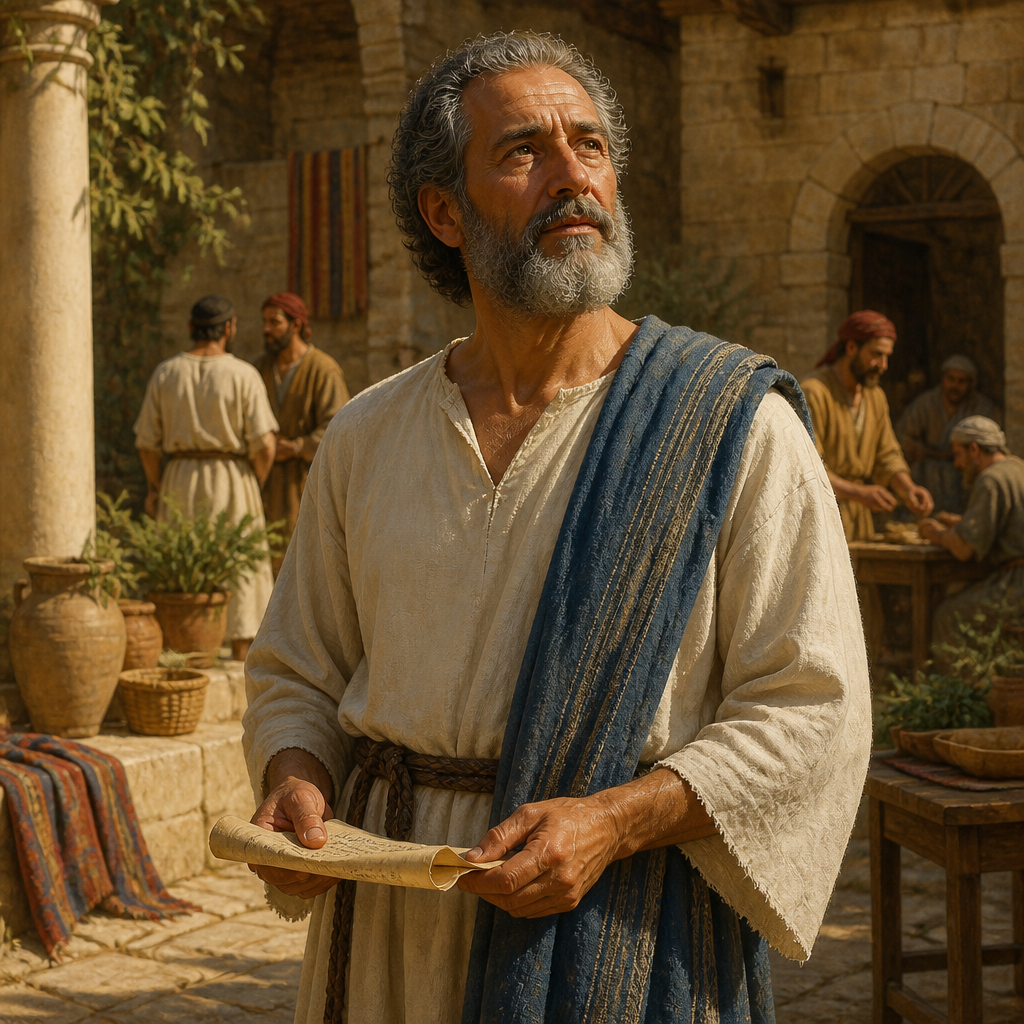
Judas, known by his patronymic surname Barsabbas, was a pivotal figure in the mid-1st century AD Christian community in Jerusalem. Mentioned exclusively in the Book of Acts, he was recognized as a leading man among the brothers, holding a position of significant authority and trust within the earliest ecclesiastical structure. His role was central to maintaining the unity of the nascent church during its first major theological crisis regarding the inclusion of Gentile converts.
Beyond his administrative and diplomatic responsibilities, the New Testament explicitly identifies Judas as a prophet. In the biblical context, this designation signifies more than the prediction of future events; it denotes an individual empowered by the Holy Spirit to deliver authoritative, edifying, and challenging messages from God to the community of believers. Judas served as a vital link between the Jewish core of the church in Jerusalem and the expanding mission to the Greek-speaking world.
Background and Family
Judas Called Barsabbas appears in the biblical narrative at a critical juncture in the history of the early Church. While his specific lineage is not detailed, his surname 'Barsabbas' is an Aramaic patronymic meaning 'Son of Sabbas' (or perhaps 'Son of the Sabbath'). This suggests a Jewish background and high standing within the Jerusalem community. The New Testament describes him as a 'leading man among the brothers' (Acts 15:22), indicating that he was not a recent convert but likely an established member of the church who may have been among the followers of Jesus during his earthly ministry, or at least a witness to the post-resurrection period.
Major Life Events
The primary account of Judas’s life occurs in Acts 15 during the Jerusalem Council (c. 48–50 AD). The council was convened to address the 'Judaizing' controversy—whether Gentile believers needed to be circumcised and follow the Mosaic Law to be saved. After the apostles and elders reached a consensus, they decided to send a formal letter to the Gentile believers in Antioch, Syria, and Cilicia. To ensure the letter was received as an authentic expression of the Jerusalem church's will, they chose two delegates to accompany Paul and Barnabas: Judas Barsabbas and Silas.
Upon arriving in Antioch, Judas and Silas gathered the congregation and delivered the decree. The impact of their visit was profound. Acts 15:32 provides the most significant detail regarding Judas’s spiritual office:
'And Judas and Silas, who were themselves prophets, encouraged and strengthened the brothers with many words.'
This passage clarifies that Judas’s mission was not merely that of a postman or a witness but of a spiritual teacher. As a prophet, he exercised the gift of exhortation, helping the Gentile church navigate the complexities of their new identity in Christ. After spending some time in Antioch, Judas was 'sent off in peace' by the brothers to return to the apostles in Jerusalem.
Relationship to Other Biblical Figures
Judas worked in close partnership with Silas, another prominent prophet and leader who would later become a traveling companion of the Apostle Paul. His interaction with Paul and Barnabas demonstrates the high regard in which he was held; the Jerusalem leadership trusted him to speak for them even alongside figures as influential as Paul. His relationship with the Apostles in Jerusalem—specifically Peter and James—was one of mutual trust. He was viewed as a reliable representative of the 'pillars' of the church, capable of interpreting and defending their decisions in foreign contexts.
Spiritual Significance
The spiritual significance of Judas Called Barsabbas lies in his exercise of the prophetic office within the New Testament framework. Unlike the Old Testament prophets who often spoke to the nation of Israel as a whole, Judas’s prophetic work was focused on the 'edification, exhortation, and comfort' of the local church (cf. 1 Corinthians 14:3). His role highlights that prophecy in the early church was intimately connected to local leadership and the preservation of apostolic doctrine.
Additionally, his participation in the delivery of the Apostolic Decree marks the first major instance of 'ecclesiastical diplomacy.' By traveling to Antioch, Judas helped bridge the cultural and religious divide between Jewish and Gentile Christians. His ministry ensured that the decision of the Jerusalem Council was not seen as a cold legal document, but as a living, Spirit-led word that brought joy and peace to the believers.
Spiritual Significance
Judas Barsabbas is significant as a primary example of a New Testament prophet whose ministry served to unify the burgeoning Christian movement. His selection as a delegate by the apostles reflects the high standards of character and spiritual maturity required for leadership in the early church. His work demonstrates that the early church relied on the Holy Spirit's gift of prophecy to provide clarity and encouragement during times of theological transition.
Furthermore, Judas represents the authority of the Jerusalem church as it extended its reach into the Gentile world. His success in Antioch serves as a biblical model for conflict resolution, showing how the presence of trusted, Spirit-filled witnesses can validate institutional decisions and foster communal harmony across cultural boundaries.
Frequently Asked Questions
What does the name 'Barsabbas' mean?
The name is Aramaic, meaning 'Son of Sabbas'. It was a patronymic surname used to distinguish him from other men named Judas in the early Christian community.
What was the mission of Judas Barsabbas in Antioch?
He was sent by the Jerusalem Council to deliver and confirm the 'Apostolic Decree', which stated that Gentile converts did not need to follow Jewish circumcision laws.
Was Judas Barsabbas an apostle?
The Bible does not call him an apostle, but it describes him as a 'leading man among the brothers' and a 'prophet,' indicating a high-ranking leadership role just below that of the Twelve.
Who was the companion of Judas on his journey?
He was accompanied by Silas, Paul, and Barnabas. Silas, like Judas, is also identified as a prophet.
What happened to Judas after his visit to Antioch?
According to Acts 15:33, after staying for some time and ministering to the believers, he was 'sent off in peace' to return to those who had sent him in Jerusalem.
Connected Figures

Silas
Fellow prophet and ministry partner
Paul the Apostle
Co-laborer in the mission to Antioch
Barnabas
Co-laborer in the mission to Antioch
James the Just
Appointed Judas as a delegate