Joses, Son of Mary
Joses was the son of Mary (a follower of Jesus) and the brother of James the Younger, mentioned in the context of the crucifixion and burial of Jesus Christ.
Joses is a figure mentioned in the Synoptic Gospels during the culminating events of the life of Jesus. He is identified primarily through his relationship to his mother, Mary, who was among the group of women who followed Jesus from Galilee to Jerusalem to minister to Him. Joses belongs to a specific family unit closely associated with the apostolic circle, most notably as the brother of James the Younger (also identified as James the son of Alphaeus).
Although Joses does not appear as an active participant in the recorded dialogues of the New Testament, his inclusion in the Passion narrative serves a vital historical and genealogical purpose. His name appears in the witness lists of the crucifixion and the entombment, providing a link between the female witnesses and their male relatives who served within the leadership of the early Church.
Background and Family
The biblical record identifies Joses as the son of a woman named Mary, who is distinguished from Mary the mother of Jesus and Mary Magdalene by the title "mother of James the younger and of Joses" (Mark 15:40). According to the familial connections provided in the Gospels, Joses is the brother of James the Younger, who is traditionally identified with the Apostle James, son of Alphaeus. Based on this connection, Alphaeus is identified as the father of Joses.
Furthermore, the textual evidence suggests a relationship to Matthew (also known as Levi), who is similarly described as a son of Alphaeus (Mark 2:14). While some scholars debate the exact nature of this sibling bond, the shared patronymic suggests Joses belonged to a prominent family within the tribe of Judah that contributed multiple figures to the inner and outer circles of Jesus’ ministry.
Major Life Events
Joses is mentioned exclusively in the context of the Passion of Christ. In Mark 15:40, he is mentioned as a means of identifying his mother, who stood "watching from a distance" as Jesus was crucified. This indicates that Joses’ family was present in Jerusalem during the final days of Jesus' life, likely having traveled from Galilee.
Following the death of Jesus, the Gospel accounts note the specific women who observed where the body was laid. Mark 15:47 records that "Mary the mother of Joses" (rendered as Joseph in some translations) saw where the body was placed in the tomb provided by Joseph of Arimathea. While Joses himself is not explicitly stated to be at the tomb, his identity is the primary marker used by the Evangelists to verify the identity of the witness.
"And there were also women watching from a distance. Among them were Mary Magdalene, Mary the mother of James the younger and of Joses, and Salome." (Mark 15:40)
Relationship to Other Biblical Figures
Joses is inextricably linked to the "Marys" of the New Testament. His mother was one of the devoted followers who provided for Jesus' needs (Mark 15:41). His brother, James the Younger, held a significant role as one of the Twelve Apostles. The mention of Joses alongside James suggests that Joses was a well-known figure within the early Christian community at the time the Gospels were written, even if his personal deeds were not the focus of the narrative. The variation of his name between "Joses" and "Joseph" in different manuscripts and translations (such as Matthew 27:56) reflects the commonality of the name and its Greek Hellenization.
Spiritual Significance
The significance of Joses lies in his function as a historical anchor. By naming specific individuals like Joses and James, the Gospel writers provided the contemporary audience with verifiable witnesses to the crucifixion and burial. His inclusion serves to validate the testimony of the women at the cross; by identifying them as the mother of known figures like Joses, the Evangelists grounded the supernatural events of the Gospel in the concrete reality of specific, recognizable families within the Judean and Galilean community.
Spiritual Significance
Joses serves as a genealogical marker that confirms the identity of the women who witnessed the crucifixion and burial of Jesus. His presence in the text links the apostolic circle (through his brother James) to the faithful women who remained at the cross, ensuring the continuity of the historical record regarding Christ's death and entombment.
Frequently Asked Questions
Who was Joses' mother?
His mother was Mary, one of the women who followed Jesus from Galilee and witnessed the crucifixion. She is often called 'the other Mary' to distinguish her from the mother of Jesus.
Was Joses one of the twelve apostles?
No, Joses is not listed among the twelve apostles, though his brother, James the son of Alphaeus, was one of the Twelve.
Is Joses the same as Joseph?
Yes, 'Joses' is a Greek variant of the Hebrew name 'Joseph.' In Matthew 27:56, some translations use 'Joseph' while Mark 15:40 uses 'Joses' to refer to the same individual.
To which tribe did Joses belong?
As a descendant of the house of Alphaeus and a resident of the region associated with the followers of Jesus, he is traditionally associated with the Tribe of Judah.
Connected Figures
Categories
Mentions by Book
- Mark2
- Matthew1
Family & Relationships
Sibling
James son of Alphaeus, Apostle
Matthew 27:56
Sibling
MatthewDisputed
Matthew 27:56
Parent
Matthew 10:3
Sibling
James son of Alphaeus, Apostle
Matthew 10:3
Parent
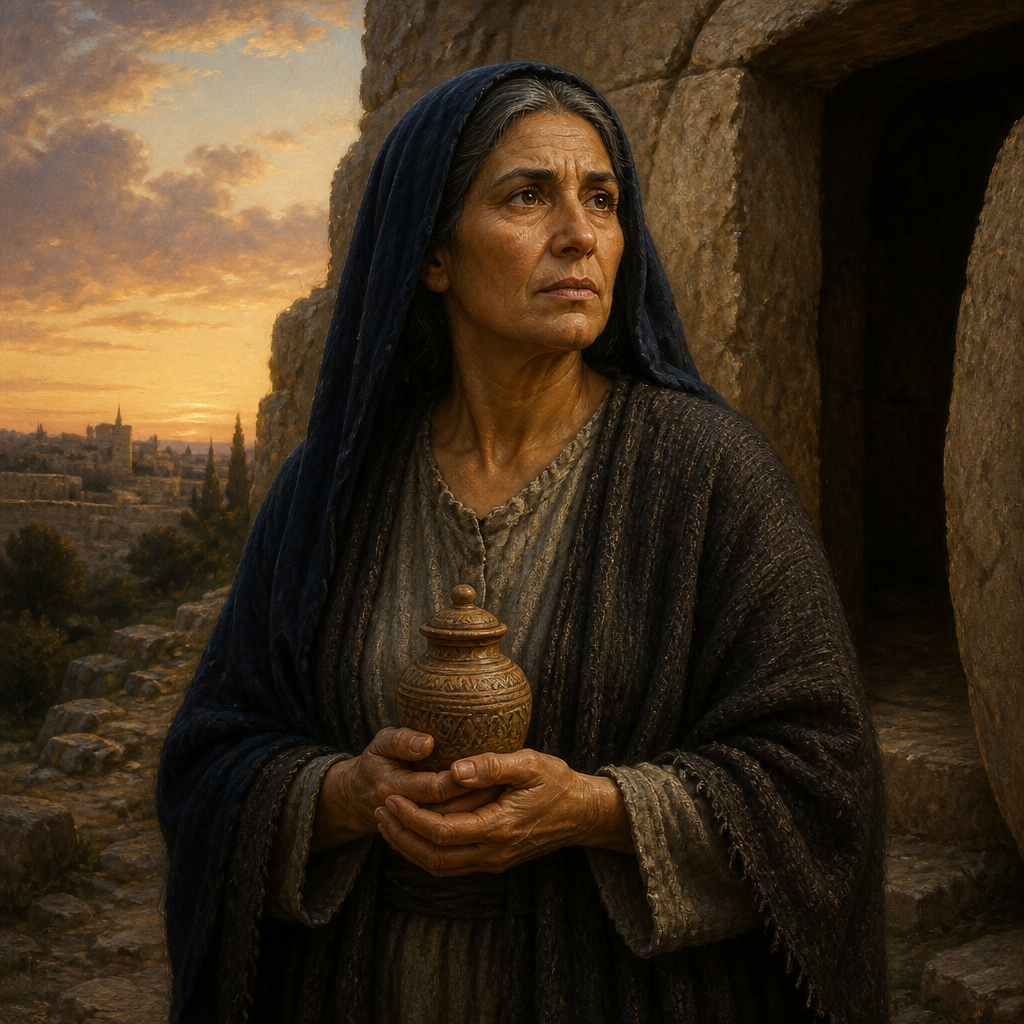
Mary, Mother of James and Joses
Matthew 27:56
Sibling
Matthew 9:9
Others Named Joses
Joses, Sibling of JesusMark 6:3
Joses was one of the four brothers of Jesus Christ mentioned by name in the Gospels during the skepticism of the Nazarene townspeople.