
Spokesmen
Professional orators and representatives tasked with presenting legal arguments or public defenses within the Greco-Roman judicial system.
The role of Spokesmen in the New Testament describes professional orators and representatives tasked with presenting legal arguments or public defenses within the Greco-Roman judicial system. These individuals were hired or appointed to navigate the complexities of formal rhetoric and legal procedure, often acting as intermediaries between a specific community and Roman authorities. The text does not say what specific training or credentials these men required, but it depicts them as figures capable of addressing large crowds or high-ranking officials in high-stakes environments.
In the Book of Acts, these figures appear during moments of intense civic and religious conflict. Tertullus is identified as an orator who was brought by the high priest Ananias and the elders to present a formal case against the Apostle Paul before Governor Felix (Acts 24:1). He began his speech with a flattering address to the governor, praising the peace and foresight Felix provided to the nation, before accusing Paul of being a plague and a ringleader of the sect of the Nazarenes (Acts 24:2–5). Another figure, Alexander was put forward by the Jews in Ephesus during a massive public disturbance in the city theater (Acts 19:33). The text does not say what Alexander intended to speak about, but it notes that he motioned with his hand to make a defense to the people (Acts 19:33). However, the crowd refused to listen to Alexander because they recognized he was a Jew, and they shouted him down for two hours (Acts 19:34).
The presence of these figures illustrates the intersection of early Christian activity with the established legal and social structures of the Roman Empire. The use of Tertullus shows that the Jewish leadership utilized professional Roman legal channels to address what they perceived as a threat to their religious laws and public order (Acts 24:6). Conversely, the failure of Alexander to calm the Ephesian mob demonstrates the limits of formal oratory when faced with widespread civil unrest and religious fervor (Acts 19:35–41). These accounts highlight how the message of the early church was frequently mediated through the formal language of the courtroom and the public square.
Everyone in this list
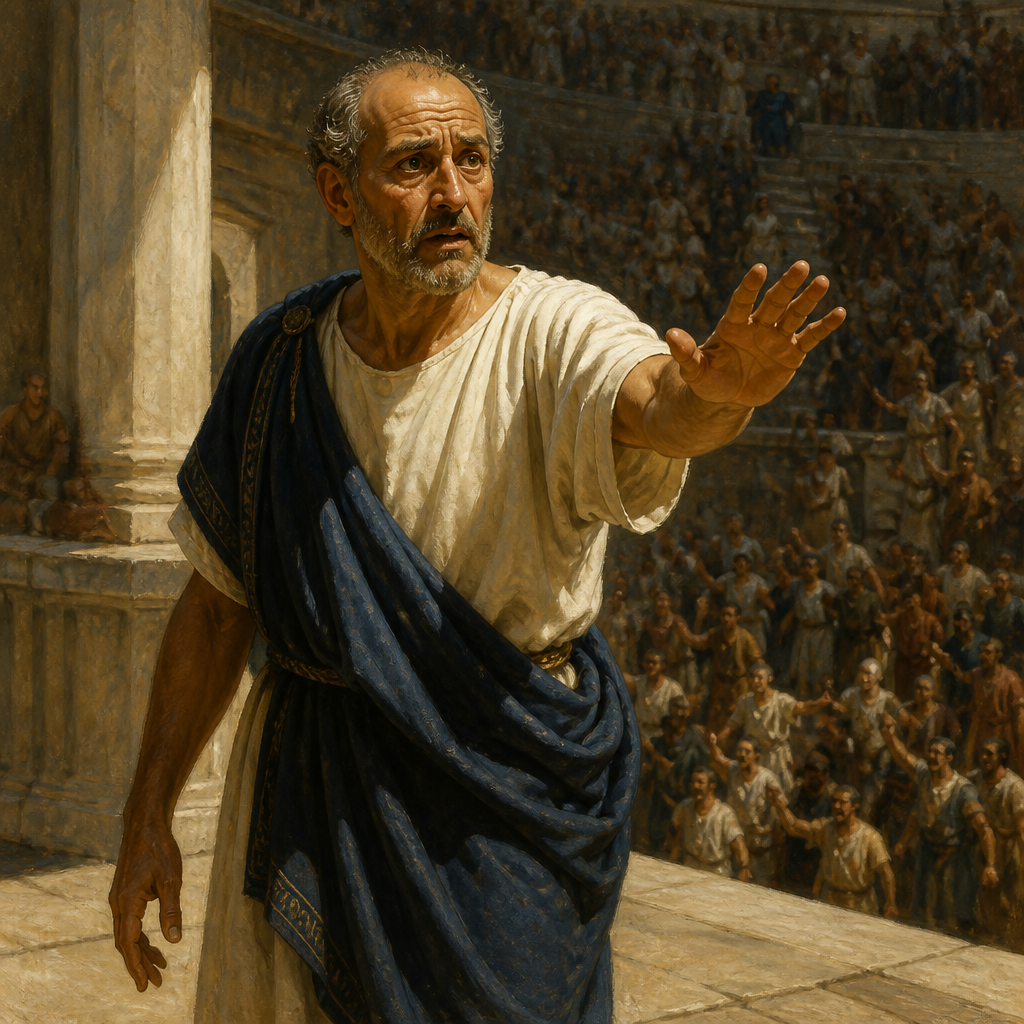
Alexander of the Ephesus Riot
Jewish spokesman who was shouted down by a riotous mob in the Ephesian theater

Tertullus
Professional orator who prosecuted the Apostle Paul before Governor Felix