
Raised by Jesus
Those Jesus called back from death to life.
The accounts of individuals Raised by Jesus appear in the Gospels of Luke and John to demonstrate his authority over death. These narratives describe specific instances where Jesus intervenes during funeral processions or at the bedside of the deceased to restore life. The text does not say how many people in total were raised during his ministry, but it provides detailed accounts of three specific individuals.
The first recorded instance involves The Son of the Widow of Nain, who was being carried out of the city gate for burial when Jesus touched the open coffin and commanded him to arise (Luke 7:11–15). In another account, Jairus' Daughter was a twelve-year-old child who had died while her father was seeking help, yet Jesus entered her room and took her by the hand to bring her back to life (Luke 8:41–56). The final and most detailed narrative concerns Lazarus of Bethany, a man who had been dead and in a tomb for four days before Jesus commanded the stone to be removed and called him to come out (John 11:38–44). These three figures represent different stages of death and burial, ranging from a child who had just expired to a man whose body had already begun to decay.
The organization of these events in the biblical text emphasizes the immediate physical restoration of the individuals. The Son of the Widow of Nain sat up and began to speak as soon as he was raised (Luke 7:15). Jairus' Daughter rose immediately and was given food to eat at the instruction of Jesus (Luke 8:55). Lazarus of Bethany emerged from his tomb still bound in linen strips and a head cloth, requiring the bystanders to unbind him so he could walk (John 11:44). The text does not say what these individuals experienced while they were dead or how long they lived after being restored to life.
These wonders serve as a turning point in the larger biblical story, particularly leading toward the crucifixion. The raising of Lazarus of Bethany specifically caused a stir among the religious leaders, who then began to plot how they might put Jesus to death (John 11:53). By demonstrating power over the grave, these acts are presented as signs that validate the identity of Jesus and foreshadow his own resurrection. The accounts conclude by noting that news of these events spread throughout the surrounding regions, drawing large crowds to witness the men and women who had returned from death.
Everyone in this list

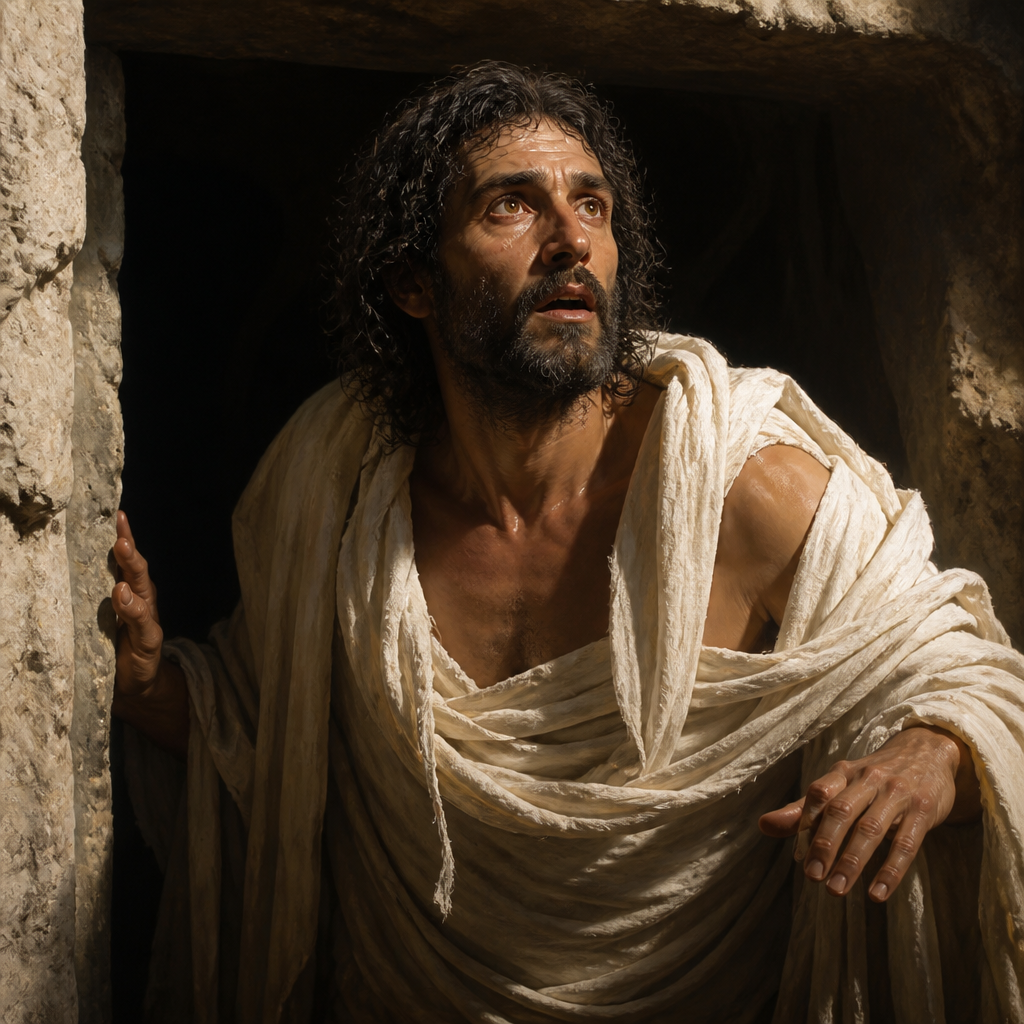

The Son of the Widow of Nain
The first person recorded in the Gospels whom Jesus raised from the dead