Wise Men from the East
Gentile dignitaries from the East who, guided by a star, traveled to Bethlehem and worshiped Jesus—arriving later than the shepherds and finding the child not in the manger but in a house (Matthew 2:11), possibly up to two years after His birth.
The Wise Men from the East, often referred to as the Magi or the Three Kings, are prominent figures appearing exclusively in the Gospel of Matthew's account of the Nativity. The term 'Magi' is derived from the Greek word 'magoi,' which originally referred to a hereditary caste of priests within the Median and Persian Empires. By the first century AD, the term had broadened to describe those who studied the stars, interpreted dreams, and practiced what was considered ancient science and philosophy. They appear in the biblical narrative as seekers of truth who recognized celestial signs indicating the birth of a new 'King of the Jews.'
Arriving in Jerusalem during the reign of Herod the Great, their presence caused considerable political and social upheaval. Their journey reflects a significant theological theme in the New Testament: the recognition of Jesus as the Messiah by Gentile nations. Despite their high status and likely wealth, they demonstrated profound humility, traveling long distances to offer expensive gifts—gold, frankincense, and myrrh—to a child born in a humble setting. Their inclusion in the Gospel of Matthew serves as a pivotal moment, signaling that the salvation offered through Christ was not exclusively for the house of Israel but for all humanity.
Background and Family
The Bible provides no specific details regarding the names, exact number, or specific lineage of the Wise Men. The tradition that there were three Magi is an inference based on the three gifts mentioned in Matthew 2:11. In later Western Christian tradition, they were given the names Melchior, Caspar, and Balthazar, and were often depicted as representing the three known continents (Europe, Asia, and Africa) or the three ages of man. However, these details are extra-biblical developments rather than scriptural facts.
Scholars generally agree that the Wise Men originated from the regions of Persia, Mesopotamia (Babylon), or possibly Arabia. The mention of 'the East' strongly points toward the Parthian Empire, where the Magi were a powerful political and religious class. As advisors to kings, they would have been well-educated in the sciences of the day, particularly astronomy, which they used to discern the changing of eras or the rise of new rulers.
Major Life Events
The account begins with the appearance of a star in the eastern sky, which the Magi interpreted as a sign of the birth of the King of the Jews. This led them on a journey to Jerusalem, the logical location to seek a royal heir. Upon arrival, their inquiry—'Where is he who has been born king of the Jews?'—alarmed King Herod the Great, who viewed any potential rival as a threat to his power. Herod consulted the chief priests and scribes, who identified Bethlehem as the prophesied location for the Messiah's birth based on Micah 5:2.
Herod met with the Wise Men privately, requesting that they report back to him once they found the child so he too might 'worship' him—a deceptive intent aimed at eliminating the infant. The star reappeared, guiding the Magi to the specific house in Bethlehem where Mary and Jesus were residing.
"And going into the house, they saw the child with Mary his mother, and they fell down and worshiped him. Then, opening their treasures, they offered him gifts, gold and frankincense and myrrh." (Matthew 2:11)
Following their encounter, the Magi were warned in a dream not to return to Herod. Being men of spiritual discernment, they obeyed this divine injunction and departed for their own country by a different route, successfully avoiding Herod's murderous intentions and effectively shielding the location of the holy family.
Relationship to Other Biblical Figures
The primary interaction of the Wise Men is with King Herod the Great. Their visit highlights the contrast between the paranoid, earthly king who seeks to destroy the Messiah and the foreign seekers who seek to honor him. Their report indirectly led to one of the most tragic events in the New Testament, the Massacre of the Innocents, as Herod reacted to their 'deception' by ordering the slaughter of all male children in Bethlehem age two and under.
Furthermore, their visit established a link between the Old Testament prophecies and the New Testament reality. By consulting the Jewish religious leaders, the Magi bridged the gap between Gentile inquiry and Hebrew scripture. While the religious leaders knew where the Messiah was to be born, it was the Wise Men who possessed the faith to actually go and find Him.
Spiritual Significance
The arrival of the Wise Men is theologically termed the 'Epiphany'—the manifestation of Christ to the Gentiles. In the context of Matthew’s Gospel, which was written primarily for a Jewish audience, the inclusion of these figures emphasizes that Jesus is the King of kings for all nations. The gifts they presented are often interpreted symbolically: gold representing kingship, frankincense representing deity or priestly service, and myrrh (an embalming spice) foreshadowing his sacrificial death.
The Magi also model the archetype of the 'true seeker.' They were willing to leave their comfort, travel through dangerous territories, and provide their best resources to a king who, in earthly terms, appeared to have no power. Their posture of falling down to worship a child underscores the biblical theme that true wisdom leads to the recognition of God's presence in the most unexpected places. Their story serves as a call to both intellectual inquiry and humble devotion.
Spiritual Significance
The Wise Men serve as the first Gentiles to recognize and worship Jesus, fulfilling Old Testament prophecies such as Psalm 72:10-11 and Isaiah 60:3, which describe kings bringing gifts to the light of God. Their role is crucial in Matthew's narrative to demonstrate that the Messiah's authority transcends national and ethnic boundaries.
Additionally, the Magi represent the harmony between general revelation (the star/nature) and special revelation (the Scriptures). God used their existing knowledge of the stars to lead them to Jerusalem, but it was through the Word of God revealed in prophecy that they were directed to the exact location of the Savior. This illustrates that while God calls people through various means, the fullest truth is found in Christ through His Word.
Frequently Asked Questions
How many Wise Men were there?
The Bible does not specify the number; it only mentions the three types of gifts (gold, frankincense, and myrrh). Because of these three gifts, Western tradition eventually assumed there were three men, but the biblical text remains silent on the exact count.
Were the Wise Men present at the stable when Jesus was born?
Contrary to most nativity scenes, Matthew 2:11 states they entered a 'house,' not a stable. Furthermore, Herod's subsequent order to kill children age two and under suggests that Jesus may have been a toddler by the time they arrived, potentially appearing months or even a year after the birth.
What happened to the Wise Men after they left Bethlehem?
The biblical record concludes with them returning to their own country by a different route. There are no further mentions of them in the Bible, though various traditions claim they were later baptized by the Apostle Thomas.
What was the 'Star of Bethlehem'?
The nature of the star is a subject of debate. Some suggest a conjunction of planets, a nova, or a comet, while others believe it was a supernatural manifestation of God's glory (the Shekinah) used specifically to guide the Magi.
Why did they give gold, frankincense, and myrrh?
These were standard royal gifts in the ancient world. Gold represented royalty, frankincense was used in worship and incense to signify divinity, and myrrh was an expensive resin used in perfumes and burial preparations, symbolizing Christ's future suffering.
Connected Figures
Jesus Christ
Subject of their worship and gift-giving
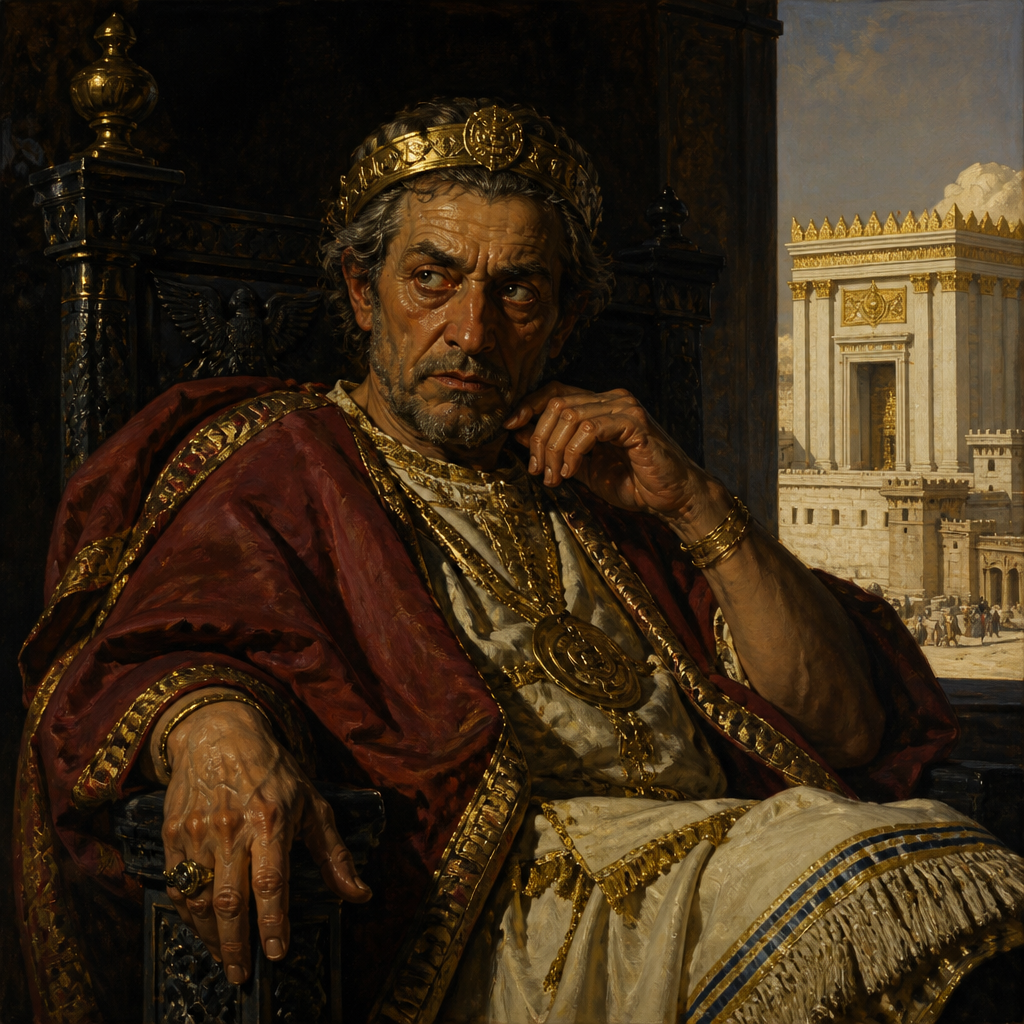
Herod the Great
Ruler who interrogated them and sought to use them to find Jesus
Mary
Mother of the child they visited
Joseph
Legal father of the child they visited