The Rider on the Pale Horse
The fourth and final horseman of the Apocalypse, representing Death and accompanied by Hades to execute judgment through famine, plague, and wild beasts.
The Rider on the Pale Horse is a symbolic figure appearing in the Book of Revelation, specifically during the opening of the seven seals. As the final member of the group popularly known as the Four Horsemen of the Apocalypse, this figure is the only one explicitly named in the biblical text. Unlike the preceding three riders who represent conquest, war, and famine, this fourth rider serves as the culmination of divine wrath directed toward a rebellious world.
Appearing upon a horse described as 'pale' (Greek: chlōros), the rider is identified as Death, with Hades following closely behind. This duo suggests a totalizing force of mortality where Death claims the physical life and Hades receives the soul. The imagery is deeply rooted in prophetic traditions and serves as a sobering reminder of the consequences of sin and the ultimate sovereignty of God over human history.
Background and Family
The Rider on the Pale Horse does not have a human lineage or family in the traditional sense, as he is a visionary personification. In the apocalyptic literature of the New Testament, he is part of a quartet of riders summoned by the four living creatures around the throne of God. Emerging upon the opening of the fourth seal (Revelation 6:7-8), his 'family' or association is strictly with the other three horsemen: the white horse (conquest), the red horse (war), and the black horse (famine). Historically, scholars view this figure as the personification of the ultimate end of all earthly ambition and the finality of judgment.
The Linguistic Significance of 'Pale'
The Greek word used to describe the horse is chlōros, which is the root of the English word 'chlorophyll.' In most Greek literature, it denotes a yellowish-green or sickly pale hue. It is the color of vegetation that is withered or, more strikingly, the color of a corpse in the process of decay. This reinforces the rider's identity as Death; he does not ride a vibrant or noble animal, but one that visually represents the stench and reality of the grave.
Major Life Events
While the Rider on the Pale Horse is a symbolic vision rather than a biological person with a lifespan, his 'appearance' marks a pivotal moment in the eschatological timeline of the Bible. According to the Apostle John's vision on the island of Patmos, the Lamb (Jesus Christ) opens the fourth seal, prompting the fourth living creature to say, 'Come!'
I looked, and there before me was a pale horse! Its rider was named Death, and Hades was following close behind him. They were given power over a fourth of the earth to kill by sword, famine and plague, and by the wild beasts of the earth. (Revelation 6:8, NIV)
The rider’s primary function is the execution of authority. He is granted power over a significant portion of the global population. His methods are four-fold: the sword (violent conflict), hunger (economic collapse and famine), death (often interpreted as pestilence or plague), and the beasts of the earth. This four-fold judgment mirrors the 'four sore judgments' mentioned by the prophet Ezekiel (Ezekiel 14:21), creating a scriptural bridge between Old Testament warnings and New Testament fulfillments.
Relationship to Other Biblical Figures
The Rider on the Pale Horse is intricately linked with his companion, Hades. In the Greek worldview adopted into biblical imagery, Hades is the realm of the dead. By depicting Hades following 'close behind,' John illustrates a harvesting process: Death strikes the blow, and Hades collects the remains. This relationship signifies that the judgment is not merely a temporary physical setback but a transition into the afterlife and divine reckoning.
Furthermore, the rider is entirely subordinate to the Lamb. He does not act on his own volition but is summoned by the opening of a seal by Christ. This relationship establishes that while Death is a terrifying force, it remains under the ultimate jurisdiction of God. Even in the height of apocalyptic chaos, the Rider on the Pale Horse is an instrument of a larger divine plan.
Spiritual Significance
Theologically, the Rider on the Pale Horse represents the finality of the 'beginning of sorrows.' He serves as a personified warning of the fragility of human existence and the certainty of judgment. For the early Christian church, living under Roman persecution in the 1st century AD, this figure was a reminder that the world's systems—represented by the earlier riders of conquest and economic disparity—inevitably lead to the grave.
However, the Rider on the Pale Horse also sets the stage for the ultimate victory of Christ. Later in the Book of Revelation, both Death and Hades are described as being cast into the lake of fire (Revelation 20:14). Thus, the rider is a temporary power. His significance lies in his role as a purifier of the earth, removing the old order to make way for the 'New Heaven and New Earth' where, as the scripture promises, 'there shall be no more death.'
Spiritual Significance
The Rider on the Pale Horse is the only one of the Four Horsemen explicitly named, which underscores his role as the ultimate consequence of the preceding judgments. He represents the intersection of divine justice and human mortality, acting as a grim reaper who utilizes the collective horrors of war and famine to bring about an end to an era of rebellion. His presence signifies that God's judgment is comprehensive, affecting both the physical body through death and the spiritual state through Hades.
In a broader theological sense, this figure serves as a 'memento mori' (reminder of death) for the reader. He demonstrates that death is not merely a natural occurrence but is often tied to the moral and spiritual trajectory of the world. By showing that this rider is ultimately defeated and his companions (Death and Hades) are destroyed at the end of the age, the Bible uses this figure to highlight the magnitude of Christ's resurrection power over the final enemy.
Frequently Asked Questions
What does the pale color of the horse symbolize?
The 'pale' color (Greek: chlōros) refers to a sickly, yellowish-green hue associated with the pallor of a corpse or the appearance of skin during a plague, symbolizing decay and mortality.
Is the Rider on the Pale Horse a real person?
No, within the context of Revelation, the rider is a symbolic personification or an angelic messenger representing the force of Death, rather than a historical human figure.
What is the difference between Death and Hades in this context?
In this vision, Death is the horseman who takes the physical life, while Hades is the follow-up force that claims and contains the souls of the departed.
Why is the Rider on the Pale Horse given power over only a quarter of the earth?
The 'fourth of the earth' signifies a limited judgment. It is a warning stroke intended to lead humanity to repentance before the final, total judgments described later in the book.
How does the Rider on the Pale Horse die?
The rider himself does not 'die' in a narrative sense, but his power is ended when Death and Hades are cast into the lake of fire at the end of the Book of Revelation.
Connected Figures
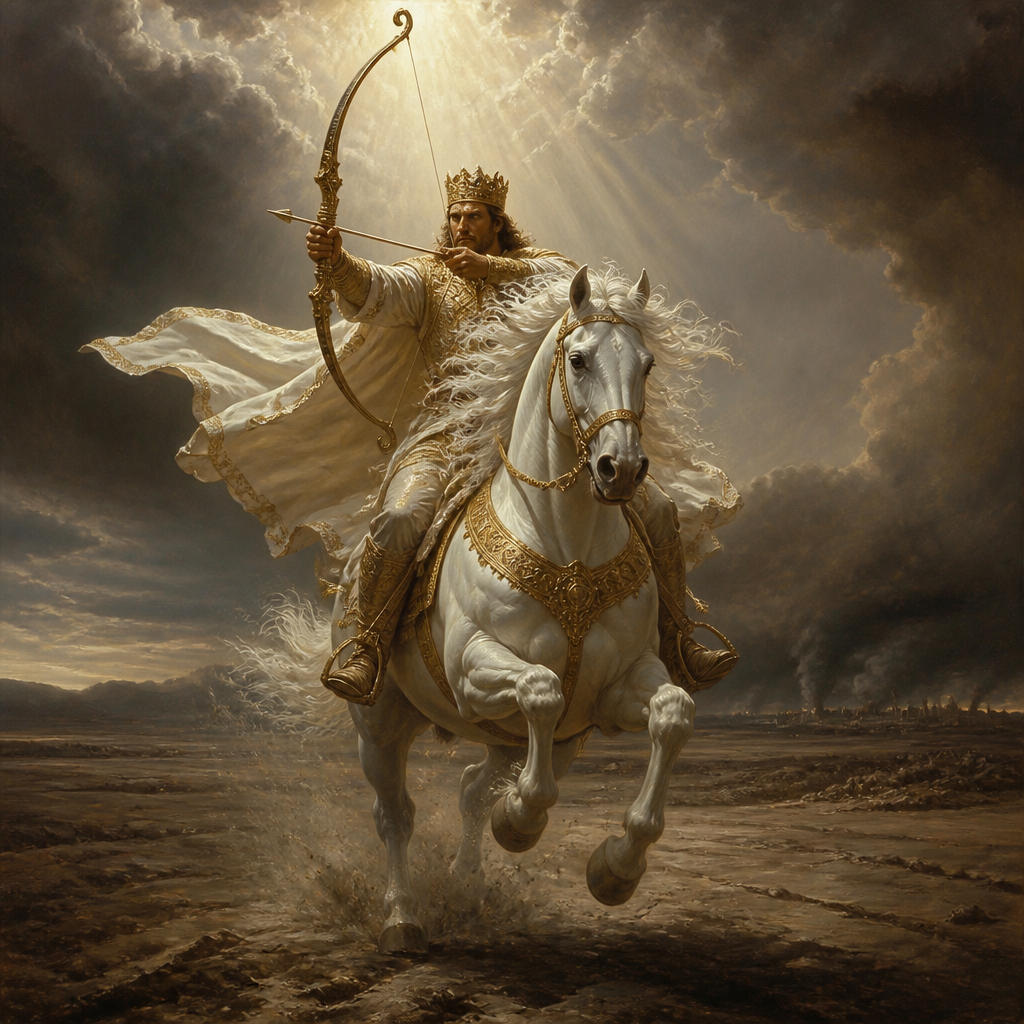
The Rider on the White Horse
Fellow horseman representing Conquest
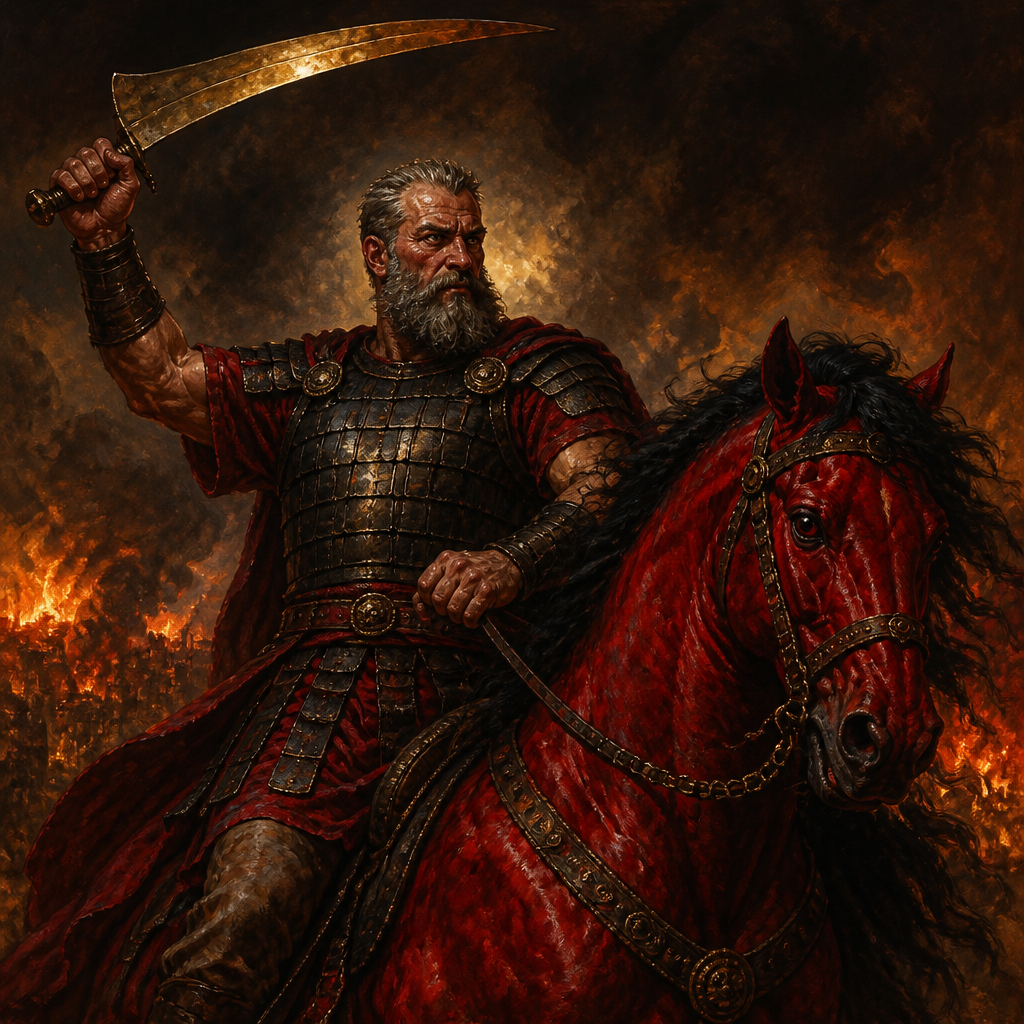
The Rider on the Red Horse
Fellow horseman representing War
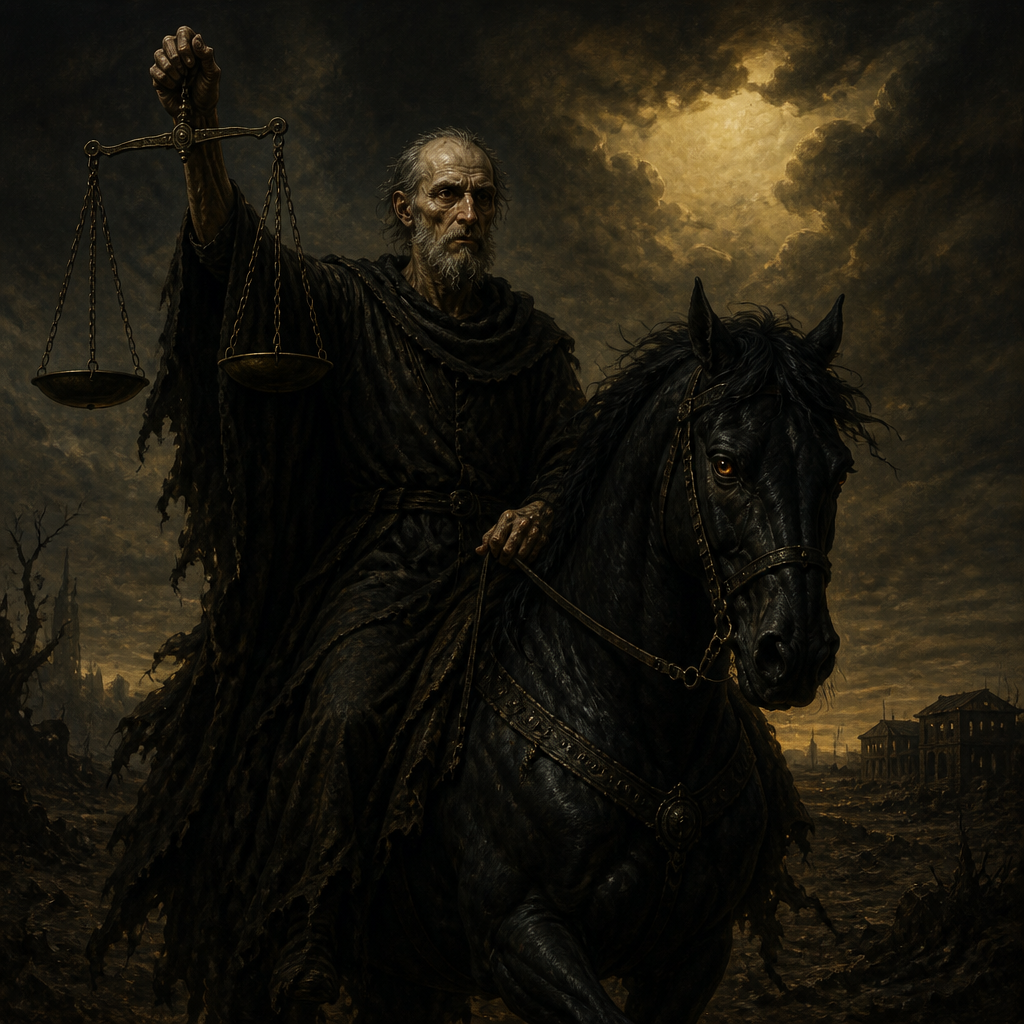
The Rider on the Black Horse
Fellow horseman representing Famine
Jesus Christ
The Lamb who opens the seals and commands the riders
John of Patmos
The visionary who recorded the appearance of the rider