The Rider on the Black Horse
The third of the Four Horsemen of the Apocalypse, symbolizing famine and economic inequality through the scales he carries.
The Rider on the Black Horse constitutes the third figure released following the opening of the seven seals by the Lamb in the Book of Revelation. Appearing specifically at the sounding of the third seal, this figure represents a shift from the overt violence of the first two riders—conquest and war—toward the systemic and devastating consequences of societal collapse: scarcity and famine. Unlike the preceding horsemen, this rider is uniquely associated with a spoken proclamation regarding the price of essential commodities, highlighting a period of extreme economic hardship.
Clothed in symbolism, the rider is traditionally understood by biblical scholars as the personification of Famine. While the rider does not wield a weapon of war like a bow or a sword, he carries a pair of scales (a balance), which in the ancient world was the primary instrument for weighing food and currency. This imagery suggests a time when food is so scarce that it must be measured with meticulous precision, and the prices mentioned in the text indicate a cost of living that far exceeds the means of the average laborer, while luxuries remain untouched, pointing to a stark divide between the wealthy and the impoverished.
Background and Context
The Rider on the Black Horse appears in the sixth chapter of the Book of Revelation, the final book of the Christian New Testament. The vision is experienced by the Apostle John while in exile on the island of Patmos. As the Lamb (Jesus Christ) opens the third of the seven seals on the heavenly scroll, one of the four living creatures—characterized by the face of a man—cries out, "Come!" In response, a black horse emerges, and its rider holds a pair of scales in his hand.
The color black in biblical symbolism is frequently associated with mourning, death, and famine (Lamentations 5:10). While the first rider represents conquest and the second represents civil or international warfare, the third rider represents the inevitable economic consequences of such upheavals. The emergence of this figure signals a transition from the kinetic energy of battle to the slow, agonizing depletion of resources that follows.
The Symbols: The Scales and the Voice
Unlike his predecessors, the Rider on the Black Horse is accompanied by a specific auditory command. John hears what sounds like a voice in the midst of the four living creatures saying, "A quart of wheat for a denarius, and three quarts of barley for a denarius; and do not harm the oil and the wine" (Revelation 6:6).
The mention of the 'denarius' is critical for historical context. In the 1st century AD, a denarius was the standard daily wage for a common laborer or soldier. Under normal circumstances, a denarius could purchase significantly more grain. The prices quoted by the voice indicate a situation where a man's entire day of labor would buy only enough wheat to feed one person for one day, or enough inferior barley to barely sustain a small family. This depicts a subsistence-level existence where no surplus is possible.
Relationship to Other Biblical Figures
The Rider on the Black Horse is inextricably linked to the other three horsemen. He follows the Rider on the Red Horse (War), reflecting the historical reality that war destroys crops, disrupts trade routes, and depletes the workforce, leading directly to food shortages. In the overarching narrative of Revelation, these riders act as agents of God's judgment, permitted by the Lamb to bring the world to a state of realization regarding its fallen nature.
Some scholars draw parallels between this rider and the warnings of the Old Testament prophets. Ezekiel, for instance, speaks of God's "four sore judgments" which include sword, famine, noisome beasts, and pestilence (Ezekiel 14:21). The Rider on the Black Horse serves as the fulfillment of the "famine" aspect of these classical prophetic warnings within the specialized apocalyptic framework of John’s vision.
Spiritual Significance
Theologically, the Rider on the Black Horse represents the fragility of human civilization and the judgment of economic injustice. A striking detail of the vision is the command to "not harm the oil and the wine." In the ancient Near East, oil and wine were considered luxuries or at least secondary to the essential grains.
This preservation of luxuries alongside the astronomical inflation of staples like wheat and barley suggests a world of profound inequality. The poor starve while the wealthy continue to enjoy their refinements. Spiritually, this warns against a society that prioritizes commerce and luxury over the basic survival and dignity of the human person. It also demonstrates the sovereignty of God over the economy; even in the midst of judgment, the limits of the devastation are strictly defined by the divine voice, showing that the rider operates only within the boundaries permitted by the Creator.
Spiritual Significance
The Rider on the Black Horse is theologically significant as he represents the divine judgment of scarcity and the collapse of the material economy. He serves as a sobering reminder that human sustenance is ultimately dependent on divine providence rather than human systems of trade. The 'scales' symbolize a transition from the chaos of war to the cold, calculated measurement of survival, highlighting the desperation of a world separated from God's abundance.
Furthermore, the rider emphasizes the reality of social injustice during the 'end times.' By highlighting the disparity between the price of grain and the protection of oil and wine, the text identifies economic exploitation as a key feature of the fallen world that attracts divine wrath. This figure serves as a call for the faithful to maintain perspective on material wealth and to recognize that earthly security is transitory.
Frequently Asked Questions
What do the scales held by the rider symbolize?
The scales, or balance, symbolize the weighing of food during a famine, indicating that supplies are so low they must be rationed and sold at exorbitant prices.
Why is the horse black?
In biblical and ancient contexts, the color black is often associated with mourning and the 'blackness' of skin that occurs during extreme starvation.
What is the meaning of 'a quart of wheat for a denarius'?
It signifies extreme inflation. Since a denarius was a full day's wage, paying that much for a single quart of wheat meant a worker could only afford to feed himself, leaving nothing for his family or other needs.
Why are the oil and wine not to be harmed?
This is often interpreted as a sign that luxuries remain available for the rich while the poor suffer for lack of staples, or that God is setting a specific limit on the extent of the famine.
Who gives the command to the rider?
The command 'Come!' is given by the third living creature (with the face of a man), but the voice discussing prices comes from 'in the midst of the four living creatures,' implying the throne of God.
Connected Figures
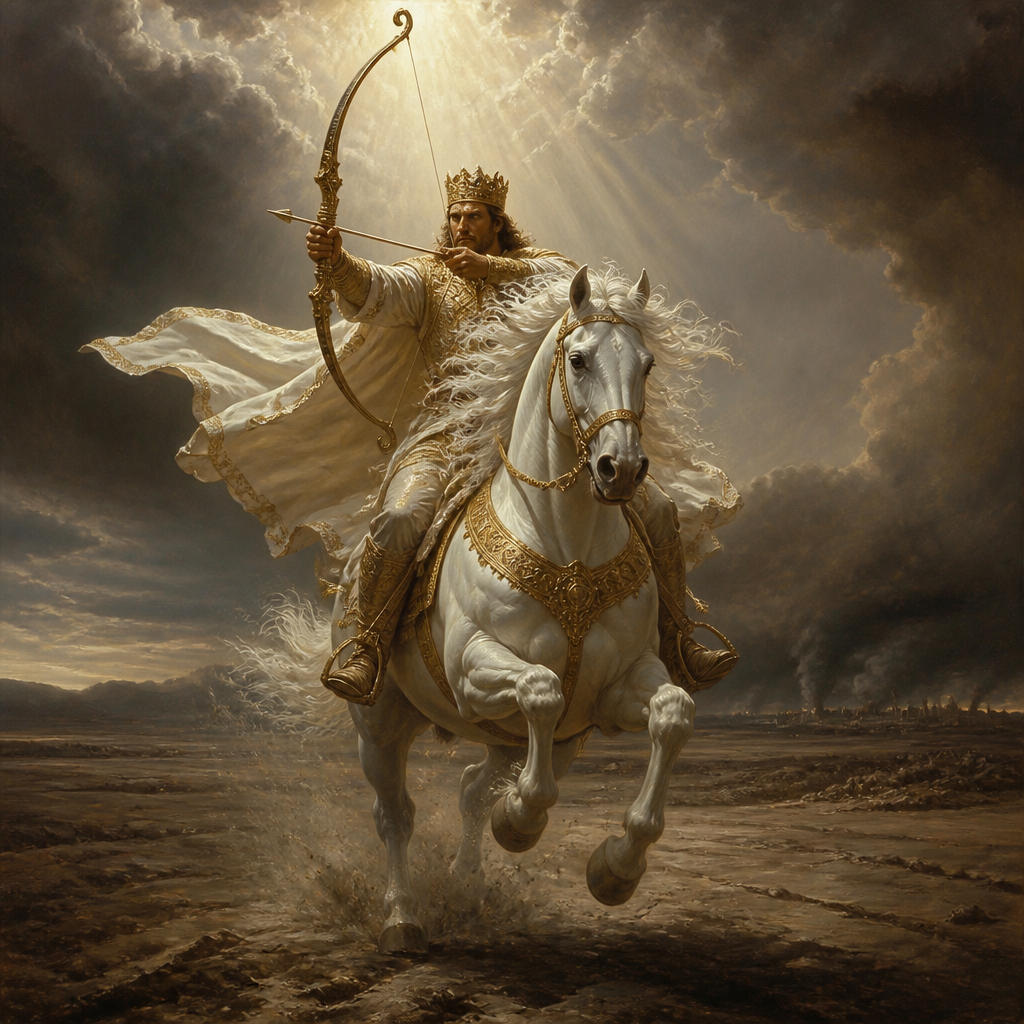
The Rider on the White Horse
First of the four horsemen
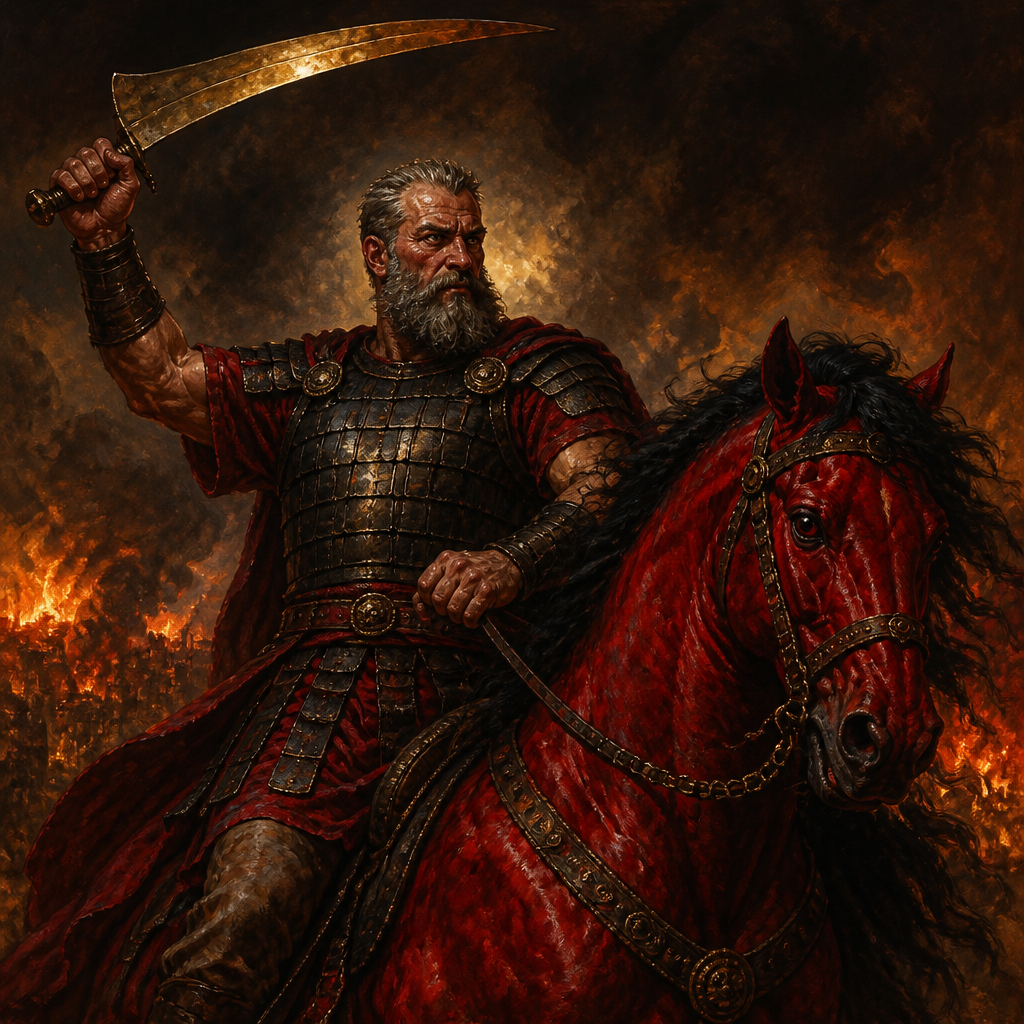
The Rider on the Red Horse
Second of the four horsemen
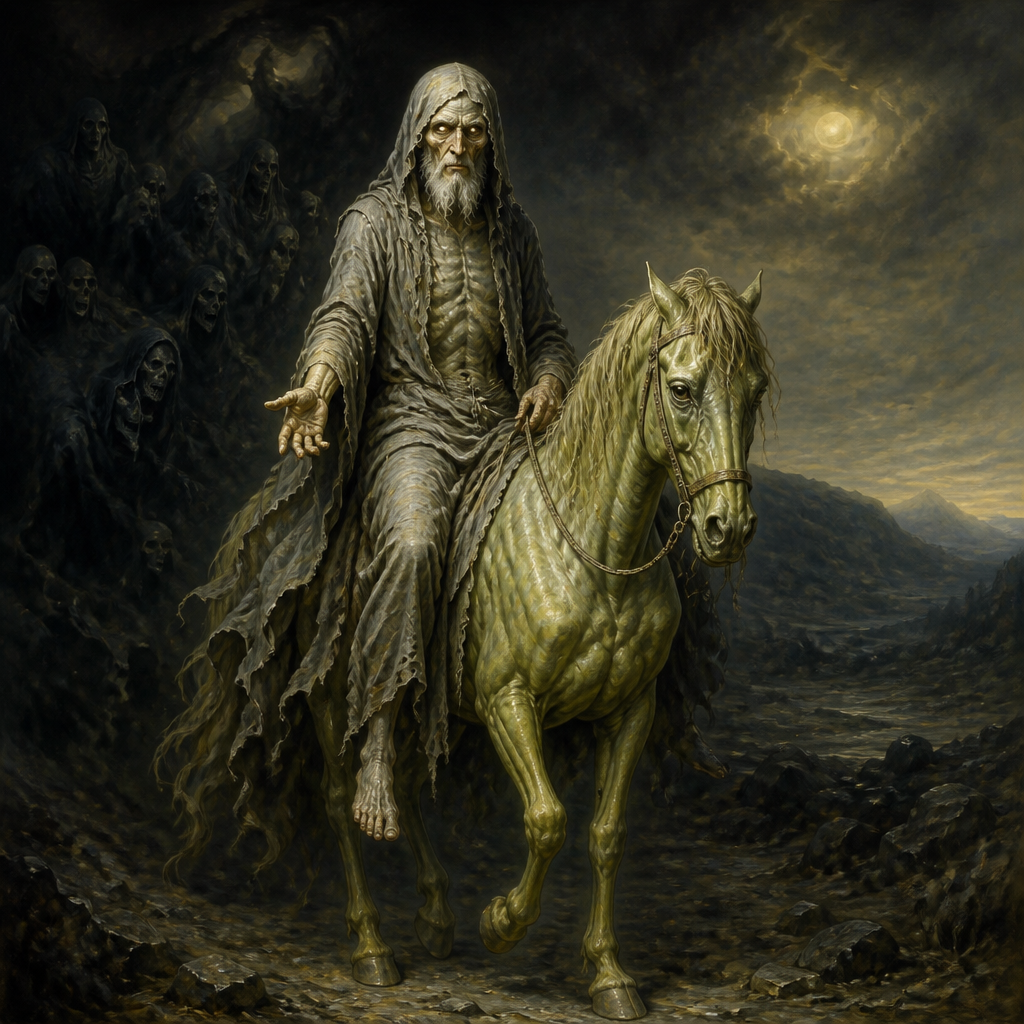
The Rider on the Pale Horse
Fourth of the four horsemen
The Lamb (Jesus Christ)
The one who opens the third seal
John of Patmos
Visionary who recorded the rider's appearance