The Persuaded Thessalonian Jews
A minority group of Jewish residents in Thessalonica who, after hearing Paul's synagogue reasoning, converted to Christianity and joined the early church.
The Persuaded Thessalonian Jews represent a specific demographic within the early Christian community of Thessalonica in Macedonia. During the second missionary journey of the Apostle Paul, occurring approximately 50 AD, Paul and Silas visited the local synagogue for three consecutive Sabbaths to present the argument that Jesus was the prophesied Messiah who had to suffer and rise from the dead. While the majority of the Jewish establishment in the city rejected this message, a subset of the Jewish population was 'persuaded' and chose to align themselves with the apostolic mission.
These individuals are historically significant as they formed the Jewish core of what would become one of the most vibrant and influential churches of the New Testament era. Their conversion served as a catalyst for a larger movement that included a great multitude of God-fearing Greeks and prominent women. Despite facing immediate social and legal pressure from their unbelieving peers, this group remained loyal to the gospel, establishing a precedent for the 'remnant' theology mentioned elsewhere in Pauline literature.
Background and Context
Thessalonica, the capital of the Roman province of Macedonia, was a major commercial hub located on the Via Egnatia. Its strategic importance meant it had a diverse population, including a significant Jewish community that enjoyed sufficient influence to maintain a synagogue. The arrival of Paul and Silas in approximately 50 AD marked a pivotal moment for this community. Unlike the immediate hostility encountered in other cities, the synagogue at Thessalonica initially provided a forum for Paul to present his Christological arguments for three weeks.
The Reasoning in the Synagogue
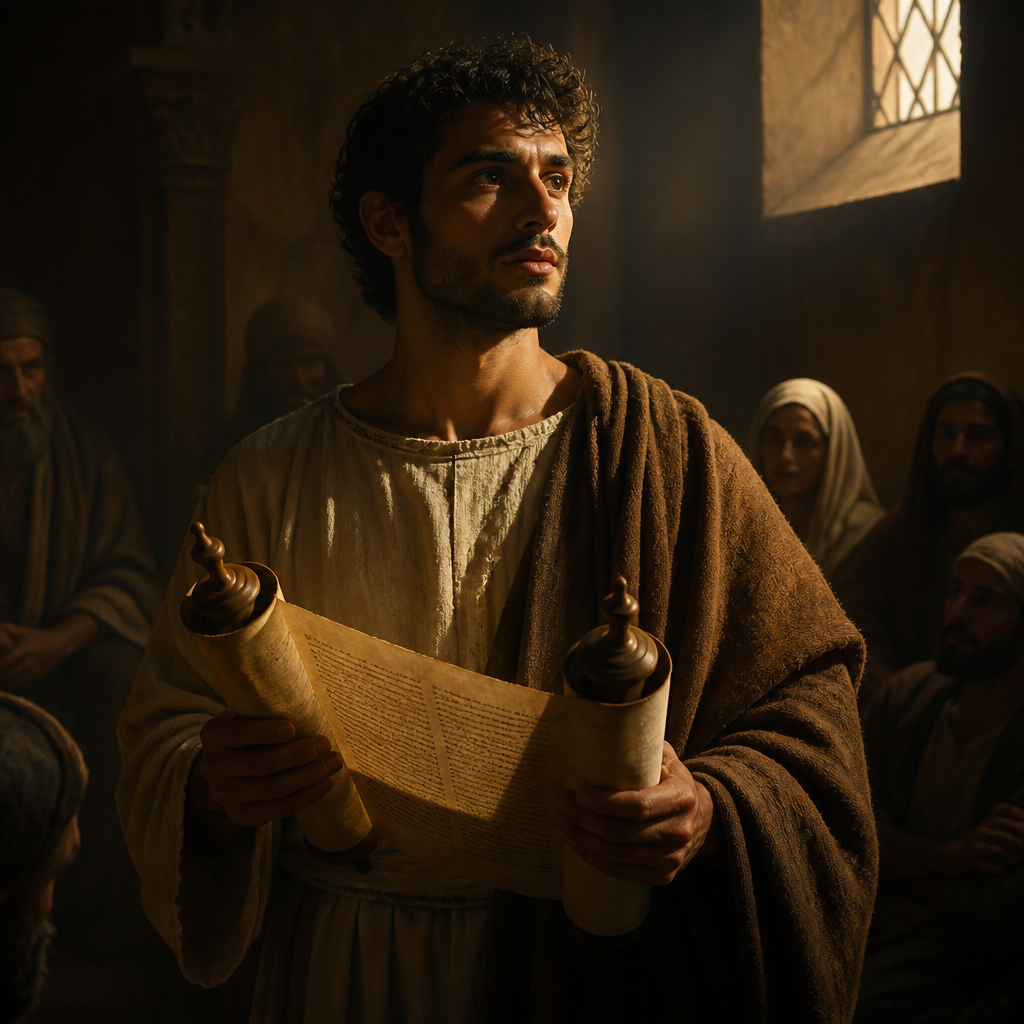
The text of Acts 17:2-3 notes that Paul 'reasoned with them from the Scriptures.' The specific Greek word epoisthesan (were persuaded) suggests a deep, intellectual, and spiritual conviction resulting from this systematic exposition of the Old Testament. These Jews were not merely swayed by emotion but were convinced by the alignment of the Hebrew messianic prophecies with the historical life and resurrection of Jesus. This persuasion required a radical re-evaluation of their existing theological framework, particularly regarding the concept of a 'suffering Messiah,' which was a stumbling block to many of their contemporaries.
Major Life Events
The primary event defining this group is their active 'joining' with Paul and Silas (Acts 17:4). This was not a private intellectual assent but a public transfer of allegiance. By casting their lot with the itinerant preachers, the persuaded Jews separated themselves from the traditional synagogue structure. This act of separation was immediate and consequential.
Shortly after their conversion, the city was thrown into turmoil. Unbelieving Jews, described by Luke as 'jealous' and 'wicked men of the rabble,' instigated a riot. While the persuaded Jews are not named individually in the initial arrest (Jason, a host, is the primary target), they were part of the community that had to navigate this sudden persecution. The Bible indicates that this group remained steadfast even after Paul and Silas were forced to flee to Berea under the cover of night. Their persistence is further evidenced by Paul’s First Epistle to the Thessalonians, where he commends the church for becoming 'an example to all the believers in Macedonia and Achaia' (1 Thessalonians 1:7).
Relationship to Other Biblical Figures
The persuaded Jews served as the bridge between the Jewish tradition and the growing Gentile church in Thessalonica. They were direct disciples of Paul and Silas, and they likely operated alongside Timothy, who was sent back to the city to strengthen them. Their relationship with their fellow Jewish citizens, however, soured into one of intense conflict.
Within the church, they joined a multifaceted group consisting of 'God-fearing Greeks' and 'leading women.' This demographic mix was revolutionary for the time, as Jewish men of the synagogue shared equal spiritual standing with Gentiles and high-status women. They also shared a bond with Jason, who seems to have functioned as a protector or leader within the fledgling house church. The solidarity of these Jews with their new Gentile brothers was a living testament to Paul’s teaching that in Christ, there is neither Jew nor Greek.
Spiritual Significance
Theologically, the persuaded Thessalonian Jews are an example of the 'remnant according to the election of grace' (Romans 11:5). Their presence in the narrative of Acts reinforces the Lukan theme that the Gospel is offered 'to the Jew first.' Their experience serves as a paradigm for the cost of discipleship; they suffered at the hands of their own countrymen, yet Paul speaks of their conversion as occurring 'in much affliction, with the joy of the Holy Spirit' (1 Thessalonians 1:6).
Furthermore, their status as 'persuaded' individuals highlights the biblical emphasis on the intellect and the scriptures. Their faith was not blind; it was rooted in the 'explaining and proving' of the Word. In the broader New Testament context, they represent the successful planting of a church that would become a 'sounding out' of the word of the Lord throughout the Mediterranean world.
Spiritual Significance
The persuaded Thessalonian Jews represent the fulfillment of the apostolic mission to the Jewish diaspora. Their willingness to examine the scriptures and accept the suffering Messiah provided the foundational structure for the Thessalonian church, which Paul calls his 'glory and joy.' Their conversion highlights the continuity between the Old Testament promises and the New Testament realization, showing that the Gospel did not abolish Judaism but fulfilled it for those who were willing to listen.
Critically, they are also significant for their endurance. The Epistles to the Thessalonians are preoccupied with the theme of suffering and the Second Coming of Christ, topics that were likely of immediate concern to these Jewish converts who had lost their social and religious standing in the local community. Their example of 'work produced by faith' and 'labor prompted by love' illustrates the transformative power of the Gospel within a hostile urban environment.
Frequently Asked Questions
How many Jews in Thessalonica were persuaded by Paul?
The Bible does not give a specific number, using the phrase 'some of them' (Acts 17:4). This suggests they were a minority compared to the larger 'great multitude' of Greeks who also converted.
What specifically persuaded these Jews to believe in Jesus?
They were persuaded by Paul’s reasoning from the Scriptures, specifically the proofs that the Messiah had to suffer and rise from the dead, and that Jesus of Nazareth fulfilled these prophecies.
What happened to them after Paul left the city?
They remained in Thessalonica and formed the core of the church. They faced significant persecution from their fellow citizens but remained firm in their faith, as noted in Paul's later letters to them.
Were there any notable individuals among the persuaded Jews?
While the group is mentioned as a whole, Jason (Acts 17:5-9) was a prominent member who hosted the believers, and Aristarchus and Secundus (Acts 20:4) are later identified as Thessalonians who traveled with Paul.
How did the other Jews in the city react to their conversion?
The unbelieving Jews were moved by jealousy and incited a mob to attack the house where the believers gathered, eventually dragging Jason before the city authorities.
Connected Figures
Paul the Apostle
Teacher and founder of their community

Silas
Co-preacher who reasoned with them in the synagogue
Jason of Thessalonica
Fellow believer and host of the group
Timothy
Sent by Paul to strengthen their faith during persecution
Aristarchus
A Thessalonian believer who later became Paul's traveling companion