Jason
A prominent early Christian in Thessalonica who hosted the Apostle Paul and faced legal persecution as a result of his hospitality.
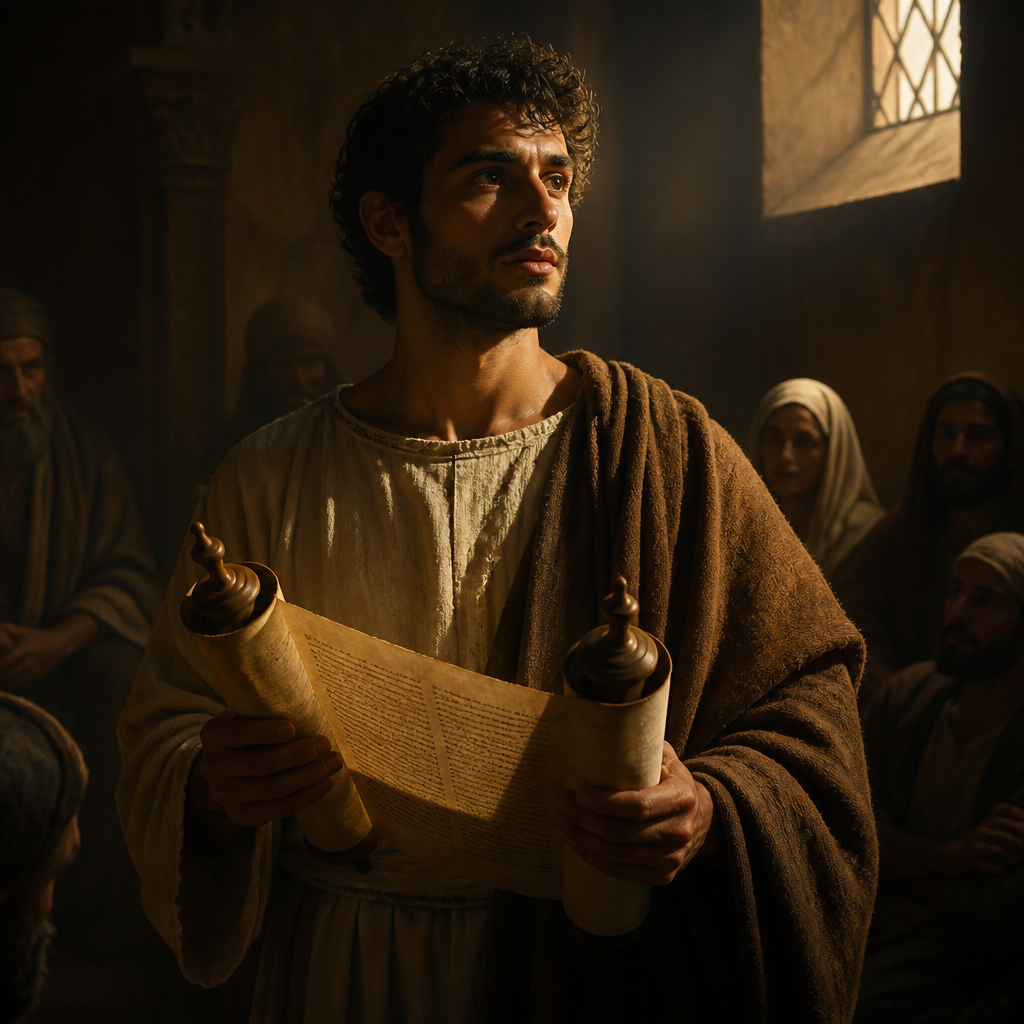
Jason was a first-century Christian resident of Thessalonica who played a critical role in the establishment of the church in that city. His home served as a base of operations for the Apostle Paul and Silas during their second missionary journey (c. AD 49–52). By providing sanctuary to these itinerant preachers, Jason became a direct target of the city's civil unrest and was ultimately forced to answer for his guests' actions before the local authorities.
His Greek name, Jason, was commonly used by Hellenistic Jews as a substitute for 'Joshua' or 'Jesus.' While his ethnicity is not explicitly stated in the Book of Acts, his presence in Thessalonica and his subsequent mention in the Epistle to the Romans as one of Paul's 'kinsmen' suggests he was likely a Jewish believer who had successfully integrated into the cosmopolitan social structure of the Macedonian capital.
Background and Family
Jason appears in the New Testament record during a period of intense missionary expansion. He resided in Thessalonica, a major port city and the capital of the Roman province of Macedonia. As a resident of a Free City (civitas libera), Jason lived under a local government led by officials known as 'politarchs.' His social standing appears to have been significant enough to own a home capable of hosting Paul, Silas, and Timothy, and he possessed the financial means to post a legal bond when required by the court.
Regarding his family and heritage, the primary evidence comes from Romans 16:21, where Paul refers to a 'Jason' as one of his syngeneis (kinsmen). While this term can occasionally refer to a physical relative, in the Pauline epistles it most frequently identifies a fellow Jew. This suggests that Jason was a Hellenized Jew who had embraced the Gospel. Whether the Jason in Thessalonica is the same Jason who later accompanied Paul in Corinth (from where Romans was written) is a matter of scholarly consensus, as both texts describe a man deeply committed to Paul’s safety and ministry.
Major Life Events
The most dramatic episode in Jason’s life occurred during Paul’s initial visit to Thessalonica. For three successive Sabbaths, Paul reasoned in the local synagogue, persuading a multitude of devout Greeks and prominent women that Jesus was the Christ. However, the Jewish leadership, moved by envy, recruited 'lewd fellows of the baser sort'—essentially a mob of market-place idlers—to incite a riot.
"And when they found them not, they drew Jason and certain brethren unto the rulers of the city, crying, These that have turned the world upside down are come hither also; Whom Jason hath received: and these all do contrary to the decrees of Caesar, saying that there is another king, one Jesus." (Acts 17:6–7, KJV)
Because the mob could not find Paul and Silas, they seized Jason as their legal proxy. The accusation was grave: treason (maiestas). By 'receiving' Paul, Jason was accused of harboring subversives who preached a rival king to the Roman Emperor. This was a strategically chosen charge designed to force the politarchs to act, as ignoring potential sedition could result in the loss of the city's 'free' status.
In a display of judicial restraint, the politarchs did not imprison Jason indefinitely but required him to provide 'security'—likely a substantial sum of money as a bail bond or a legal guarantee that Paul and Silas would leave the city and not return to cause further trouble. This forced Paul’s immediate departure to Berea under the cover of night, a move intended to protect Jason and the fledgling church from further legal jeopardy.
Relationship to Other Biblical Figures
Jason’s primary relationship was with the Apostle Paul. He functioned as a 'patron' or host, a role essential for the spread of Christianity in the Roman world. Without the hospitality of figures like Jason, Lydia, or Gaius, the missionary journeys would have been significantly more difficult. In Romans 16:21, Paul includes Jason in a list of associates who send greetings to the church in Rome, grouping him with Timothy, Lucius, and Sosipater. This indicates that Jason remained a faithful companion and perhaps a traveling associate of Paul in the years following the Thessalonian crisis.
Spiritual Significance
The spiritual significance of Jason lies in his courage and his willingness to suffer loss for the sake of the Gospel. In the first century, hosting a controversial figure like Paul was not merely a social gesture; it was a high-risk political and financial commitment. By posting bond, Jason effectively put his property and perhaps his life on the line to ensure the survival of the church at Thessalonica.
Jason serves as a biblical archetype for the 'supporter'—those whose names are not at the forefront of the narrative but whose resources and legal standing provide the necessary infrastructure for the growth of faith. His inclusion in the record of the early church highlights the cost of discipleship among the urban wealthy and the Jews of the Diaspora, showing that the 'turning of the world upside down' required the active participation of local residents willing to face the local 'rulers of the city.'
Spiritual Significance
Jason represents the vital role of hospitality and advocacy in the early Christian movement. His willingness to host Paul and Silas despite the threat of mob violence demonstrates the intersection of faith and civic risk. By standing before the politarchs, Jason mediated the tension between the 'Kingdom of God' and the 'Decrees of Caesar,' providing a model for how early believers navigated hostile political environments.
Furthermore, his probable mention in Romans 16:21 as a 'kinsman' of Paul underscores the importance of Jewish-Christian connections in the expansion of the church. Jason's legacy is found in his selfless protection of the apostles, ensuring that the Gospel could take root in Macedonia even when the physical presence of the apostles was forcibly removed.
Frequently Asked Questions
What happened to Jason after the riot in Thessalonica?
After posting bond for Paul and Silas, Jason likely continued as a leader in the Thessalonian church. He is later mentioned in Romans 16:21 as being with Paul in Corinth, suggesting he eventually traveled with the Apostle's mission team.
Was Jason a Jew or a Gentile?
Most scholars believe Jason was a Jew based on Paul calling him a 'kinsman' in Romans 16:21 and his presence in the context of the Thessalonian synagogue, though he bore a common Greek name.
What does the charge of 'turning the world upside down' mean?
It was an accusation that Christian preaching was causing social and political upheaval across the Roman Empire by challenging the exclusive sovereignty of Caesar with the lordship of Jesus.
Why did Jason have to pay a bond to the politarchs?
The bond served as a legal guarantee that Paul and Silas would leave and not return to cause further disturbances, protecting the city officials from appearing negligent toward sedition.
What is a 'politarch'?
A politarch was a specific title for a city magistrate in Macedonia. For many years, critics doubted the Bible's accuracy on this term until archeological inscriptions in Thessalonica confirmed the title was used exactly as Luke described.
Connected Figures
Paul the Apostle
Guest and ministry partner

Silas
Guest and missionary
Timothy
Missionary associate
Sosipater
Fellow kinsman mentioned in Romans