The Ephesians Who Burned Their Magic Books
A group of former occultists in Ephesus who publicly renounced sorcery by burning their expensive scrolls after witnessing the power of the name of Jesus.
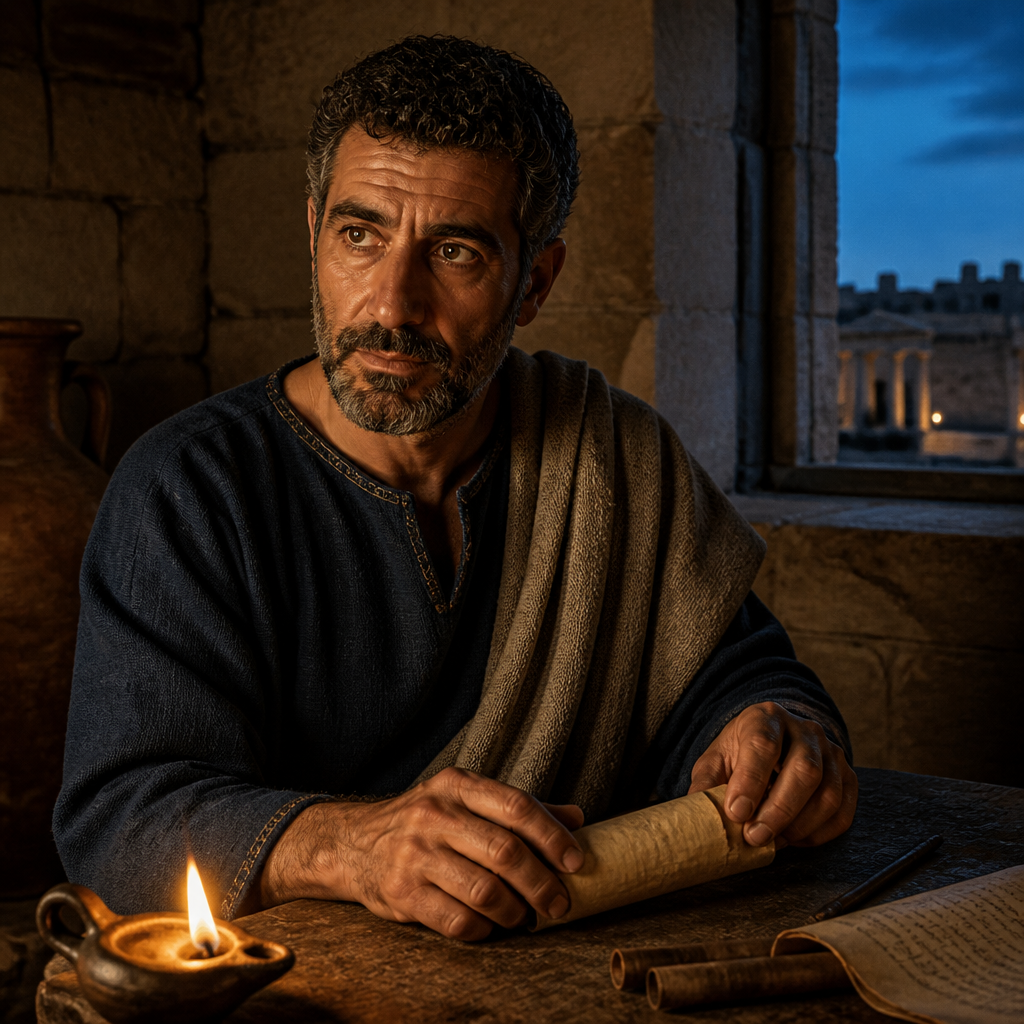
The Ephesians who burned their magic books were a specific collective of newly converted Christians in the city of Ephesus during the mid-1st century AD. This event, recorded in the Book of Acts, serves as a pivotal moment in the history of the early Church, illustrating the radical break between Hellenistic occultism and the emerging Christian faith. Following a failed exorcism by the seven sons of Sceva, fear and awe gripped the residents of Ephesus, leading many who practiced 'curious arts' to openly confess their deeds and renounce their former lifestyles.
This group is characterized by their extreme devotion and financial sacrifice. The value of the scrolls they committed to the flames was estimated at fifty thousand pieces of silver—a staggering sum that suggests the converts were not merely casual practitioners but established members of the Ephesian magical community. Their actions signaled the beginning of a major cultural shift in Ephesus, which was then the center of the cult of Artemis and a hub for the production of magical amulets and grimoires (often referred to in the ancient world as 'Ephesian Letters').
Background and Family
While the Bible does not provide individual names for those who burned their scrolls, they are identified as residents of Ephesus who had recently come to faith through the ministry of the Apostle Paul. Ephesus was the provincial capital of Roman Asia and was world-renowned for its Temple of Artemis, one of the Seven Wonders of the Ancient World. The city was a melting pot of Greek philosophy, Roman governance, and deep-seated Eastern mysticism. Magic was not a fringe activity in Ephesus; it was a lucrative industry.
The individuals in this group were likely diverse in social standing, ranging from wealthy practitioners who owned expensive hand-copied grimoires to those who had previously sought temporal power or healing through incantations. Their common bond was their history in the "curious arts" (Greek: perierga), a term referring to the intrusive and meddlesome nature of magic that sought to manipulate the divine or demonic for personal gain.
Major Life Events
The catalyst for the mass burning of books was a dramatic spiritual encounter involving the Seven Sons of Sceva, the children of a Jewish high priest. These itinerant exorcists attempted to invoke the name of Jesus to cast out an evil spirit, despite having no personal relationship with Him. The possessed man retorted, "Jesus I know, and Paul I know; but who are ye?" Before the seven men could escape, the possessed man overpowered and stripped them, leaving them wounded and fleeing from the house.
When news of this event spread throughout Ephesus, it produced a profound fear of the Lord among both Jews and Greeks. For those who had been attempting to blend their new Christian faith with old magical traditions, this event proved that the name of Jesus was not a magical formula to be manipulated, but a sovereign authority. Consequently, those who believed came forward to confess their practices. The climax of this repentance was a public bonfire where thousands of silver drachmas' worth of magical texts were destroyed. This act was not an imposed censorship but a voluntary renunciation of their past trades and spiritual ties.
Relationship to Other Biblical Figures
The primary figure associated with this group is the Apostle Paul, who spent three years in Ephesus teaching in the school of Tyrannus. Paul's ministry was characterized by "special miracles," such that even handkerchiefs touched by him could heal the sick (Acts 19:11-12). This group of converts would have been the fruit of Paul's labor, mentored by him in the distinction between the Holy Spirit's power and the sorceries they once practiced.
They also stand in stark contrast to the craftsmen led by Demetrius the silversmith. While the book-burners were willing to lose a fortune for the sake of Christ, Demetrius and his fellow artisans incited a riot shortly thereafter, fearing that the growth of Christianity would destroy their business of making shrines for Artemis. The book-burners represented the inward transformation of the city, while the silversmiths represented the outward resistance of the status quo.
Spiritual Significance
Theologically, the burning of these books is considered a paramount example of "fruit meet for repentance." In the ancient world, magical scrolls were seen as assets of immense value and sources of secret power. By burning them, the Ephesian believers demonstrated that true conversion requires a clean break from the past. They did not sell the books to recoup their losses, as that would have passed the spiritual contagion to others; they destroyed them entirely.
This event also highlights the supremacy of the Word of God over human and demonic systems. Luke, the author of Acts, concludes this narrative by noting: "So mightily grew the word of God and prevailed" (Acts 19:20). The destruction of the books cleared the way for the establishment of the Ephesian church, which would later become a theological powerhouse in the New Testament era, receiving one of Paul's most profound epistles and being addressed directly by Jesus in the Book of Revelation.
Spiritual Significance
The burning of the magical books in Ephesus serves as a historic milestone in the New Testament, representing the Gospel's victory over entrenched paganism and the occult. It remains the most significant scriptural example of 'lifestyle purging,' where believers voluntarily destroyed items that hindered their spiritual devotion. This event solidified Ephesus as a center of Christian thought and demonstrated that the power of the Gospel was capable of dismantling the most profitable and culturally dominant systems of the first-century Roman world. It also provides a clear biblical precedent for the total renunciation of idolatry, showing that true faith involves both a turning toward God and a turning away from competing spiritual loyalties.
Frequently Asked Questions
What was the modern value of the books burned at Ephesus?
The text states the value was fifty thousand pieces of silver. If these were silver drachmas or denarii, each representing a day's wage, the total would be roughly equivalent to the wages of 137 years of labor for a single person, easily totaling millions of dollars in modern purchasing power.
Why did they burn the books instead of selling them?
Selling the books would have made the owners profit from sin and allow the harmful teachings to continue circulating. By burning them, they ensured the 'curious arts' contained within would never harm anyone else, reflecting a total commitment to their new faith.
Who were the sons of Sceva?
They were seven sons of a Jewish chief priest who tried to use the name of Jesus as a magical incantation without actually being followers of Christ. Their failure and subsequent beating by a demonized man led to the mass repentance and book-burning in Ephesus.
What kind of 'magic' were the Ephesians practicing?
They practiced 'curious arts,' which included the use of 'Ephesian Letters'—written spells or formulas used for protection, love, or cursing. These were often kept in scrolls or worn as amulets and were central to the superstitious atmosphere of the city.
How did this event impact the local economy?
The loss of revenue from magical scrolls and the subsequent decline in the purchase of silver idols for Artemis eventually led to an economic crisis among local artisans, resulting in a citywide riot led by Demetrius the silversmith.
Connected Figures
Paul the Apostle
Teacher and founder of the Ephesian church
Sons of Sceva
Exorcists whose failure sparked the book-burning
Demetrius
Silversmith who opposed the Christian movement in Ephesus
Luke the Evangelist
Chronicler of this event in the Book of Acts