The Astonished Pharisee
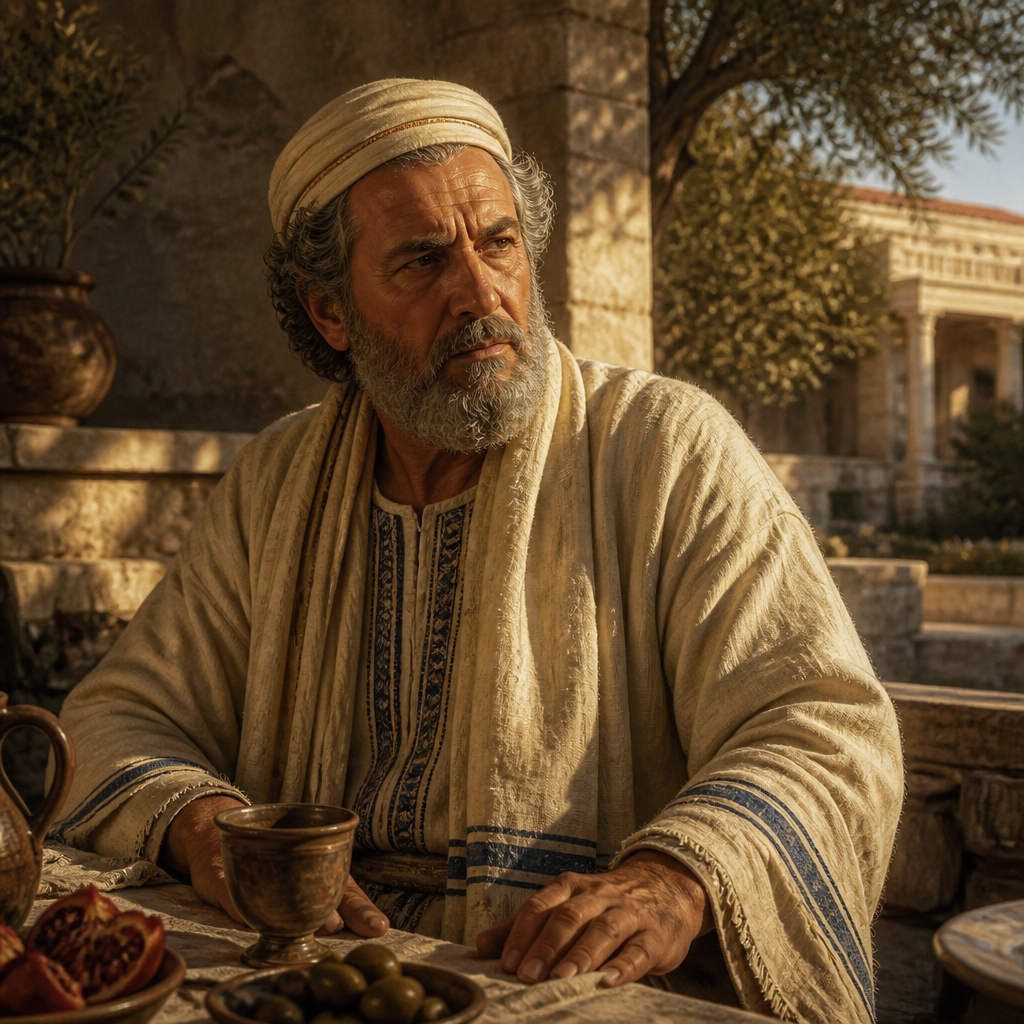
An unnamed member of the Pharisaic sect who invited Jesus to a meal and was surprised by Christ's disregard for ritual hand-washing traditions.
The Astonished Pharisee is a figure appearing in the Gospel of Luke who serves as a significant catalyst for one of Jesus Christ’s most piercing critiques of religious legalism. Unlike many of his peers who sought to trap Jesus in public debates, this individual extended a gesture of hospitality, inviting Jesus to dine at his home. The interaction that followed highlights the tension between the external ritual purity emphasized by the Pharisees and the internal moral purity preached by Jesus.
Historically, this figure is categorized among the 'sympathetic' or at least inquisitive Pharisees. While the text portrays him as being 'astonished' (emauthase) by Jesus' behavior, he is not initially depicted with the overt hostility characteristic of the high-ranking religious officials in Jerusalem. His reaction provides the narrative framework for a series of 'woes' pronounced against the legalistic tendencies of the first-century Jewish elite.
Background and Context
The encounter with the Astonished Pharisee occurs during the later stages of Jesus' ministry, as recorded in the Gospel of Luke. The Pharisees were a prominent Jewish social movement and a school of thought in the Levant during the Second Temple period. They were known for their strict adherence to the Written Law (the Torah) and the Oral Law, which included a complex system of ritual purity.
In the cultural context of 1st century AD Judea, inviting a popular or controversial teacher like Jesus to a meal was a social event of significant weight. It provided an opportunity for the host and his associates to evaluate the guest’s orthodoxy and wisdom. The Astonished Pharisee’s invitation suggests a level of openness or, at the very least, a scholarly curiosity regarding Jesus’ identity and teachings.
The Incident of the Ritual Washing
The central conflict of the narrative arises immediately as the meal begins. Luke 11:37–38 states:
"When Jesus had finished speaking, a Pharisee invited him to eat with him; so he went in and reclined at the table. But the Pharisee was surprised when he noticed that Jesus did not first wash before the meal."
This 'washing' refers to the netilat yadayim, a ritual cleansing of the hands. For the Pharisees, this was not a matter of hygiene but of ceremonial sanctity. It was believed that a person might have touched something ritually 'unclean' in the marketplace, and failure to perform the prescriptive washing would render the meal and the person spiritually defiled. The host’s astonishment stems from the fact that a man widely regarded as a holy 'Rabbi' or prophet would so blatantly disregard a foundational tradition of the elders.
Jesus’ Response and the Internal vs. External
Rather than apologizing for the breach of etiquette, Jesus used the Pharisee’s internal reaction as a springboard for a profound theological discourse. He addressed the host directly, contrasting the cleanliness of a cup's exterior with the contents of the heart.
"Then the Lord said to him, 'Now then, you Pharisees clean the outside of the cup and dish, but inside you are full of greed and wickedness. You foolish people! Did not the one who made the outside make the inside also?'" (Luke 11:39-40).
This discourse challenged the entire framework of the Pharisee’s worldview. Jesus argued that true purity is not achieved through physical rituals but through almsgiving and a heart oriented toward God’s justice. The Astonished Pharisee becomes the silent witness to a revolutionary shift in the definition of holiness—from the performative to the transformative.
Relationship to Other Biblical Figures
The Astonished Pharisee is often compared to other members of his sect, such as Nicodemus or Gamaliel, who showed varying degrees of receptivity to Jesus or His followers. While the text does not record his response to Jesus’ rebuke, he is distinct from the 'Tribunal Pharisees' who later persecuted the Apostles in Acts. He shares a similar narrative role with Simon the Pharisee (Luke 7), though the specific focuses of their interactions differ; Simon’s interaction focused on forgiveness and love, while the Astonished Pharisee’s interaction focused on legalism and internal purity. This figure also stands in contrast to the 'Pharisees who warned Jesus' in Luke 13, who showed an active concern for Jesus' safety.
Spiritual Significance
Theologically, the encounter with the Astonished Pharisee underscores the biblical theme that God looks at the heart rather than outward appearances (1 Samuel 16:7). The Pharisee’s astonishment reflects a common human tendency to prioritize visible religious symbols over invisible character traits. For the early church, this narrative served as an essential teaching on the transition from the Old Covenant’s preoccupation with ritual cleanliness to the New Covenant’s focus on spiritual renewal through Christ. The figure of the Astonished Pharisee remains a cautionary representative of 'religion without relationship,' reminding readers that hospitality and observance are hollow if they are not accompanied by an inner life free of 'greed and wickedness.'
Spiritual Significance
The encounter with the Astonished Pharisee marks a pivotal moment in Luke’s Gospel where Jesus explicitly rejects the Oral Tradition's weight regarding ritual purity. This event serves to define the Christian understanding of 'cleanliness' as a matter of the spirit rather than the flesh, emphasizing that true devotion is found in charity and justice rather than the performative scrupulosity of the law.
Frequently Asked Questions
What specifically 'astonished' the Pharisee?
He was astonished because Jesus did not perform the traditional ritual hand-washing (*ebaptisthe*) before reclining to eat the meal.
Was the Pharisee being hostile by being astonished?
The Greek word implies wonder or surprise rather than immediate malice, suggesting his reaction was one of genuine confusion based on his religious upbringing.
What did Jesus call the Pharisee in response?
Jesus referred to the host and his colleagues as 'foolish people' for prioritizing the cleaning of the 'outside of the cup' while neglecting the 'inside' (the heart).
Does this Pharisee appear in other Gospels?
While Matthew 23 contains a similar series of 'woes' against the Pharisees, the specific narrative of the invitational meal and the host's astonishment is unique to the Gospel of Luke.
Did the Pharisee follow Jesus after this?
The Bible does not record the later life or conversion of this specific Pharisee; he remains an unnamed figure who serves as a narrative foil for Jesus' teaching.
Connected Figures
Jesus Christ
Guest and Teacher
The Lawyers
Associated colleagues present at the meal
Simon the Pharisee
Counterpart in Luke 7