Hermogenes
A believer in Roman Asia who abandoned the Apostle Paul during his final imprisonment in Rome, becoming a symbol of apostasy and desertion.
Hermogenes is a figure mentioned in the New Testament, specifically within the Second Epistle to Timothy. He is noted not for his contributions to the early church, but for his public desertion of the Apostle Paul during a time of extreme persecution and legal distress. His name, which means 'born of Hermes,' suggests a Greek background or a connection to the Hellenistic culture prevalent in the Roman province of Asia.
Writing from a Roman prison during his second and final incarceration, Paul identifies Hermogenes alongside another man, Phygellus, as leaders or prominent members among a group of Christians who had turned away from him. This abandonment was not merely a private disagreement but appears to have been a collective withdrawal of support from the Apostle when he most needed advocacy and fellowship before the Roman authorities. Hermogenes stands in the biblical record as a cautionary example of those who profess faith but retreat when the cost of discipleship becomes life-threatening.
Background and Family
Direct biographical details regarding the family and early life of Hermogenes are absent from the biblical text. However, his context can be reconstructed through the geographical and social clues provided in 2 Timothy. Hermogenes was situated in the Roman province of Asia, a region that included major hubs of early Christianity such as Ephesus, Smyrna, and Sardis. His name is of Greek origin, derived from the messenger god Hermes, which was atypical for Jews of the period and suggests he was either a Gentile convert or a highly Hellenized Jew.
His inclusion by name in Paul’s letter indicates that he was not an obscure member of the congregation. For Paul to single him out to Timothy, who was then laboring in Ephesus, implies that Hermogenes held significant influence or status within the Asian Christian community. He likely functioned as a teacher, a leader, or a wealthy patron whose departure would have had a demoralizing effect on the local believers.
Major Life Events
The defining event of Hermogenes' life, as recorded in Scripture, is his desertion of Paul (2 Timothy 1:15). This took place during Paul’s second Roman imprisonment, roughly between 64 AD and 67 AD, during the reign of Emperor Nero. Unlike Paul’s first house arrest recorded in the Book of Acts, this second imprisonment was far more severe; he was treated as a common criminal and faced imminent execution.
Paul writes, "This you know, that all those in Asia have turned away from me, among whom are Phygellus and Hermogenes." The phrase "turned away" (Greek: apestraphēsan) suggests a deliberate shunning. While it is possible Hermogenes rejected Paul's theological stance, the context of the Neronian persecution suggests a motive of self-preservation. Associating with a prisoner charged with crimes against the state was dangerous. Hermogenes likely prioritized his safety and social standing over his loyalty to the Gospel and the embattled Apostle, leading a broader movement of Asian Christians to distance themselves from Paul’s trial.
Relationship to Other Biblical Figures
Hermogenes is inextricably linked with Phygellus; the two are presented as a duo of defection. Their betrayal is contrasted sharply in the same chapter with the character of Onesiphorus. While Hermogenes turned away, Onesiphorus "often refreshed" Paul and "was not ashamed of [his] chain." This contrast highlights the gravity of Hermogenes' choice. Where one sought out the Apostle in the dark cells of Rome, Hermogenes remained in Asia, presumably to avoid the stigma and danger of the Roman courts.
His relationship with Timothy was likely one of shared acquaintance. Paul’s mention of "This you know" indicates that Timothy was well aware of Hermogenes' reputation and his subsequent fall from grace. The mention served as a warning to Timothy to remain steadfast where others had failed.
Spiritual Significance
Theologically, Hermogenes represents the "stony ground" hearer described in the Parable of the Sower—one who receives the word with joy but falls away when persecution arises. His life serves as a New Testament example of the peril of shame. Paul’s second letter to Timothy is themed around the concept of not being ashamed of the Gospel or its prisoners; Hermogenes is the literary and historical embodiment of that very shame.
In the history of the early church, Hermogenes is often cited by commentators to illustrate that the Apostolic age was not a time of perfect unity or universal bravery. Even those who had the privilege of knowing the Apostles personally were susceptible to fear and social pressure. His legacy is one of warning, reminding the reader that a profession of faith is validated not by its beginning, but by its endurance through suffering. His absence from any later tradition of martyrdom or restoration leaves him as a permanent fixture of failure in the Pauline corpus.
Spiritual Significance
Hermogenes serves as a crucial negative example in the Pauline epistles, illustrating the reality of apostasy within the first-generation church. His desertion of Paul highlights the intense social and physical pressure exerted by the Roman state on early Christians, demonstrating that not all who were associated with the church possessed the fortitude to endure 'hardness as a good soldier of Jesus Christ.' By name-listing Hermogenes, Paul underscores the personal pain of betrayal and the theological necessity of 'perseverance of the saints.'
Furthermore, Hermogenes provides a historical counterbalance to the more celebrated figures of the New Testament. His presence in the canon ensures a realistic portrayal of the early church, showing that it faced internal collapse and cowardice just as much as it experienced growth and courage. He remains a symbol of the cost of compromise, highlighting the high value Paul placed on loyalty to the truth even unto death.
Frequently Asked Questions
Why did Hermogenes turn away from Paul?
While the Bible does not state his exact motive, it occurred during Paul's final imprisonment under Nero. It is widely believed that Hermogenes feared the legal consequences and social stigma of being associated with a condemned prisoner of the Roman state.
Was Hermogenes a false teacher?
The text does not explicitly label him a heretic in the sense of teaching false doctrine, such as Hymenaeus or Philetus. His failure was primarily one of cowardice and relational abandonment rather than doctrinal error.
What happened to Hermogenes after Paul's death?
The Bible provides no further record of Hermogenes. Later apocryphal traditions, such as the Acts of Paul and Thecla, attempt to expand on his story, but these are not considered historically or biblically reliable.
Who was mentioned alongside Hermogenes?
He is mentioned alongside Phygellus. Both are grouped together by Paul as prominent figures from the province of Asia who deserted him during his trial in Rome.
What does the name Hermogenes mean?
His name is Greek for 'born of Hermes' or 'begotten of Hermes,' reflecting the Hellenistic culture of the Roman province of Asia where he lived.
Connected Figures
Paul the Apostle
Former mentor and leader whom Hermogenes deserted
Phygellus
Associate in the desertion of Paul

Timothy
Ecclesiastical leader in Ephesus who knew of his desertion
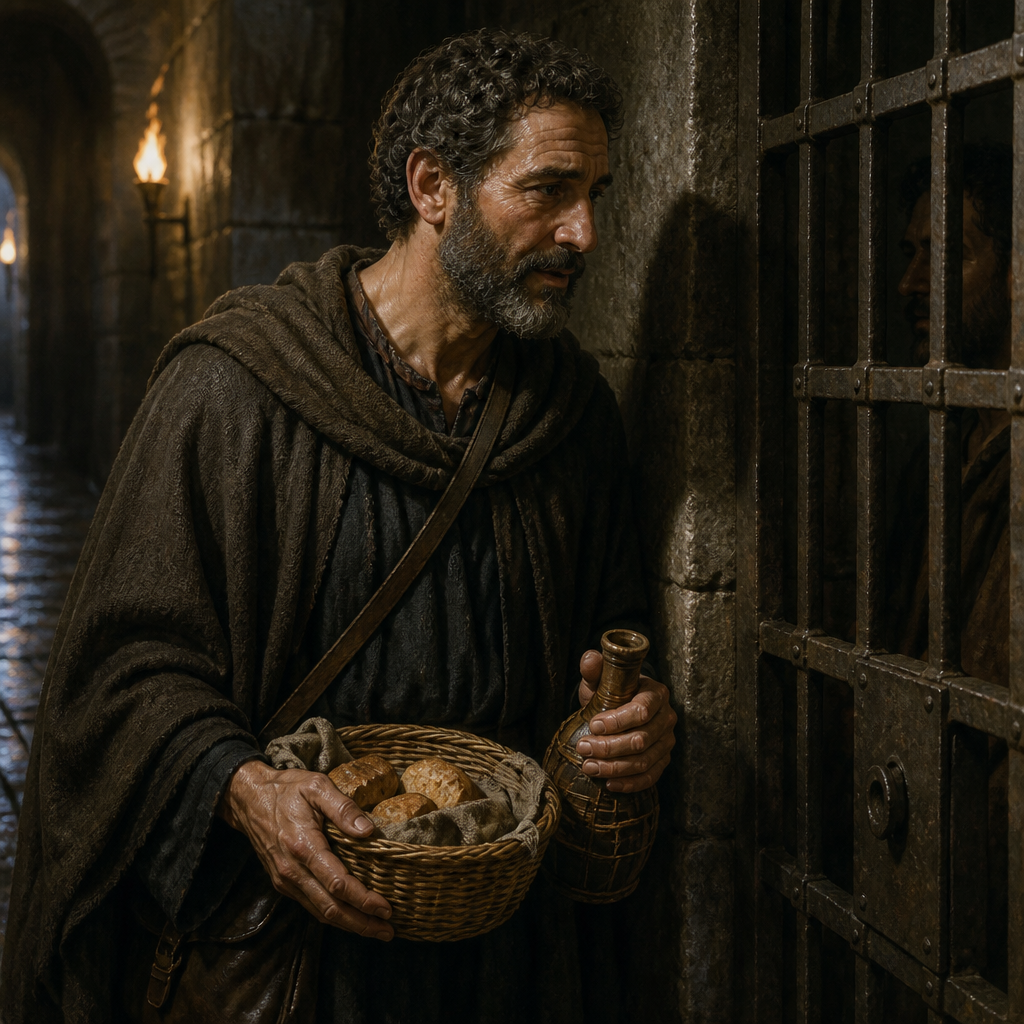
Onesiphorus
Loyal contemporary who is contrasted with Hermogenes