Sergius Paulus
The Roman Proconsul of Cyprus who converted to Christianity after witnessing the Apostle Paul blind the sorcerer Elymas.
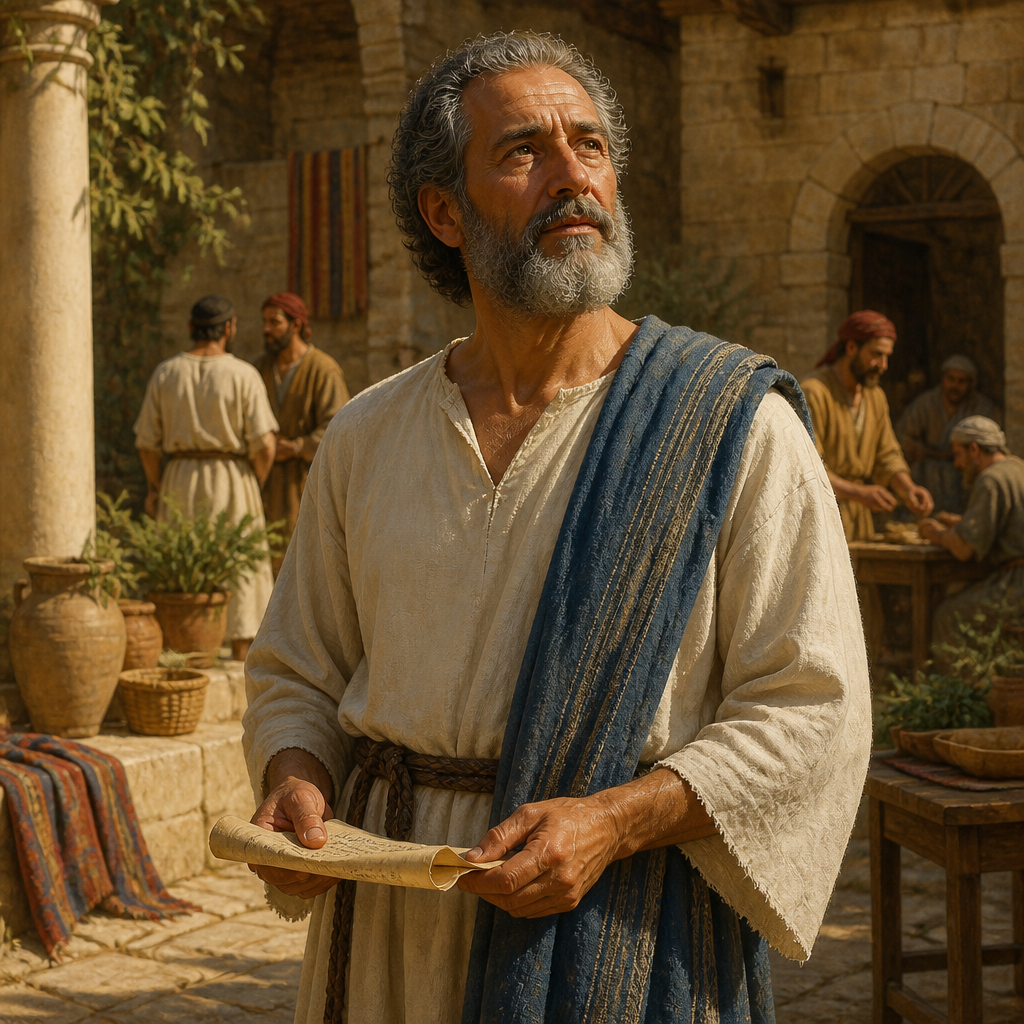
Sergius Paulus was a high-ranking Roman official serving as the proconsul of Cyprus during the mid-first century AD. He appears in the biblical narrative during the first missionary journey of the Apostle Paul and Barnabas. Described by the historian Luke as an 'intelligent man,' his encounter with the early Christian missionaries represents a pivotal moment in the expansion of the Gospel into the upper echelons of Roman governance.
His tenure as proconsul is significant not only for its theological implications but also for its historical corroboration. Archaeological evidence, including various inscriptions found in Cyprus and Rome, supports the existence of a family of 'Sergii Pauli' who held senatorial rank and administrative power during this era. His conversion signifies one of the earliest recorded instances of a Roman aristocrat embracing the new faith.
Background and Family
Sergius Paulus held the title of proconsul (anthypatos in Greek), a position reserved for men of senatorial rank who governed provinces under the jurisdiction of the Roman Senate. Cyprus had become a senatorial province in 22 BC, and as such, it was presided over by a former praetor rather than a military legate. This administrative detail provided by the Book of Acts aligns perfectly with Roman political history of the first century.
While the Bible does not elaborate on his lineage, secular history and archaeology offer tantalizing clues. Inscriptions discovered at Soli in Cyprus mention a proconsul named Paulus, and a famous inscription from Pisidian Antioch refers to an Lucius Sergius Paulus. Some scholars suggest the family may have had estates in Asia Minor, which might explain why Paul and Barnabas traveled to Pisidian Antioch immediately after leaving Cyprus. This suggests Sergius Paulus may have provided the missionaries with introductions or directions to his ancestral seat, facilitating the spread of the Gospel in that region.
Major Life Events
Around 47–48 AD, the Apostle Paul, Barnabas, and John Mark arrived in Paphos, the seat of the Roman government on Cyprus. Sergius Paulus, characterized as a man of keen intellect and spiritual curiosity, sent for the missionaries because he 'desired to hear the word of God' (Acts 13:7). This initiative suggests that despite his pagan Roman upbringing, the proconsul was dissatisfied with traditional Roman religion and was actively seeking philosophical or spiritual truth.
However, the proconsul’s court included a Jewish sorcerer and false prophet named Bar-Jesus, also known as Elymas. Fearing the loss of his influence over the governor, Elymas opposed the apostles and sought to turn the proconsul away from the faith. This opposition led to a dramatic spiritual confrontation. Paul, filled with the Holy Spirit, rebuked Elymas and pronounced a temporary judgment of blindness upon him.
"And now, behold, the hand of the Lord is upon you, and you will be blind and unable to see the sun for a time." Immediately mist and darkness fell upon him, and he went about seeking people to lead him by the hand. (Acts 13:11)
Witnessing this display of divine power and the superiority of the Christian message over magic, Sergius Paulus believed. The text notes that he was 'astonished at the teaching of the Lord' (Acts 13:12), indicating that his conversion was rooted not just in the miracle, but in the substance of the apostolic doctrine.
Relationship to Other Biblical Figures
The interaction between Sergius Paulus and the Apostle Paul is a major linguistic and narrative turning point in the Book of Acts. Prior to this encounter, the Apostle is consistently referred to by his Hebrew name, Saul. Following the conversion of the Roman proconsul who shared his name, the text switches exclusively to 'Paul.' While it is a common misconception that he changed his name to honor the governor, it is more likely that as he began his mission to the Gentile Roman world, he adopted the use of his Roman cognomen, which happened to match that of the first high-ranking Roman he converted.
His relationship with Barnabas was also significant, as Barnabas was a native of Cyprus. Barnabas likely utilized his regional knowledge to navigate the social and political landscape of the island, eventually gaining the audience with the proconsul that allowed for the transformative encounter at Paphos.
Spiritual Significance
The conversion of Sergius Paulus serves as a paradigm for the Gospel’s power to transcend social and political barriers. As a Roman proconsul, he represented the pinnacle of Gentile authority within his jurisdiction. His acceptance of the faith demonstrated that Christianity was not merely a sect for the marginalized or the Jewish diaspora, but a universal message capable of convincing the Roman elite through both rational inquiry and divine demonstration.
Furthermore, the episode at Paphos establishes a recurring theme in the New Testament: the victory of the Spirit over occultism. By blinding the sorcerer who attempted to obstruct the truth, the Holy Spirit vindicated the message of the Gospel before the highest political authority on the island. For subsequent generations of Christians, Sergius Paulus remained a symbol of the 'intelligent' seeker who recognizes the truth despite the competing distractions of secular power and false spirituality.
Spiritual Significance
Sergius Paulus is the first recorded high-ranking Roman official to convert to Christianity through the direct ministry of the Apostle Paul. His conversion marks a definitive shift in the Book of Acts from a predominantly Jewish mission to a global, Gentile-focused mission that targets the heart of Roman power. Scientifically and historically, the mention of his specific title and location serves as a primary point of 'undesigned coincidence' where biblical narrative matches Roman archaeological records.
Theologically, his story emphasizes that the Gospel is intended for the 'wise' and 'powerful' as much as for the poor. His response to the 'teaching of the Lord'—rather than just the miracle of the sorcerer's blindness—highlights the importance of doctrinal conviction in true biblical conversion.
Frequently Asked Questions
What was the official title of Sergius Paulus?
He was the proconsul of Cyprus, which was the highest-ranking civil official in a senatorial province of the Roman Empire.
Did Sergius Paulus change the Apostle Paul's name?
No. While the Apostle began using the name 'Paul' exclusively after this encounter, it was likely his existing Roman name which he chose to use as his mission moved deeper into the Gentile world.
What did Sergius Paulus witness that led to his conversion?
He saw the Apostle Paul strike the sorcerer Elymas (Bar-Jesus) with temporary blindness and was deeply impressed by the teaching of the Lord.
Is there archaeological evidence for Sergius Paulus?
Yes, several inscriptions in Cyprus and Rome mention various members of the Sergii Pauli family holding high office, including one that names a 'Lucius Sergius Paulus' as a curator of the Tiber under Claudius.
Why did Sergius Paulus want to see Paul and Barnabas?
The Bible describes him as an intelligent man who specifically requested to hear the word of God from them.
Connected Figures
Paul the Apostle
Spiritual teacher and missionary
Barnabas
Co-missionary who visited his court
Elymas (Bar-Jesus)
Court sorcerer and advisor