Marcus Antonius Felix
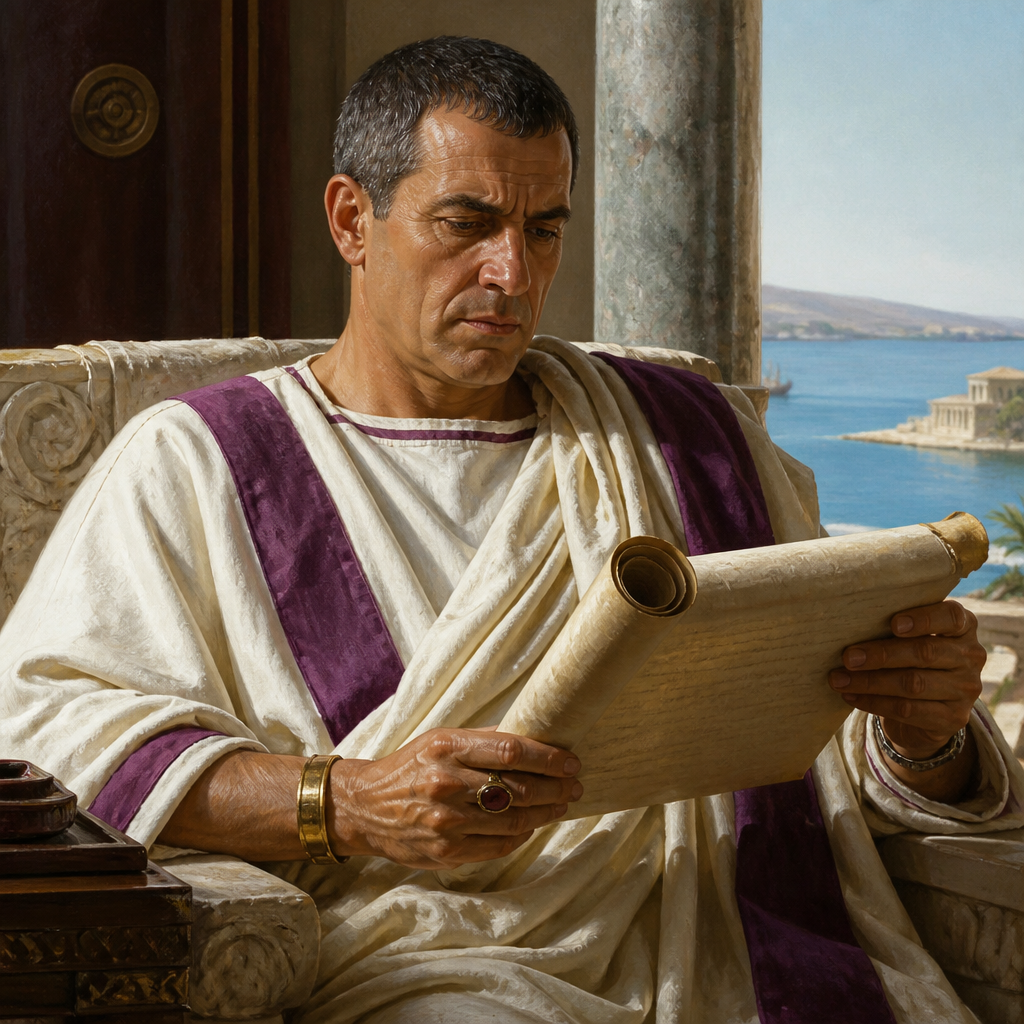
Marcus Antonius Felix was the Roman procurator of Judea (c. 52–60 AD) best known for his two-year imprisonment of the Apostle Paul at Caesarea.
Marcus Antonius Felix was the Roman governor of Judea during a period of escalating social and political unrest. Appointed by the Emperor Claudius, Felix was a man of unusual social standing for a governor, having risen from the status of a freedman—a former slave—to a position of significant imperial authority. His administration was characterized by a paradoxical combination of ruthless suppression of Jewish insurgents and a deep personal fascination with, or perhaps pragmatic curiosity regarding, the emerging Christian movement.
Felix enters the biblical narrative in the Book of Acts, following the arrest of the Apostle Paul in Jerusalem. As the presiding official at Caesarea Maritima, Felix was tasked with adjudicating the conflict between Paul and the Jewish leadership. His tenure is often viewed by historians and theologians as a pivotal moment of missed opportunity, where a Roman official was confronted with the Gospel but ultimately prioritized political expediency and personal enrichment over justice or spiritual conviction.
Background and Family
Marcus Antonius Felix was the brother of Pallas, a powerful favorite and advisor to the Emperor Claudius. Because of his brother's influence, Felix achieved the unprecedented feat of being a freedman (a former slave of the imperial household) appointed to a high-ranking equestrian governorship. The Roman historian Tacitus provided a scathing assessment of his character, noting that he 'practiced every kind of cruelty and lust, wielding the power of a king with all the instincts of a slave.'
Felix’s personal life was marked by strategic marriages to women of royal status. According to Josephus, his third wife was Drusilla, the daughter of Herod Agrippa I and sister of Herod Agrippa II. Drusilla was a Jewess who had been married to Azizus, King of Emesa, whom Felix persuaded her to abandon. This marriage provided Felix with a direct link to the Herodian dynasty and a window into Jewish customs and law, which explains the biblical note in Acts 24:24 that Felix had a 'fairly accurate knowledge of the Way.'
Major Life Events
Felix’s primary interaction with the biblical record occurs in Acts 23-24. After a period of rioting in Jerusalem, the Roman commander Claudius Lysias sent the Apostle Paul under heavy guard to Caesarea to protect him from a Jewish assassination plot. Felix received the prisoner and, five days later, presided over a formal hearing involving the high priest Ananias and a professional orator named Tertullus.
During this hearing, Tertullus accused Paul of being a ringleader of the 'sect of the Nazarenes' and a disturber of the peace. Paul countered these charges by emphasizing his innocence regarding the Temple and his adherence to the law and the prophets. Felix, recognizing that Paul had committed no crime under Roman law but wishing to avoid conflict with the Jewish leadership, deferred a final decision.
Over the next two years, Felix frequently summoned Paul to speak with him. These meetings were not merely judicial; Felix and his wife Drusilla listened to Paul discuss 'faith in Christ Jesus.' However, the text reveals a duality in Felix’s motivations. While he felt genuine alarm at Paul’s discourse on 'righteousness, self-control, and the judgment to come,' he was also hoping for a bribe—a common practice for corrupt provincial officials.
Relationship to Other Biblical Figures
Felix’s primary biblical relationship is his adversarial yet inquisitive dynamic with the Apostle Paul. Unlike the more decisive Porcius Festus, his successor, Felix maintained a prolonged state of legal limbo for Paul. Felix also interacted with the High Priest Ananias and members of the Sanhedrin, balancing their political demands against the requirements of Roman order.
His marriage to Drusilla is also significant, as she represents the final generation of the Herodian line to interact with the early Church. Through her, Felix was immersed in the complex religious environment of Judea, which allowed him to understand the theological nuances of Paul's defense in ways other Roman governors might have missed.
Spiritual Significance
Spiritually, Felix serves as a cautionary figure of procrastination and the hardening of the heart. Acts 24:25 records a profound moment of conviction: 'As Paul talked about righteousness, self-control and the judgment to come, Felix was afraid and said, "That’s enough for now! You may leave. When I find it convenient, I will send for you."' This 'convenient time' appears never to have resulted in a conversion.
Felix represents the secular world’s reaction to the Gospel—a mixture of intellectual curiosity, fear of moral accountability, and an unwillingness to sacrifice worldly position. His refusal to release an innocent man (Paul) in hopes of securing a bribe or currying political favor illustrates the corrupting influence of power when confronted with absolute truth. His eventual recall to Rome by Nero around 60 AD, following complaints of maladministration and his failure to quell ethnic tensions in Caesarea, underscores the transient and unstable nature of the power he chose over the message Paul offered.
Spiritual Significance
Felix is theologically significant as he embodies the 'stony ground' hearer described in the Parables of Jesus; he hears the word with a degree of fear and recognition of truth, but the 'cares of this world' and the 'deceitfulness of wealth' choke the seed. His interaction with Paul highlights the Gospel's challenge to the Roman social order, specifically its demands for 'self-control' and the reality of a 'judgment to come,' themes that directly confronted the lifestyle of a Roman governor.
Furthermore, the two-year detention of Paul under Felix served a providential purpose in the expansion of the early Church. It provided a period of relative safety for Paul to write and influence the community from Caesarea, and it set the stage for Paul’s eventually journey to Rome. Felix’s indecision served as the catalyst for Paul’s appeal to Caesar, ensuring that the Gospel would reach the heart of the Roman Empire.
Frequently Asked Questions
Why did Felix keep Paul in prison for two years?
Felix kept Paul in prison primarily for two reasons: he hoped that Paul or his associates would offer him a bribe for his release, and he wanted to grant a favor to the Jewish leadership to maintain political stability.
Who was Felix’s wife, and why is she mentioned?
His wife was Drusilla, a Jewish princess and daughter of Herod Agrippa I. She is mentioned because her presence helped explain Felix's knowledge of Jewish religious matters and because she was present when Paul preached.
What happened to Felix after his time in Judea?
Felix was recalled to Rome by Emperor Nero following a violent conflict between the Jewish and Greek populations of Caesarea. He was succeeded by Porcius Festus and escaped punishment only through the influence of his brother Pallas.
What did Paul preach to Felix that made him afraid?
Paul preached about righteousness, self-control, and the coming judgment. These topics likely convicted Felix regarding his own corrupt administration and his illicit marriage to Drusilla.
Was Felix a Roman citizen from birth?
No. Felix was born a slave and was later freed (a 'freedman'). His rise to the rank of governor was highly unusual in Roman society and was due to his brother's political influence.
Connected Figures
Paul the Apostle
Prisoner under his jurisdiction

Drusilla
Wife
Porcius Festus
Successor as Procurator of Judea

Ananias
High Priest who accused Paul before Felix