The Children of the Elect Lady's Elect Sister
Members of a specific early Christian community who sent collective greetings to a sister church through the Apostle John in his second epistle.
The collective group known as the children of the 'elect sister' are mentioned in the closing verse of the Second Epistle of John. In the brief, highly personal correspondence common in the Johannine corpus, these individuals serve as a vital link between two distinct house-churches. Their mention provides a glimpse into the interconnected nature of the early Christian network, functioning as a communal greeting that bridges the gap between the author (the Elder), the recipient (the Elect Lady), and their respective families.
While the names of these individuals are not preserved in the biblical text, their role is structurally significant to the letter. They represent the extended family of the faith, emphasizing that the 'Elect Lady' and her own children are not isolated in their walk in the truth. Instead, they are part of a broader, reciprocal relationship of mutual recognition and spiritual kinship within the Johannine community.
Background and Family
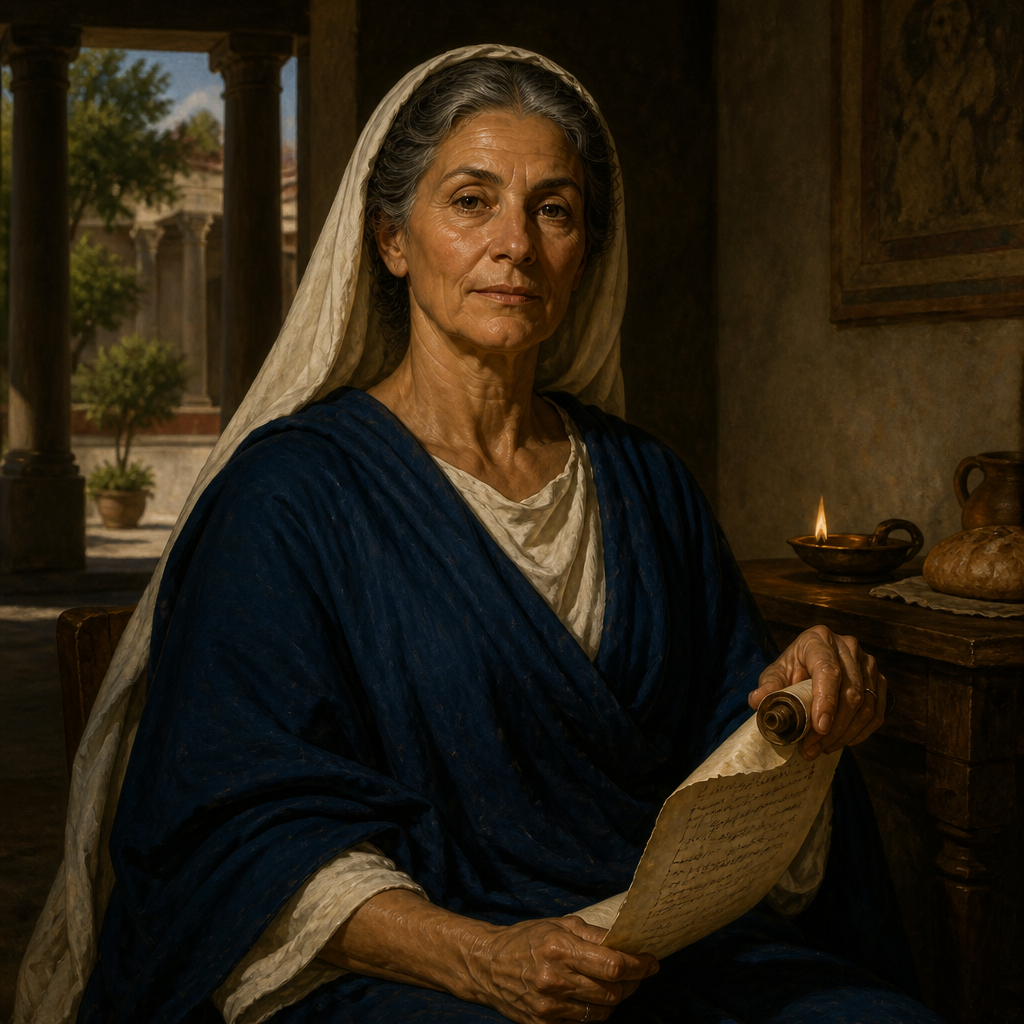
The identity of the 'children of the elect lady's elect sister' is bound up in the interpretive debate regarding the identity of the 'Elect Lady' herself. In the Second Epistle of John, the author addresses his letter to eklekte kyria (the 'elect lady') and her children. The letter concludes with a greeting from the children of her adelphe (sister), who is also described as eklekte (elect).
Scholars generally fall into two camps regarding these identities. The first is the literal interpretation, which posits that the 'Elect Lady' was a prominent woman who hosted a house-church, and her sister was another mother in a nearby congregation. Under this view, the children mentioned are the biological offspring who had joined the Christian movement. The second, more widely accepted scholarly view is that these terms are corporate metaphors. In this ecclesiological reading, the 'Elect Lady' is a personification of a local church, and her 'children' are the individual members of that congregation. Consequently, the 'children of the elect sister' would represent the members of the Elder's own local church, sending their regards to their 'sister' congregation.
Major Life Events
Within the canonical record, the only 'event' associated with these individuals is their participation in the transmission of the epistle. By including their greetings, the Elder (traditionally identified as John the Apostle or John the Presbyter) demonstrates that the message of the letter—walking in truth and love—is not merely his own instruction, but is supported by a living community of believers.
Their inclusion at the end of the letter (2 John 1:13) serves a liturgical and communal purpose. In the first-century Mediterranean world, greetings were not merely polite formalities but were essential for maintaining social and religious bonds across geographical distances. By sending these greetings, this group affirmed their shared identity in Christ and their rejection of the 'deceivers' mentioned in the body of the letter who denied the incarnation.
Relationship to Other Biblical Figures
The primary relationship of this group is to the 'Elder' who writes the letter. They are physically present with him, likely in Ephesus or its surrounding regions, at the time of the letter's composition. Their connection to the 'Elect Lady' is described through their mother (the sister), creating a framework of family terminology that defines the early church’s self-understanding. They are depicted as being 'in the truth,' a key Johannine technical term, which places them in direct spiritual alignment with the Apostle and the recipients of the letter.
Furthermore, their existence provides a contrast to the 'antichrists' or 'deceivers' described in the epistle. While the deceivers have 'gone out into the world' (2 John 1:7) and broken fellowship, the children of the elect sister remain in communion with the Elder, standing as representatives of the orthodox community that adheres to the original apostolic teaching.
Spiritual Significance
Theologically, the children of the elect sister represent the 'communion of saints.' Their presence in the text reinforces the idea that the local church is never truly solitary. Even in a short, urgent letter warning against heresy, the conclusion focuses on the warmth of shared fellowship.
The children of your elect sister greet you. Amen. — 2 John 1:13
This greeting underscores the Johannine theme of 'love one another.' It suggests that the commandment to love is not just a theoretical imperative given by the Elder, but a lived reality practiced between congregations. The use of the term 'elect' (eklekte) for both the mother and the sister (and by extension, the status of the children) emphasizes the doctrine of divine choice. It suggests that these two communities, though geographically separated, share a common source in God’s sovereign election. For the modern reader, these anonymous children serve as a reminder of the countless unnamed believers who sustained the early church through simple acts of hospitality, loyalty to the truth, and the maintenance of communal bonds.
Spiritual Significance
The children of the elect lady's elect sister signify the horizontal unity of the early church. Their mention at the close of 2 John provides evidence of the 'sister-church' relationship that characterized first-century Christianity, where congregations viewed one another as family members sharing a common heritage and standard of truth. They represent the faithful remnant that stands behind the apostolic message, providing a communal endorsement of the Elder's warnings against false teachers.
Frequently Asked Questions
Are the children of the elect sister real people or a metaphor?
Scholars are divided; they may be literal biological children of a Christian woman, or they may be a metaphorical way of describing the members of a local church congregation near the Apostle John.
Where were these children located?
They were located with 'the Elder' (John) at the time of writing, traditionally believed to be in Ephesus or the surrounding province of Asia Minor.
Why are they called 'elect'?
The term 'elect' (chosen) denotes their status as part of God's covenant people, emphasizing that their identity is rooted in divine grace rather than social standing.
Who is the 'Elect Sister' mentioned in the verse?
The Elect Sister is likely the mother of this group, but in an ecclesiological sense, she represents the local church from which John is writing.
What is their relationship to the Apostle John?
They appear to be members of his immediate community or congregation, as they are present to send greetings through his letter.
Connected Figures
The Elect Lady
Aunt (or sister-church leader)
John the Apostle
Spiritual mentor and letter-writer

The Children of the Elect Lady
Cousins (or fellow believers)