The Children of the Elect Lady
Members of a specific first-century Christian congregation or biological family addressed in 2 John who walked in the truth and were warned against false teachers.
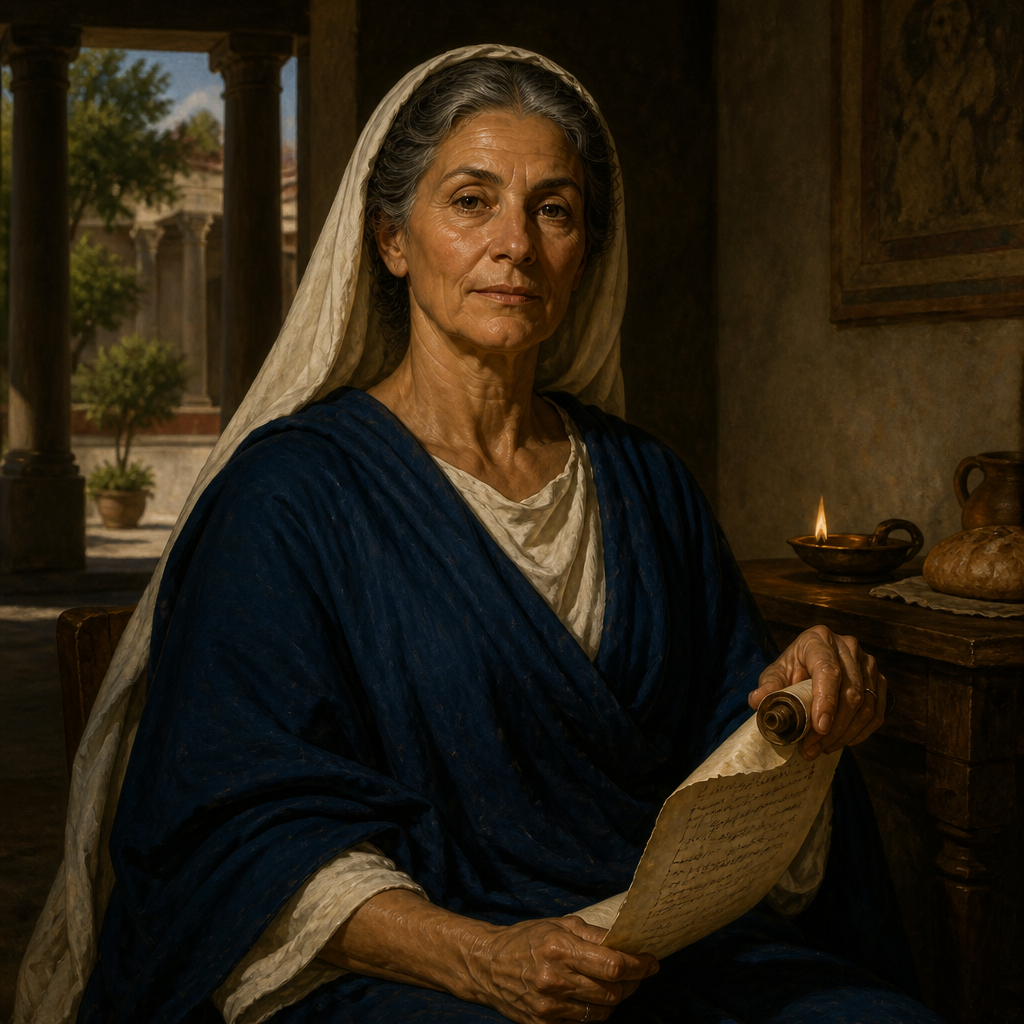
The 'Children of the Elect Lady' are the primary recipients, alongside their 'mother,' of the Second Epistle of John. Mentioned in the opening and closing verses of this brief but potent letter, they represent a community or family unit deeply integrated into the Johannine network of early Christianity. Their identity is inextricably linked to the 'Elect Lady,' a figure whose title has sparked centuries of debate regarding whether she represents a specific noblewoman or a personification of a local church.
These children are characterized by the Elder (John) as individuals 'walking in truth,' a hallmark of spiritual health in Johannine theology. However, they are also the subjects of an urgent pastoral warning regarding the arrival of 'deceivers' who deny the incarnation of Jesus Christ. Their role in the New Testament narrative serves as a vital case study in the dynamics of early Christian hospitality and the geographical spread of the Johannine community.
Background and Family
The identity of the Children of the Elect Lady depends heavily on the interpretation of the 'Elect Lady' (Eklete Kyria) herself. In biblical scholarship, two primary views exist. The literal view suggests the children are the biological offspring of a prominent Christian woman who hosted a house church. Under this interpretation, the children represent a second-generation Christian family navigating the complexities of the late first-century religious landscape. The figurative view, widely held by modern scholars, posits that the 'Lady' is the church itself and her 'Children' are the individual members of the congregation.
Regardless of the interpretative framework, the text establishes a distinct familial bond. The Elder expresses a deep, sacrificial love for these children, affirming that this love is shared by 'all who know the truth' (2 John 1:1). This indicates that the children were not isolated figures but were recognized participants in a broader network of believers who adhered to the teachings of the Beloved Disciple. Their family structure extended beyond the immediate household to include 'the children of your elect sister' (2 John 1:13), suggesting a sister-church or a related biological family in another location.
Major Life Events
The specific actions of the children are highlighted through the Elder's report of a recent encounter. John writes, 'I rejoiced greatly to find some of your children walking in truth, just as we were commanded by the Father' (2 John 1:4). This suggests that the Elder had met these individuals, perhaps while they were traveling or during a visit to their community, and observed their conduct firsthand.
The primary 'event' recorded for these children is their encounter with itinerant preachers. The second half of the epistle serves as a protective mandate for the children. They are warned about 'many deceivers' who have gone out into the world. The children are instructed specifically in the ethics of hospitality: if a teacher comes to them without the orthodox 'teaching of Christ,' they are not to receive him into their house or even give him a greeting. For the children, the act of hospitality was a theological statement; to welcome a false teacher was to participate in his 'wicked works.'
Relationship to Other Biblical Figures
The children's most significant relationship is with 'The Elder' (traditionally identified as John the Apostle or John the Presbyter). The relationship is one of pastoral authority and affectionate mentorship. The Elder does not merely command them but appeals to them through the 'new commandment' of mutual love.
They also stand in relationship to the 'Elect Sister's children.' This group, mentioned in the closing salutation, sends greetings to the Children of the Elect Lady. This exchange of greetings signifies the interconnectedness of early Christian house churches. It reveals a communal life defined by mutual recognition and the shared defense of apostolic tradition against Docetic heresies—those who denied that Jesus Christ came in the flesh.
Spiritual Significance
The spiritual significance of the Children of the Elect Lady lies in their status as 'truth-walkers.' In the Johannine corpus, 'truth' is not merely an intellectual category but a path of life. By walking in truth, these children provided the Elder with his greatest joy. Their existence proves the success of the apostolic mission into its second generation.
Furthermore, they serve as the biblical archetype for corporate discernment. The instructions given to them regarding false teachers demonstrate that the responsibility for maintaining the purity of the gospel did not rest solely on the leaders (the Lady), but also on the members (the Children). They were expected to possess enough theological maturity to distinguish between the 'doctrine of Christ' and the innovations of the deceivers. Their inclusion in the canon emphasizes that every member of the faith community is a guardian of the apostolic deposit.
Spiritual Significance
Theologically, the Children of the Elect Lady represent the concrete application of 'truth and love,' the two pillars of Johannine ethics. Their mention reinforces the idea that the Christian faith is transmitted through communal and familial structures, emphasizing the importance of the next generation staying 'in the doctrine.' They are significant for understanding early church boundaries, particularly how hospitality was used as a tool for ecclesiastical discipline.
Moreover, the children provide a window into the Christological conflicts of the late first century. The warnings given to them indicate that the early church faced an internal crisis regarding the nature of Christ's humanity. By record of their instruction, the children embody the necessity of a rigorous, incarnational faith that rejects any spiritualization of Jesus that denies His physical reality.
Frequently Asked Questions
Are the children biological or figurative?
Scholars are divided; 'the children' may refer to the biological offspring of a Christian woman or the individual members of a local church congregation addressed metaphorically.
What does it mean that they were 'walking in truth'?
It signifies that their behavior, ethics, and beliefs were in constant alignment with the apostolic teachings regarding Jesus Christ and the commandment of love.
Why were they told not to welcome certain visitors?
To protect the community from 'deceivers' who denied that Jesus came in the flesh; providing hospitality to such teachers was seen as supporting their false message.
Who is the 'Elect Sister' mentioned at the end of the letter?
The 'Elect Sister' likely refers to the church from which John was writing, or the biological sister of the Elect Lady.
Which book of the Bible mentions the Children of the Elect Lady?
They are mentioned exclusively in the Second Epistle of John (2 John).
Connected Figures
The Elect Lady
Mother or Personified Church
The Elder
Pastoral mentor and author of the letter
Children of the Elect Sister
Cousins or members of a sister church