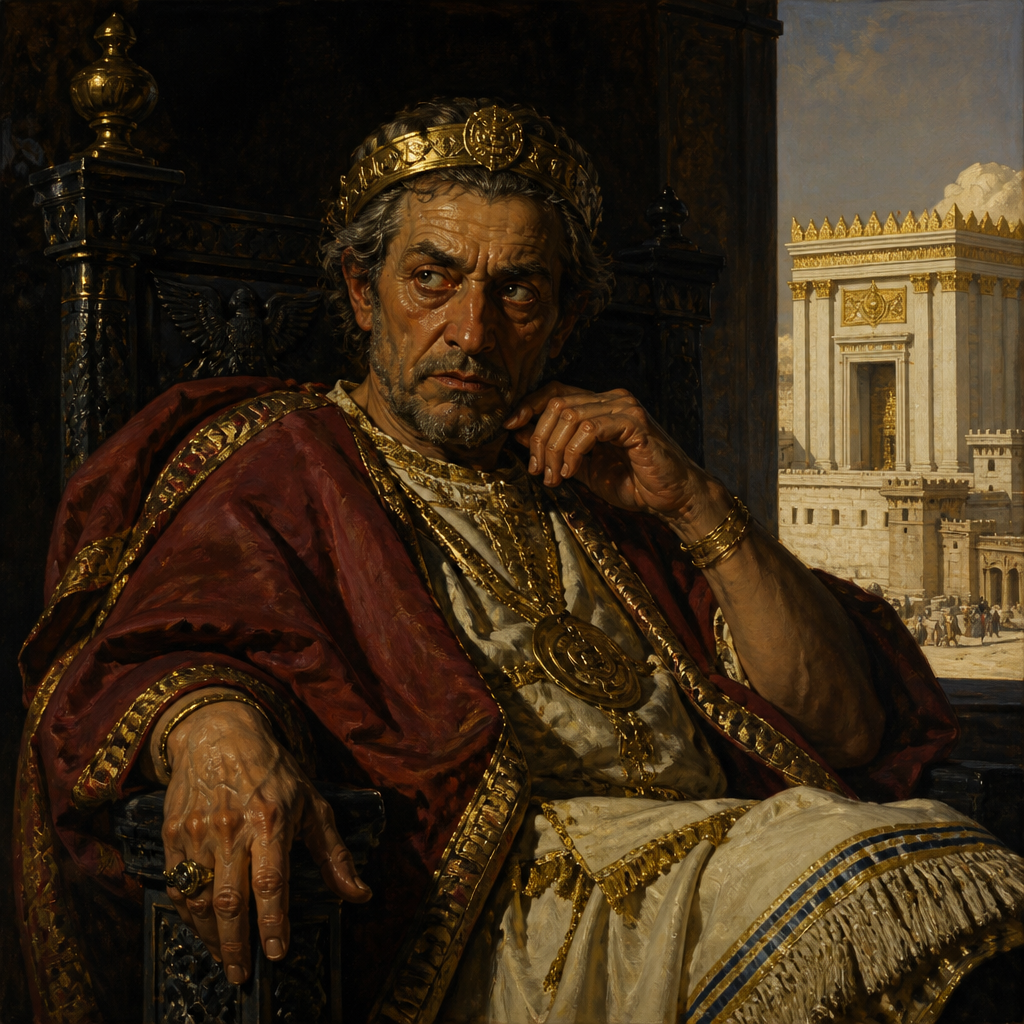
Joseph of Nazareth
The husband of Mary and the legal, earthly father of Jesus, recognized for his obedience to God and his role as the protector of the Holy Family.
Joseph is a central figure in the New Testament narratives of the nativity and early life of Jesus Christ. Identified as a descendant of King David, Joseph resided in the village of Nazareth in Galilee, where he worked as a craftsman. While he is not recorded as speaking a single word in the canonical Gospels, his actions depict a man of profound faith, integrity, and quiet strength.
According to the Gospels of Matthew and Luke, Joseph was betrothed to Mary when she was found to be with child by the Holy Spirit. Despite the social stigma and the legal recourse available to him, Joseph chose a path of mercy and obedience to divine instruction. He served as the primary provider and guardian for Jesus during his formative years, facilitating the family's survival during the persecution of Herod the Great.
Background and Family
Joseph’s lineage is of paramount importance to the Gospel writers, particularly Matthew, who establishes Jesus’ messianic credentials through Joseph’s Davidic ancestry. Matthew 1:1-16 traces Joseph’s genealogy back through the royal line of Judah, identifying his father as Jacob. Luke’s genealogy (Luke 3:23-38) also connects him to David, though it names Heli as his father—a discrepancy often resolved by scholars through the lens of legal versus biological lineage or the inclusion of Mary's line.
Joseph lived in Nazareth, a relatively obscure town in the region of Galilee. He is described by the Greek term tektōn (Matthew 13:55), which traditional translations render as 'carpenter.' However, in the context of first-century Palestine, this term likely referred to a general builder or craftsman who worked with stone, wood, and iron. As a member of the working class, Joseph would have been a man of modest means, a fact evidenced by his offering of two doves or pigeons at the Temple purification—a sacrifice permitted for those who could not afford a lamb (Luke 2:24).
Major Life Events
The biblical narrative of Joseph begins with his betrothal to Mary. In Jewish tradition of the time, betrothal was a legally binding contract that preceded the formal wedding. Upon discovering Mary's pregnancy, Joseph faced a moral and legal dilemma. According to Mosaic Law, he had the right to expose her to public trial; however, being a 'just man' (Matthew 1:19), he intended to divorce her quietly to spare her shame.
His plans were altered by a series of four pivotal angelic visitations in dreams. In the first, an angel commanded him to take Mary as his wife, revealing the divine nature of her pregnancy. Joseph obeyed without hesitation. Subsequent dreams directed him to flee to Egypt to escape the genocidal decree of Herod the Great, to return to Israel after Herod’s death, and finally to settle in Galilee to avoid Herod’s son, Archelaus. These events highlight Joseph’s role as the divinely appointed protector of the infant Messiah.
Joseph’s last appearance in the biblical text occurs when Jesus is twelve years old. During a pilgrimage to Jerusalem for the Passover, Jesus remained behind in the Temple. Joseph and Mary searched for him for three days before finding him among the teachers of the Law. After this event, Joseph disappears from the scriptural record, leading most scholars to conclude that he died before Jesus began his public ministry.
Relationship to Other Biblical Figures
Joseph’s primary relationship was with his wife, Mary, and his legal son, Jesus. The Gospels indicate that Joseph and Mary lived in a chaste marriage until after the birth of Jesus (Matthew 1:25), after which the text mentions brothers and sisters of Jesus (Matthew 13:55-56). While some traditions interpret these as Joseph’s children from a previous marriage or as cousins, the Gospel accounts portray a traditional family structure in which Joseph was the head of the household.
His relationship with Jesus was one of legal fatherhood. In first-century Jewish society, the act of a father naming a child—as Joseph did for Jesus—was a formal adoption of responsibility and a conferral of lineage. By naming Jesus, Joseph officially brought him into the House of David, fulfilling the prophetic requirement for the Messiah.
Spiritual Significance
Joseph serves as a model of 'righteousness' (tsedakah) in the New Testament. His righteousness is defined not merely by his adherence to the Law, but by his characteristic of 'hesed' (loving-kindness). When he chose to protect Mary rather than prosecute her, he demonstrated a heart aligned with the spirit of the Law rather than its letter.
Furthermore, Joseph represents the bridge between the Old and New Testaments. As the 'son of David,' he carries the weight of Israel’s regal expectations, yet he lives out those expectations through humble service and silence. His life demonstrates that participation in God’s redemptive plan often involves quiet obedience, sacrifice, and the protection of the vulnerable. In Christian theology, Joseph is often seen as the earthly reflection of God the Father’s care for the Son.
Spiritual Significance
Joseph is theologically significant as the legal link that connects Jesus to the Davidic covenant. Without Joseph's lineage and his formal acceptance of Jesus into his household, the messianic claim of Jesus as the 'Son of David' would lack its legal grounding in Jewish tradition. His role as a protector also underscores the humanity of the incarnation, showing that the Son of God required the care and guidance of a human father.
Beyond his genealogical role, Joseph is celebrated for his prompt and unquestioning obedience to divine revelation. Each time God spoke through a dream, Joseph acted immediately. This makes him a primary biblical example of faith in action, where righteousness is expressed through the protection of others and the fulfillment of God's will despite personal risk or social cost.
Frequently Asked Questions
What happened to Joseph after Jesus turned twelve?
The Bible does not provide details about Joseph's later life or death. He is absent from the accounts of Jesus' public ministry and the crucifixion, where Jesus entrusts Mary to the care of the Apostle John. This suggests Joseph likely died before Jesus began his ministry.
Was Joseph really a carpenter?
The Greek word used is 'tektōn,' which means a craftsman or builder. While 'carpenter' is the traditional translation, many scholars believe he may have worked extensively with stone, as it was a more common building material in the hilly region of Galilee.
Why are there two different genealogies for Joseph?
Matthew 1 and Luke 3 provide different lists. Scholars suggest Matthew records the legal royal line (succession to the throne), while Luke may record the biological line or Mary's lineage. Both, however, affirm his descent from David.
Did Joseph have other children?
Matthew 13:55-56 mentions James, Joseph, Simon, and Judas as Jesus' brothers, along with unnamed sisters. Different Christian traditions interpret these as Joseph's children with Mary, his children from a prior marriage, or as close relatives like cousins.
How many dreams did Joseph have from God?
The Gospel of Matthew records four distinct dreams: one telling him to marry Mary, one to flee to Egypt, one to return to Israel, and one to head to Galilee.